


The Spice of Empires: The story of Ceylon Cinnamon
Before cinnamon became a familiar ingredient in kitchens around the world, it was a coveted commodity that helped draw merchants, conquerors and empires towards Sri Lanka. Today, Ceylon cinnamon is finding a new audience among chefs and consumers who are beginning to look beyond the spice itself to its origins, craftsmanship and distinctive character.

There are few ingredients in the kitchen that appear as ordinary as cinnamon. A stick may sit unnoticed in a spice cupboard for months, eventually finding its way into a pot of rice, a dessert, a curry or a cup of tea. Ground into powder, it becomes even less distinctive, one brown ingredient among many.
Yet cinnamon has a history that is anything but ordinary. For thousands of years, it travelled along the ancient trading routes linking Asia, the Middle East and Europe, prized for its fragrance, flavour and scarcity. Long before modern supply chains made spices available to almost every household, cinnamon was a luxury capable of commanding attention far beyond the kitchen.
In Sri Lanka, the story became particularly consequential. The island's cinnamon forests and production traditions helped make the spice one of its most valuable commodities, attracting European powers that understood that controlling the trade could mean controlling a significant source of wealth. The Portuguese established themselves in Sri Lanka during the 16th century, followed by the Dutch, who developed systems around the cultivation, harvesting and trade of cinnamon. The British later took control of the island.
Cinnamon, in other words, was never merely an ingredient. It was part of the economic history of an island and one of the commodities around which colonial competition was organised.
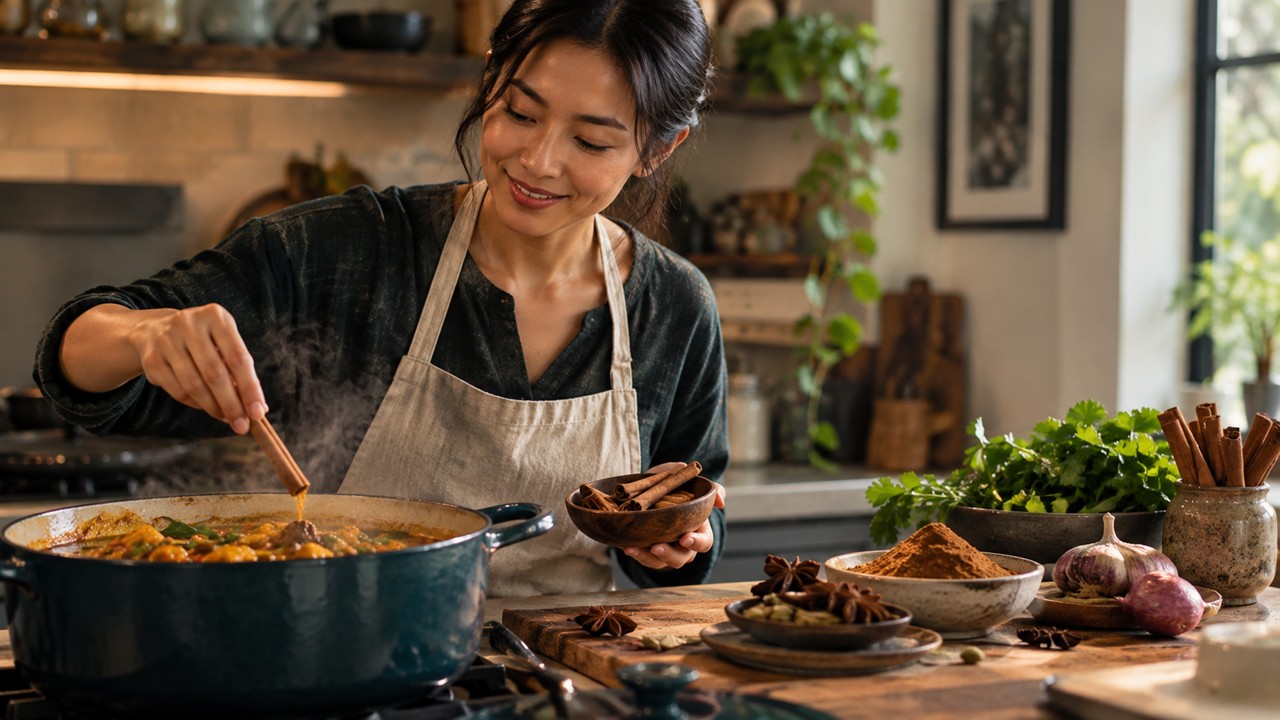
That history remains visible in the product itself. Ceylon cinnamon, known scientifically as Cinnamomum verum, comes primarily from Sri Lanka and is distinct from the Cassia varieties that account for much of the cinnamon found in global markets. The difference is not simply a matter of geography or terminology. It can be seen in the structure of the bark, detected in the aroma and experienced in the flavour.
A Ceylon cinnamon quill is generally lighter and more delicate than Cassia, with numerous thin layers of inner bark rolled carefully together. Rather than the thick, hard appearance of many Cassia sticks, a properly prepared Ceylon quill has an almost fragile quality. Its flavour is generally more subtle and complex, with a softer sweetness and fragrance that can work particularly well in both sweet and savoury cooking.
What makes the product especially intriguing, however, is how much human skill remains involved in producing it. The bark is carefully peeled and separated into thin layers before being fitted together, rolled into quills and dried. What eventually appears on a supermarket shelf as a simple brown stick is the result of an artisanal process that has been refined and passed through generations.
That craftsmanship is increasingly relevant to the way consumers think about food. The modern shopper is becoming accustomed to asking where coffee was grown, what variety of olive produced an oil, which vineyard made a wine or where chocolate originated. Ingredients that were once treated as anonymous commodities are increasingly being understood through their provenance.
Cinnamon is beginning to enter that conversation.
For a company such as Insan Spice, this creates an opportunity that extends beyond simply selling another packet or jar of cinnamon. The proposition is built around the idea that consumers should understand what they are buying, particularly the distinction between Ceylon cinnamon and Cassia, and appreciate the significance of origin, quality, appearance and flavour.
It is an important distinction because consumers already buy cinnamon. The challenge is not to persuade people that cinnamon exists, but to persuade them that the word itself does not tell the whole story.
The difference is perhaps easiest to understand through the world of professional cooking. A master chef does not necessarily use cinnamon simply because a recipe calls for a spice. Cinnamon can be used to introduce warmth, fragrance and depth, sometimes without announcing itself as the dominant flavour. A small piece can perfume a stock, add complexity to a rice dish, balance a dessert or give a drink a deeper aromatic character.
This is where the journey of Ceylon cinnamon takes an unexpected turn. A spice that once travelled through ancient trading networks and became an object of imperial competition is now being reconsidered through the language of culinary craftsmanship.
The modern chef is interested in ingredients that have a story, but also in ingredients that perform. Provenance matters, but so does what happens when the ingredient reaches the plate. Ceylon cinnamon offers both: a distinctive agricultural heritage and a flavour profile that can be used with considerable subtlety.
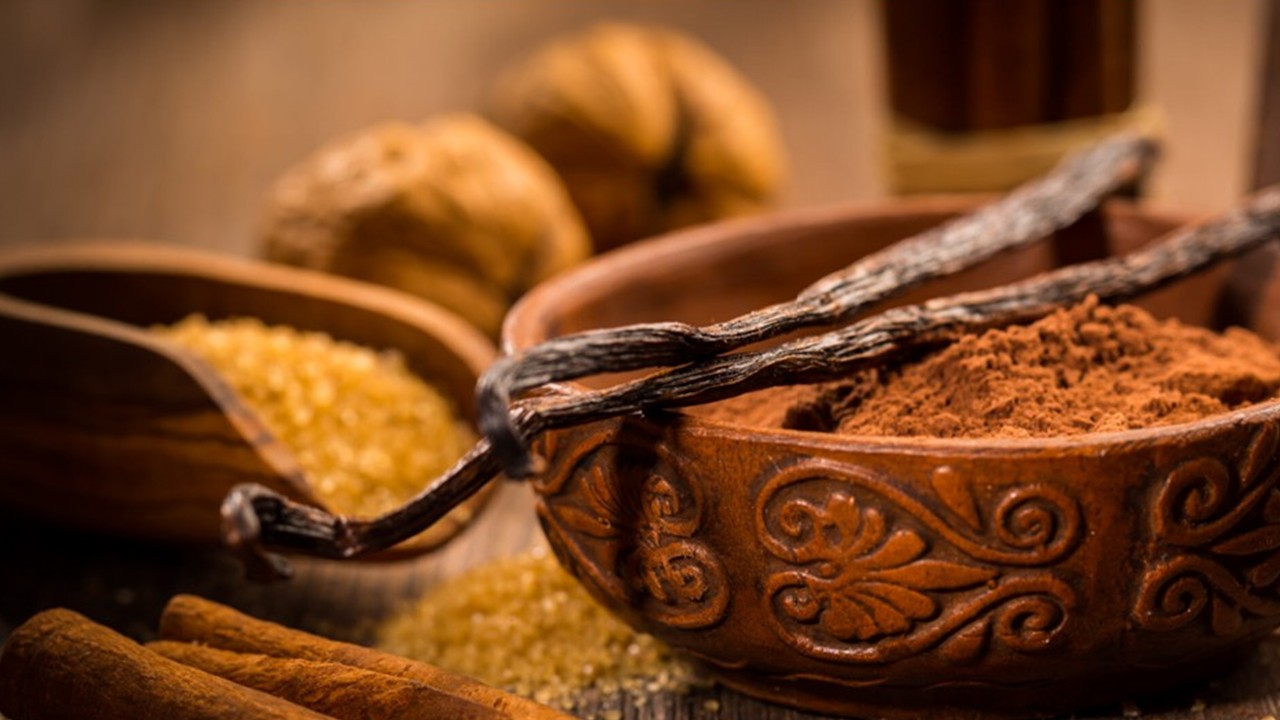
The next stage of its journey may be even closer to home. Cinnamon has moved steadily beyond the traditional spice rack. It appears in coffee and tea, breakfast foods and pastries, desserts and savoury dishes. It is also increasingly part of a wider consumer conversation about natural ingredients and everyday wellbeing.
That conversation needs to be approached with some care. Cinnamon is a culinary ingredient, not a miracle cure, and its growing association with wellness should not obscure the more interesting story. The real opportunity is to help consumers understand the ingredient itself: where it comes from, how it is produced, how varieties differ and why those differences can matter.
That is a much more enduring proposition than simply attaching a fashionable label to an ancient spice.
For Insan Spice, the opportunity is therefore to create a bridge between a product with centuries of history and a modern consumer who is increasingly interested in provenance. The company becomes part of a much larger movement in food, one in which consumers are asking questions that were once largely reserved for wine, coffee and other premium products.
Where did this come from? Who produced it? How was it made? And is the difference something I can actually taste?
With Ceylon cinnamon, those questions lead back to Sri Lanka. They lead to the trees, the growers and the cinnamon peelers whose knowledge has survived generations. They lead to an agricultural tradition shaped by centuries of trade and colonial history. And eventually they lead to the kitchen, where the history of the ingredient becomes almost invisible again as it is added to a dish.
Perhaps that is what makes cinnamon so fascinating. Its history is enormous, but its final appearance is small. A quill of bark can carry the story of ancient trade, colonial ambition, agricultural craftsmanship and modern food culture, only to end up simmering quietly in a saucepan on an ordinary evening.
The spice of empires to popular culture icon, to your table, the journey is longer than the spice cupboard suggests.
And the next time a recipe calls for cinnamon, it may be worth looking at the stick before reaching for the powder. The pale, delicate layers rolled inside one another are not simply a familiar kitchen ingredient. They are the visible remains of an old craft and a reminder that, in food, origin can be part of the flavour.
Ceylon cinnamon does not need to become something new. Perhaps it simply needs to be recognised again for what it has always been.