

The End of the Perfect Home? IKEA Study Finds Meaning in the Mess
A new global IKEA study suggests people are becoming less interested in picture perfect homes and more comfortable with spaces that reflect real life, even when that means clutter, sentimental possessions and the occasional argument over who left what where.
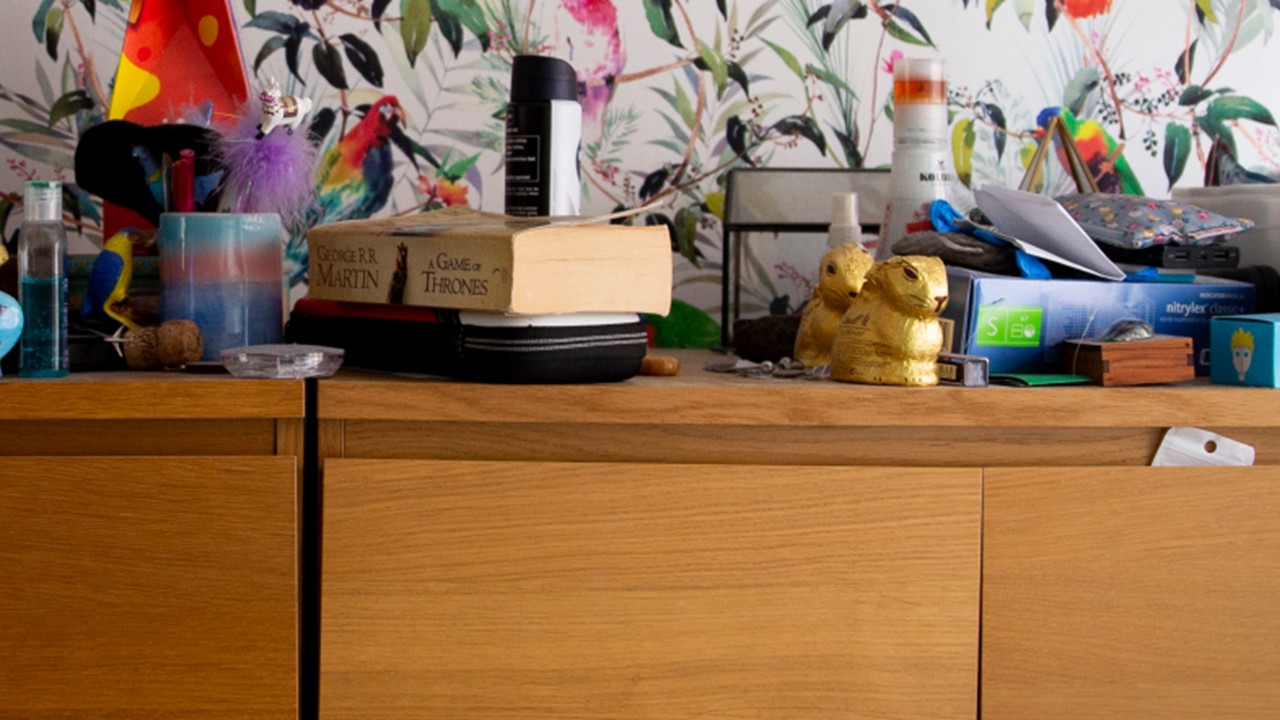
The perfectly organised home has long been held up as an ideal: clear kitchen counters, neatly arranged cupboards, everything stored in its proper place and little evidence of the everyday chaos that comes with modern life. But a new global study by IKEA suggests that many people are beginning to question whether that ideal is either realistic or even desirable.
The IKEA Store & Organise Report 2026, Finding Meaning in the Mess, surveyed 31,488 people across 31 markets and found that household clutter remains a significant source of tension, while attitudes towards what constitutes a well organised home are changing. Rather than pursuing strict minimalism, many people appear to be looking for a balance between organisation and a home that feels personal, lived in and connected to their lives. (Ingka Group)
Perhaps the clearest sign of the changing relationship with clutter is what IKEA calls the “silent protest”. In 38% of homes, someone is leaving things out rather than putting them away, apparently hoping that another member of the household will eventually take responsibility. It is a familiar domestic disagreement, but the scale of the finding suggests that the battle over household organisation is remarkably universal.
The kitchen appears to be the main frontline. The kitchen countertop was identified as the hardest household space to keep clutter free by 24% of respondents and the area most likely to trigger an argument, at 37%. In an indication of just how creative people can become when storage space is limited, one in 10 respondents said they use their oven for storage, rising to 21% in South Korea.
Yet the report's most interesting finding is that clutter is not necessarily being viewed as a problem to be eliminated. With homes becoming smaller and lifestyles becoming busier, IKEA found a clear shift towards what it describes as “meaningful mess” — possessions kept because they have emotional, personal or practical value rather than because they fit neatly into a minimalist aesthetic.
Globally, 59% of respondents said they prefer a lived in home to a minimalist one. That preference is reinforced by the finding that 82% keep possessions purely for sentimental reasons, even when they rarely use them or keep them out of sight. For 26%, that includes memorabilia from past relationships, suggesting that the objects people retain are often connected to memories and identity rather than simple functionality.
Licca Li, Home Furnishing & Retail Design Manager at Ingka Group, said the findings point towards a fundamental change in how people think about their homes. “People aren't chasing a perfect home anymore,” she said, arguing that people increasingly want homes that reflect their stories, memories and the things that matter to them.
That does not mean organisation has become irrelevant. In fact, the report highlights the very real cost of losing track of possessions. Some 68% of households have what IKEA calls a “drawer of doom” — a drawer or box containing miscellaneous objects that have no obvious home — while 53% of respondents said they personally claim such a space. Cables are among the most common items, with 54% of Baby Boomer men admitting they still keep cables for gadgets they no longer own.
The consequences can extend beyond untidy cupboards. One in 10 respondents said they have cancelled plans for friends to visit because their home was too messy, while 34% admitted to moving clutter from one room to another before guests arrive. The practice is particularly pronounced in the UK, where 49% reported doing so.
There is also a measurable time cost. Respondents in India reported spending an average of 80 minutes a day looking for misplaced items, compared with just 15 minutes in the UK. Over the course of a year, that difference amounts to more than two additional weeks spent searching for things that have been put somewhere and then forgotten.
But perhaps the most unexpected finding is that some people are beginning to see clutter not as a failure of organisation, but as part of creativity and personal expression. Fifteen per cent of respondents globally said they view mess as a form of creativity, rising to 31% in China. In Japan, however, only 4% agreed, highlighting the very different cultural attitudes that continue to shape how people think about order and the home.
The findings offer an interesting counterpoint to the long running popularity of minimalist interiors, where the absence of possessions has often been presented as a sign of calm, control and even success. IKEA's research suggests that for many people the opposite may now be true: a home with books, photographs, old keepsakes, children's possessions, chargers and the occasional untidy corner may feel more authentic than an immaculate space designed for display.
For a company whose business is built around helping people store, organise and furnish their homes, the conclusion is also significant. The challenge is no longer necessarily to eliminate every trace of clutter, but to help people manage the objects that make up their lives without making the home feel sterile or impersonal.
Ultimately, the report suggests that the modern home is becoming less about perfection and more about purpose. People still want spaces that work, but they also want those spaces to tell their stories. The goal may not be a home where everything is perfectly organised at all times, but one where there is enough organisation to make room for the mess, memories and everyday moments that make it feel like home.