

Malaysia’s Rare Earth: The Game of Global Supply Chains
Natural Resources and Environmental Sustainability Minister Arthur Joseph Kurup’s ministry has confirmed the first approval for exporting unprocessed rare earths under a revised framework, opening a new chapter for Malaysia’s critical minerals industry. But allegations of illegal extraction and exports worth potentially hundreds of millions of ringgit raise a fundamental question: can Malaysia build a trusted supply chain before environmental, labour and governance failures undermine its ambitions?
Malaysia’s decision to permit a first export of unprocessed rare earths under revised rules places the country at the intersection of a domestic industrial policy shift and an intensifying global contest for critical minerals.
The Ministry of Natural Resources and Environmental Sustainability, under Minister Datuk Seri Arthur Joseph Kurup, confirmed that the Department of Mineral and Geoscience Malaysia had approved a single export application for research and development purposes. The ministry disclosed the approval in response to a Bloomberg query reported by The Edge on 22 October, but did not identify the applicant or provide details of the shipment.
The approval follows guidelines introduced in October allowing raw rare earth materials to be exported for research and development or processing, subject to regulatory conditions and commitments to develop local processing and other value-added activities. Malaysia had imposed a moratorium on exports of unprocessed rare earths from 1 January 2024 to encourage the development of its domestic processing industry.
The government has emphasised that the objective is not to maximise export approvals, but to attract quality investment, secure technology transfer and create long-term economic value. That ambition faces an immediate test: whether Malaysia can establish credible controls over the material entering its supply chains before the industry expands.
In March 2024, then-natural resources and environmental sustainability minister Nik Nazmi Nik Ahmad cited an estimated 16,000 tonnes of rare earth oxide allegedly mined illegally and exported to China. The figure emerged amid questions over differences between Malaysian export records and Chinese import statistics.
An MP had cited Chinese trade data showing 19,081 tonnes of rare earth oxide imported from Malaysia in 2023, valued at RM975 million. The discrepancy raised questions about unrecorded shipments and the possibility of illegal extraction and exports. It does not, by itself, establish that every tonne in the difference was illegally mined.
Using the reported aggregate trade value as a rough benchmark gives an indicative value of about RM818 million for 16,000 tonnes. This is an extrapolation rather than a verified valuation of the alleged illegal shipments. Actual values would depend on the composition, grade and processing stage of the material, while any loss to public revenue would require a separate calculation.
Enforcement cases have also highlighted the potential movement of material through domestic transport and processing networks. In December 2024, police conducted raids linked to alleged illegal rare earth mining in Gua Musang, Kelantan, and a warehouse in Banting, Selangor. Reports said 55 people were arrested and more than five tonnes of suspected rare earth material were seized at the warehouse. Investigators alleged that material was being processed and repackaged for overseas shipment.
The case underlined the need to examine more than the mining site itself. Transporters, processors, intermediaries, documentation and export channels all matter when authorities attempt to distinguish legally sourced minerals from material of uncertain origin.
For Malaysia, this is a question of economic value as well as enforcement. Rare earth elements are essential to high-performance permanent magnets used in electric vehicles, wind turbines, robotics and industrial machinery. They also support advanced electronics and defence applications. The greatest commercial opportunities often lie beyond extraction, in separation, refining, alloy production and magnet manufacturing.
Malaysia already hosts the Malaysian operations of Australian producer who has invested billions and generated thousands of jobs simpily because value added operations are done in Malaysia not somewhere else. A French - Malaysia joint venutre has moved in this direction. The power of the resource game is in not exporting the raw material but forcing investment onshore to access the scarce materials. This is what Indonesia is doing succesfully with other elements critical to global supply chains.
Indonesia has pursued a "invest first" strategy with nickel, restricting exports of unprocessed ore to encourage investment in domestic smelting and downstream industries. The policy helped attract substantial investment in processing capacity and made Indonesia a much more consequential player in global nickel supply chains, although it has also raised concerns over environmental impacts, market concentration and trade disputes. The lesson is not that every element requires an identical export ban, but that resource policy can change where investment and industrial value accumulate.
The underlying principle is straightforward, countries with strategically important resources can use access to those materials as leverage to secure investment in processing, technology transfer, skills and downstream manufacturing. Rather than simply selling raw material to the highest bidder, Malaysia can structure its resource policy to encourage companies to establish operations locally if they want reliable access to its mineral supply.
The challenge is to connect these investments to a coherent domestic industrial strategy, rather than allowing Malaysia to become merely a source of raw material for processing and manufacturing elsewhere. A case in point was the exports of bauxite now also under a export ban.
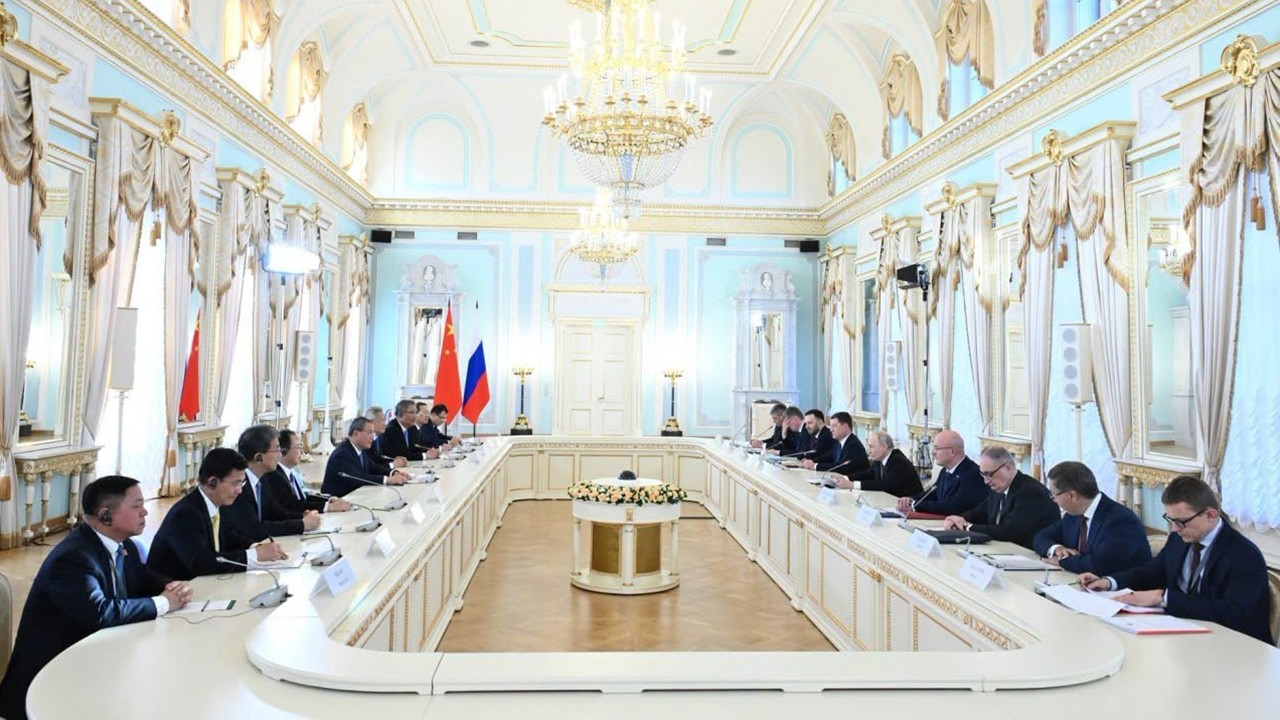
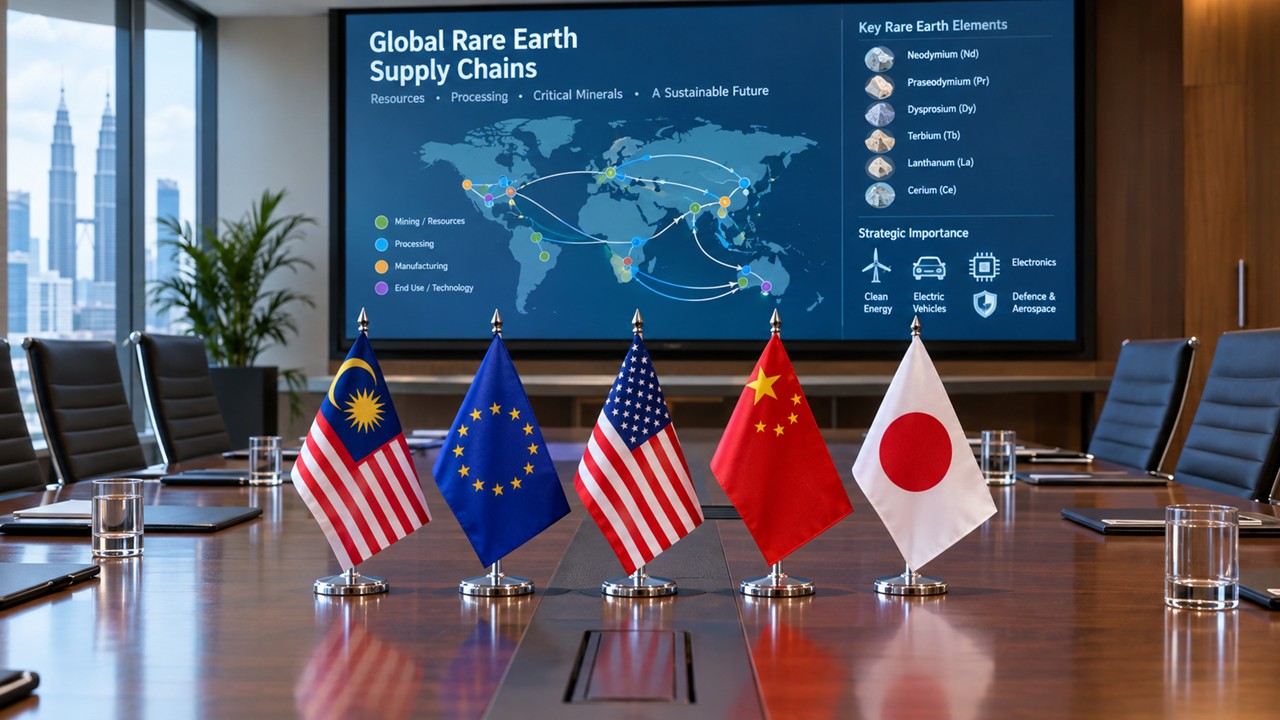
The geopolitical stakes make that distinction particularly important. China remains dominant across major stages of rare earth processing and permanent magnet production, while the United States is seeking to diversify supplies for advanced manufacturing and defence. Japan wants secure access to critical minerals for its industrial economy, and the European Union is working to reduce strategic dependencies and strengthen the resilience of its supply chains. Each has reasons to engage Malaysia, but their priorities and commercial interests are not identical.
Kuala Lumpur must therefore walk a delicate line between these competing interests. It can welcome Chinese expertise and commercial participation, pursue American investment and strategic cooperation, deepen Japan’s technology partnerships, and work with European companies on separation and processing without making its mineral policy an instrument of any single power. The objective should be to maximise Malaysia’s industrial capability and bargaining power while preserving the freedom to determine which projects meet its national priorities.
That balancing act requires more than diplomatic language. Investment agreements must deliver measurable technology transfer, local employment, skills development and downstream manufacturing. Export permissions should be transparent and conditional, with clear evidence that overseas processing arrangements contribute to domestic capabilities rather than simply provide a route for moving raw material abroad.
Malaysia’s palm oil experience offers a valuable, though imperfect, parallel. The industry became a major source of export earnings, rural livelihoods and manufacturing activity, but its international expansion also brought decades of scrutiny over deforestation, biodiversity, labour conditions, migrant-worker welfare and the treatment of Indigenous communities.
Certification systems, including the Roundtable on Sustainable Palm Oil and Malaysia’s own sustainability standards, have helped create frameworks for addressing these concerns. Yet implementation, enforcement and international acceptance remain ongoing challenges. The experience demonstrates that a globally competitive commodity can face persistent commercial and reputational pressure when buyers, regulators and civil society question how it is produced.
Rare earth mining presents different environmental and technical risks, but the underlying lesson is relevant. Malaysia has an opportunity to build safeguards into a developing industry rather than wait until poor practices, community opposition or supply-chain controversies force corrective action.
That means establishing traceability from the extraction site to the final buyer, verifying mining permits and land rights, enforcing environmental impact assessment requirements, monitoring water quality and waste management, and requiring credible rehabilitation plans. Worker safety, fair employment practices and protections against exploitation must be part of the same framework. Independent verification and public reporting would help establish whether those standards are being applied consistently.
Federal and state authorities will also need effective coordination. Mineral development and land administration involve different levels of government, while enforcement must follow material across state boundaries and through processing facilities, warehouses and ports. Without reliable chain-of-custody records, a legal export approval cannot by itself guarantee that the material originated from an authorised mine.
These safeguards could become a commercial advantage. Manufacturers in electric vehicles, renewable energy, electronics and defence-related industries need dependable supplies and face varying requirements concerning environmental performance, sourcing and governance. Malaysia could distinguish itself by offering verifiable provenance alongside competitive processing capacity, skilled labour and access to regional manufacturing networks.
The revised export framework should therefore be judged by the quality of the industrial commitments it secures, the effectiveness of its enforcement and the proportion of value retained in Malaysia. Exporting raw material for research or processing may help companies test technologies and establish commercial relationships, but it should not become a substitute for building local capabilities.
Malaysia’s rare earth opportunity is ultimately about the kind of supplier it wants to become. It can compete on the availability of resources alone, or it can build a reputation for reliable sourcing, responsible production and higher-value manufacturing.
The palm oil industry shows how difficult it can be to overcome entrenched concerns once they become part of a commodity’s international reputation. Rare earths offer Malaysia the chance to learn from that experience before its own supply chains become larger and more complex.
The first export approval may be a small administrative step, but it raises a much bigger question. Can Malaysia turn its mineral resources into a strategic industrial asset while ensuring that every tonne entering the global market can be accounted for?
The answer will depend on whether standards, traceability and enforcement are built into the industry from the beginning, rather than added after the problems emerge.