

ASEAN Outcomes and Trump’s Manila Visit
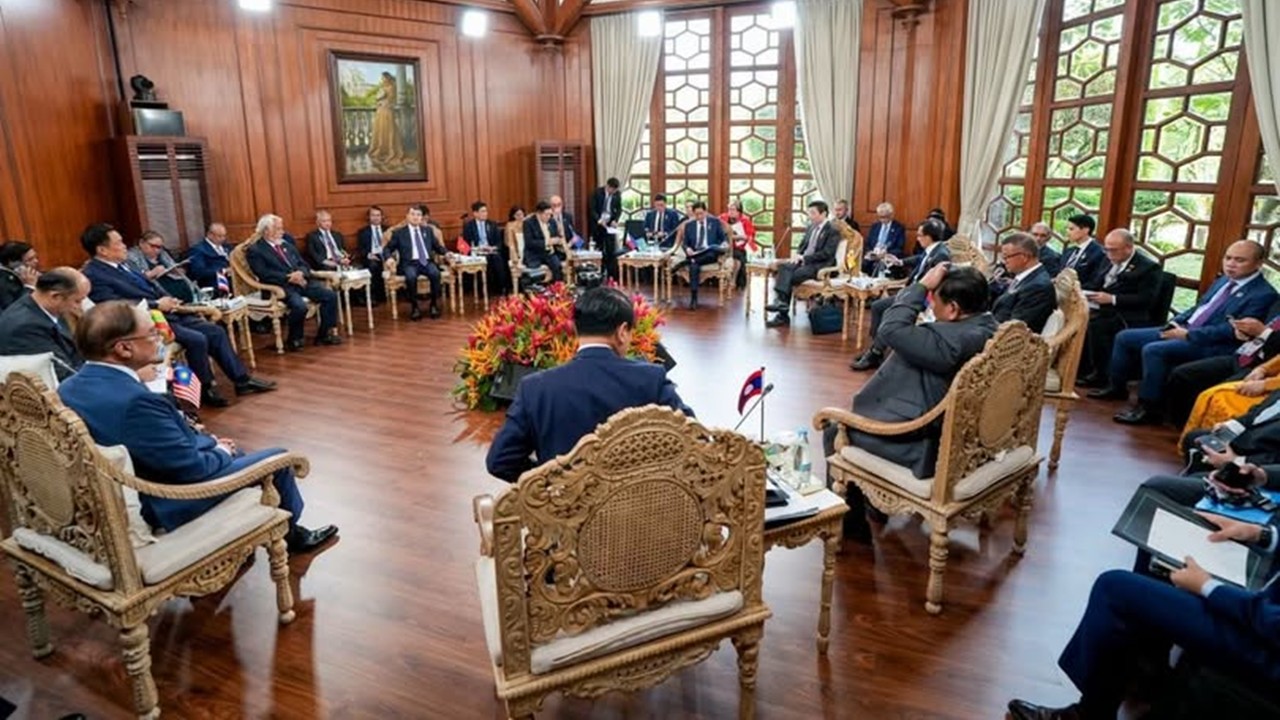
The ASEAN leaders and their dialogue partners from across the Indo-Pacific held a bevy of multilateral engagements, including the annual East Asia Summit (EAS), which President Trump did not attend. What happened at the meetings, and how will they impact U.S.-China competition and U.S.–Southeast Asia relations moving forward?
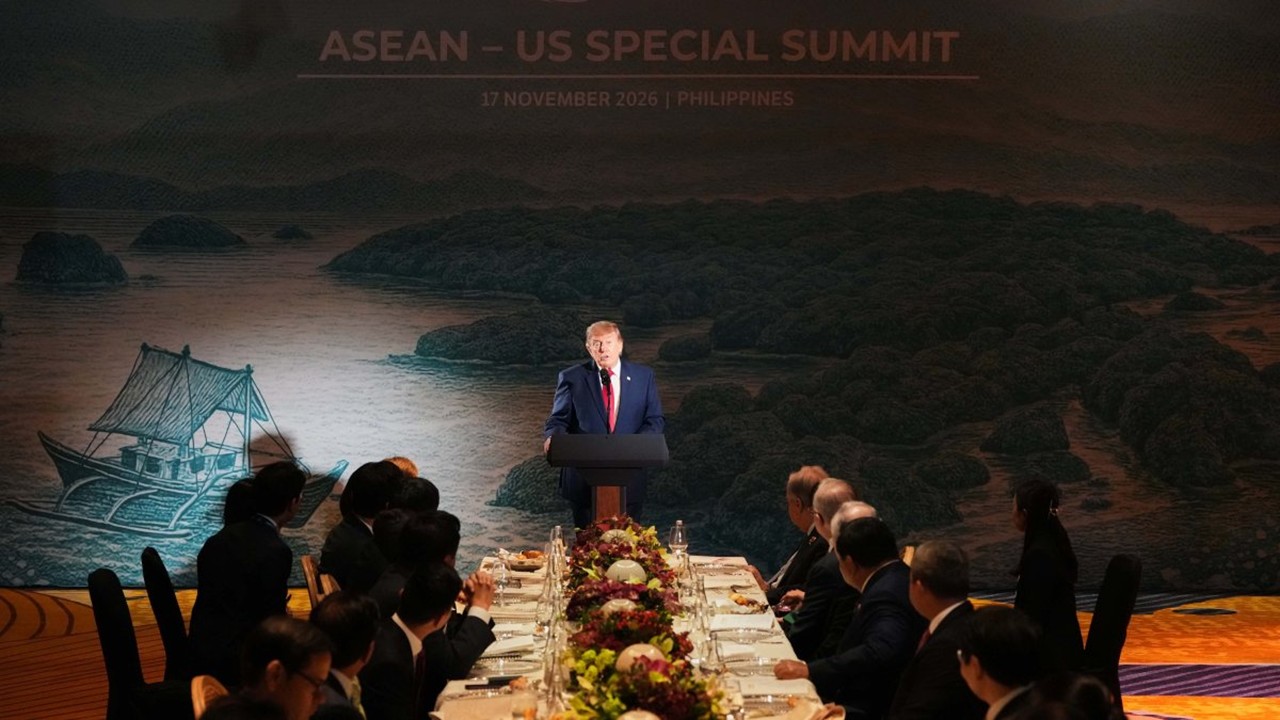
U.S. President Donald Trump joined dozens of world leaders in Manila on November 17 and 18 during the annual Association of Southeast Asian Nations (ASEAN) Summit and related meetings. President Trump participated in a meeting of the Quad, a dinner with ASEAN heads of state, and bilateral engagements with his counterparts from the Philippines and Thailand before flying out for his next stop in Shenzhen, China. The ASEAN leaders and their dialogue partners from across the Indo-Pacific held a bevy of multilateral engagements, including the annual East Asia Summit (EAS), which President Trump did not attend. What happened at the meetings, and how will they impact U.S.-China competition and U.S.–Southeast Asia relations moving forward?
Q1: What was on the schedule?
A1: Southeast Asian and other regional leaders convened in Manila from November 15 to 17 for the 49th ASEAN Summit, marking the conclusion of the Philippines’ year as chair of the grouping. Southeast Asian leaders also participated in a slew of individual summits with ASEAN’s dialogue partners, as well as the EAS. Under Secretary of State for Political Affairs Allison Hooker led the U.S. delegation to the EAS, which is usually a leader-level affair, and other engagements with ASEAN. It has become the norm over time for the U.S. president to skip most ASEAN summits in favor of the secretary of state, national security advisor, or vice president, but this is the second time the United States was officially represented at the subcabinet level.
President Trump arrived in Manila on the final day of the proceedings. He joined his counterparts from Australia, India, and Japan for the first in-person Quad leaders’ meeting of his second term before attending a dinner with Southeast Asian counterparts in lieu of the normal U.S.-ASEAN Summit. The same format was used for his stopover in Kuala Lumpur during last year’s meetings. The itinerary also included bilateral engagements with Philippine President Ferdinand “Bongbong” Marcos Jr. and Thai Prime Minister Anutin Charnvirakul.
The Quad meeting attempted to allay concerns that President Trump has not prioritized the grouping, and in particular has strained U.S.-India ties, since returning to office. President Trump lauded the partnership as “a force for good” and announced new initiatives to strengthen the organization moving forward, including an inaugural Quad Business Leaders’ Forum slated for 2027 and the launch of the Indo-Pacific Maritime Surveillance Collaboration. The latter was first announced during a Quad foreign ministers’ meeting in the spring and is meant to bolster the grouping’s earlier Indo-Pacific Maritime Domain Awareness initiative, though details remain scarce.
Q2: Why did ASEAN and China fail to finalize a South China Sea code of conduct?
A2: One of the priorities of the Philippines for its ASEAN chairmanship was to finalize the long-awaited and much delayed ASEAN-China code of conduct on the South China Sea, an aspiration that Foreign Secretary Theresa Lazaro voiced last November and highlighted throughout the year. Ultimately, however, the code was not completed, with Lazaro on Sunday pegging progress at “77 percent” and President Marcos later putting his estimate at “85–90 percent.”
For most observers, the failure to finalize was expected—and the percentages are hardly reassuring. Negotiations on the code have dragged on for over two decades since the 2002 agreement on a nonbinding Declaration on the Conduct of Parties in the South China Sea. Despite the passing of multiple deadlines and nominal milestones, little progress has been made on core issues such as the code’s geographic scope and whether it will be legally binding. Whatever progress was made this year, it is almost certain that the hardest sticking points remain unresolved, as indicated by a revealing statement from President Marcos that the remaining work includes the “definition of terms so that we can agree exactly what we are talking about.”
But there have been some wins for Manila in the realm of maritime security. On Sunday, the Philippines and Australia signed a new Defense Cooperation Arrangement that updates previous documents governing military exchanges between the two countries, including a 1995 memorandum of agreement and the 2012 Status of Visiting Forces Agreement. According to a joint statement President Marcos and Prime Minister Anthony Albanese issued after witnessing the signing of the agreement, the two sides pledged to “consult each other on contingencies that may affect our sovereignty or shared defense and regional security interests, and consider appropriate measures in response.” While not quite a mutual defense commitment, it cements the pseudoalliance Manila and Canberra have forged in recent years. At the operational level, Philippine Defense Secretary Gilberto Teodoro Jr. said the agreement will reduce red tape surrounding military coordination and deployments and help the Philippines maintain a “credible deterrence posture.”
Q3: What’s new on Myanmar?
A3: Despite a recent string of international visits by coup leader-turned-president Min Aung Hlaing, including to Malaysia, Vietnam, and Thailand, ASEAN leaders chose to extend a ban on Myanmar’s military-backed leaders attending the bloc’s annual summits. The decision followed a review of the grouping’s Five-Point Consensus on Myanmar (5PC), with ASEAN leaders “[reiterating] our deep concern over the insufficient progress in the implementation of the 5PC.” However, leaders did agree to pursue “calibrated engagement” with Myanmar through a “phased and progress-based approach” that may eventually lead to the gradual restoration of the country’s full political representation at ASEAN meetings. Despite this, President Min Aung Hlaing issued a stinging rebuke of ASEAN during a parliamentary address on November 18, accusing it of singling out Myanmar and calling for a review of the country’s relationship with the grouping.
ASEAN’s tentative steps toward bringing Myanmar back into the fold mirror the United States’ own moves to open talks with the military-led government. These coincide with a State Department review of Burma policy that resulted at the start of November in a new Integrated Country Strategy, softening Washington’s focus on restoring democracy in favor of addressing transnational crime, reducing the U.S.-Myanmar trade deficit, supporting a peace agenda, and exploring access to rare earth elements. In the same address in which he criticized ASEAN, President Min Aung Hlaing noted that Myanmar was now in talks with the United States, saying “relations and discussions are ongoing.” But shifts in the U.S. Congress following the November midterm elections could limit how far the Trump administration can go in reengaging with Myanmar; Representative Gregory Meeks (D-NY), the likely chair of the House Foreign Affairs Committee in the next Congress, described the shift in policy as “contrary to both our values and our interests.”
In any case, ASEAN’s pursuit of calibrated engagement and the United States’ increasingly broad agenda for Myanmar could shift the goalposts for normalization with Myanmar closer. And with Thailand, a vocal advocate for greater engagement, taking the chairmanship of ASEAN in 2028 after Singapore, pressure to restore Myanmar’s full role within the grouping will likely grow—in spite of ongoing atrocities in the civil war and widespread criticism from civil society organizations. The question remains whether President Min Aung Hlaing’s statement will upend or accelerate efforts to reengage.
Q4: What progress was made on trade and energy?
A4: Ahead of the leaders’ meetings, ASEAN ministers on November 14 signed the long-awaited Digital Economy Framework Agreement (DEFA). This is the first region-wide, legally binding agreement of its kind. It seeks to increase digital economic integration, as well as double the ASEAN digital economy’s value to $2 trillion by 2030. The DEFA provides a basic framework for digital rules, including AI, cybersecurity, cross-border data flows, protection of source code, and end-to-end digital trade.
ASEAN leaders also discussed resilience measures amid the global energy crisis. On November 17, all 11 ASEAN members signed an enhanced memorandum of understanding on the ASEAN power grid (APG). The APG initiative seeks to diversify regional energy sources, allowing ASEAN states to trade electricity across borders. The agreement aims to boost cooperation on infrastructure planning, policy development, and financing, including for overland transmission lines and subsea power cables.
On the sidelines of the summit, Singapore, Indonesia, Malaysia, and the Philippines agreed to a regional oil stockpiling initiative with the United Arab Emirates. The initiative would give participating countries access to oil supplies stored in-region, strengthening energy security while reducing transportation and logistics costs. Indonesia, Thailand, and the Philippines also signed a deal to share oil reserves with support from Japan. That agreement seeks to build diesel and gas storage facilities in Thailand and Indonesia, giving Philippine companies priority access to the reserves in case of emergencies.
On the trade front, Canadian Prime Minister Mark Carney met with the Southeast Asian leaders and announced the substantial conclusion of an ASEAN-Canada free trade agreement. This will be ASEAN’s first free trade agreement with a North American partner. Leaders intend to sign it by the end of 2027, in time to commemorate the 50th anniversary of ASEAN relations with Canada. Prime Minister Carney and President Marcos also announced the conclusion of a bilateral Canada-Philippines free trade agreement that they aim to sign next year.
U.S. trade priorities, by contrast, saw only symbolic progress during the summits. President Trump and Prime Minister Anutin signed a joint statement announcing the “substantial conclusion” of negotiations on a U.S.-Thailand agreement on reciprocal trade (ART), but admitted important details still need to be worked out. Thailand and the United States signed a memorandum of understanding on the trade agreement a year ago in Kuala Lumpur, and Prime Minister Anutin had previously said he hoped to ink the deal during his September visit to the United Nations in New York. During this week’s signing ceremony, President Trump claimed the agreement would eliminate all tariffs on U.S. exports to Thailand only to be immediately contradicted by Thailand’s commerce minister. Later, during a state luncheon with President Marcos, Trump announced that the United States and Philippines had finalized their “biggest” trade deal ever but provided no details. Compared to other Southeast Asian partners, there has been relatively little progress, or apparent effort, toward concluding a U.S.-Philippines ART.
Q5: What else happened during the U.S.-Philippines bilateral?
A5: Upon arriving in Manila, President Trump was personally welcomed by Executive Secretary Ralph Recto, House Majority Leader Sandro Marcos, and Philippine Ambassador to the United States Babe Romualdez. He was also met by cultural performances, waving Philippine flags, and a band playing “YMCA”—a striking contrast to anti-Trump protests elsewhere in the city, particularly targeting the planned Pax Silica economic security zone in Clark City north of Manila. Both governments made clear before the visit that no announcements on the Pax Silica hub would be forthcoming as its legal framework is not expected to be signed until the end of the year.
The following day, President Trump and President Marcos held their public bilateral meeting at Malacañang Palace, where the two highlighted the strength of the alliance. President Trump said that the U.S.-Philippines alliance has “never been better” and chalked that up in part to the presidents’ warm personal relationship. Trump also suggested other areas where the two could expand on their cooperation.
Energy was a major theme of the talks. President Trump highlighted the Luzon Economic Corridor and suggested that the Philippines could join as a partner in a pipeline project in Alaska. He also implied that Washington and Manila are likely to cooperate more on nuclear energy, including supplying U.S. technology to support Philippine nuclear ambitions amid energy shocks in the region.
Unsurprisingly, Trump did not mention the South China Sea during his remarks; he has not addressed the disputes in public in either of his terms in office. When a reporter asked about growing tensions at sea and whether the Mutual Defense Treaty could be triggered, he replied, “I am not concerned about that at all, that would be taken care of.”
Q6: What does this all mean?
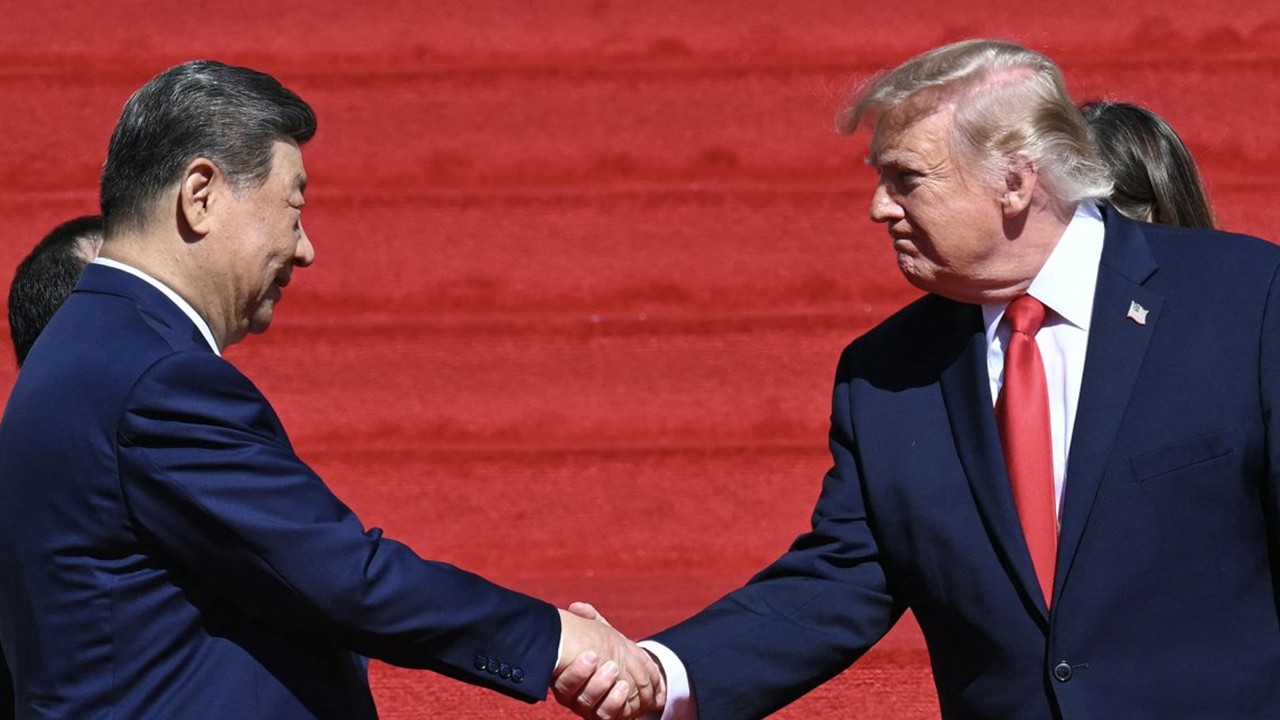
A6: This week’s ASEAN summits and President Trump’s engagements in Manila reflect two core realities. First, ASEAN remains ill-equipped to tackle the region’s pressing security challenges, especially the Myanmar conflict and tensions in the South China Sea, even as it makes real progress on economic issues. And second, the Trump administration’s approach to the region remains focused on bilateral engagements, especially with the Philippines. With President Trump now in Shenzhen for the Asia-Pacific Economic Cooperation (APEC) meetings, and with the G20 summit in Miami on the horizon, Southeast Asian leaders will be watching his engagements with President Xi closely, perhaps more so than anything said or done in Manila.
Lauren Mai is a program manager and research associate with the Southeast Asia Program at the Center for Strategic and International Studies (CSIS) in Washington, D.C. Andreyka Natalegawa is an associate fellow with the Southeast Asia Program at CSIS. Gregory B. Poling is a senior fellow and director of the Southeast Asia Program and the Asia Maritime Transparency Initiative at CSIS. Harrison Prétat is deputy director and fellow with the Asia Maritime Transparency Initiative at CSIS. Monica Sato is an associate fellow with the Asia Maritime Transparency Initiative at CSIS.