

Wang Yi says Shenzhen APEC marks new peak in Asia-Pacific cooperation
China’s Foreign Minister Wang Yi says the 33rd APEC Economic Leaders’ Meeting has opened a new chapter in regional cooperation, capping an intensive month of Chinese diplomatic engagement spanning Southeast Asia, Europe, Central Asia and major international forums.
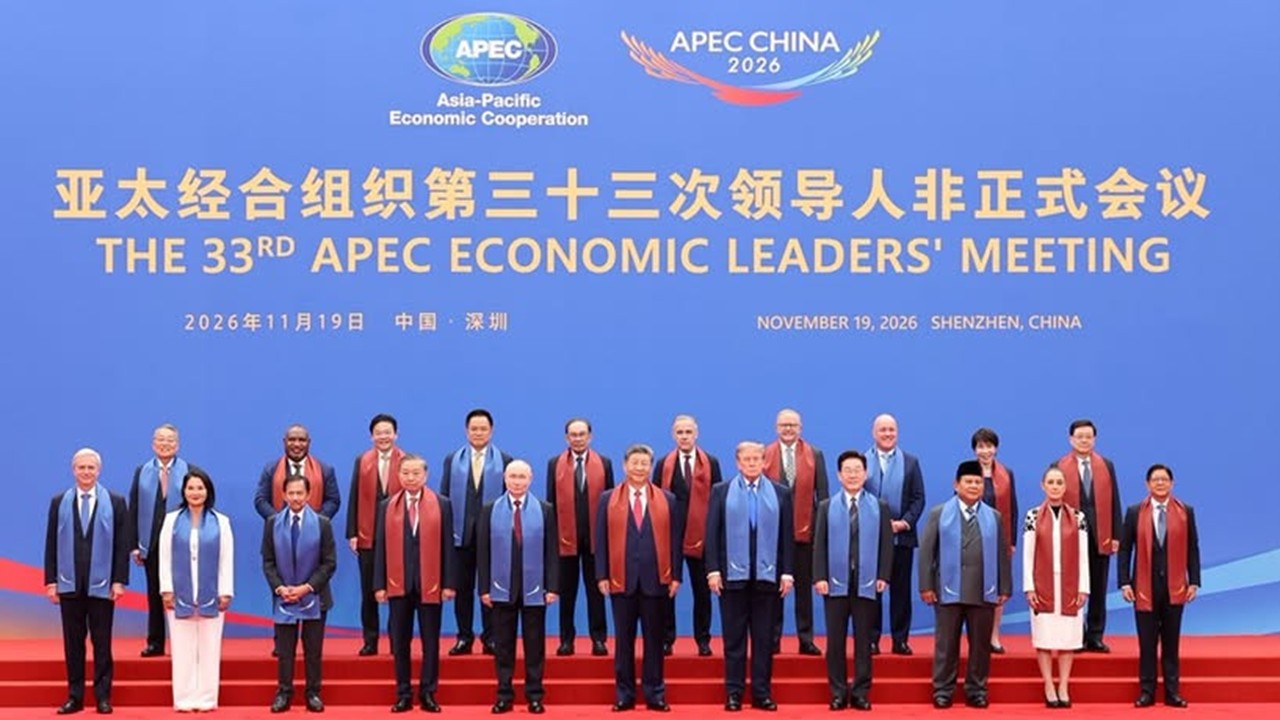
CHINA - has described the 33rd Asia-Pacific Economic Cooperation (APEC) Economic Leaders’ Meeting in Shenzhen as a new milestone in regional economic cooperation, with Foreign Minister Wang Yi saying the gathering marked a new peak in Asia-Pacific engagement.
Speaking at a press conference following the November 18–19 meeting, Wang, who is also a member of the Political Bureau of the Communist Party of China Central Committee, described the summit as the most important diplomatic event hosted by China this year.
The meeting produced the APEC Leaders’ Shenzhen Outlook, which Wang characterised as an ambitious, practical and comprehensive framework and the most significant outcome of China's 2026 APEC chairmanship.
President Xi Jinping used the summit to call for the building of an Asia-Pacific community founded on solidarity and mutual assistance, openness and integration, enterprise and innovation, and inclusive development.
Wang said Xi had outlined both the vision for such a community and the practical steps needed to achieve it, adding that the journey towards an Asia-Pacific community had truly begun in Shenzhen.
The Shenzhen gathering followed an exceptionally active period for Wang, reflecting China's efforts to strengthen diplomatic relationships across several strategic regions.
In October, he attended the seventh summit of the Conference on Interaction and Confidence-Building Measures in Asia (CICA) in Baku, Azerbaijan, as President Xi's special representative. He also undertook a four-country diplomatic tour covering Azerbaijan, Croatia, Montenegro and Bulgaria from October 14 to 20, meeting senior political leaders and foreign ministers to discuss bilateral relations, economic cooperation and international affairs.
His engagements continued in November with the 11th Lancang-Mekong Cooperation Foreign Ministers' Meeting in Beijing on November 3–4, which brought together countries sharing the Mekong River basin. The discussions focused on regional development, connectivity and cooperation, with preparations also advanced for the fifth Lancang-Mekong Cooperation Leaders' Meeting.
Wang also co-chaired the 37th APEC Ministerial Meeting with China's Commerce Minister Wang Wentao on November 3, helping to consolidate the agenda ahead of the leaders' summit.
Other high-level engagements included talks with South Korean Foreign Minister Cho Hyun on November 13, Cuban Foreign Minister Bruno Rodríguez Parrilla on November 14, and Canadian Foreign Minister Anita Anand on November 17. He also held discussions with US Secretary of State Marco Rubio by telephone on November 11.
Taken together, these engagements illustrate the breadth of China's diplomatic priorities, from regional security and economic integration to relations with major Western economies and its neighbours.
The APEC summit therefore represented more than the culmination of China's year-long hosting programme. It provided a platform for Beijing to advance its vision of regional cooperation at a time when trade fragmentation, geopolitical tensions, supply-chain realignment and competition over emerging technologies are reshaping the global economic landscape.
For the Asia-Pacific, the challenge will be translating the Shenzhen Outlook's ambitions into practical cooperation on trade, investment, connectivity, digital development and inclusive growth.