

Germany eyes Bhutan investment opportunities as bilateral trade remains modest
A German business delegation has explored opportunities in renewable energy, carbon markets, green financing and private-sector partnerships in Bhutan, where bilateral merchandise trade remains small but the potential for cooperation is considerably broader.
BHUTAN is seeking to attract greater German business participation in its economy, with renewable energy, carbon markets, green financing and sustainable development emerging as potential areas for deeper cooperation between the two countries.
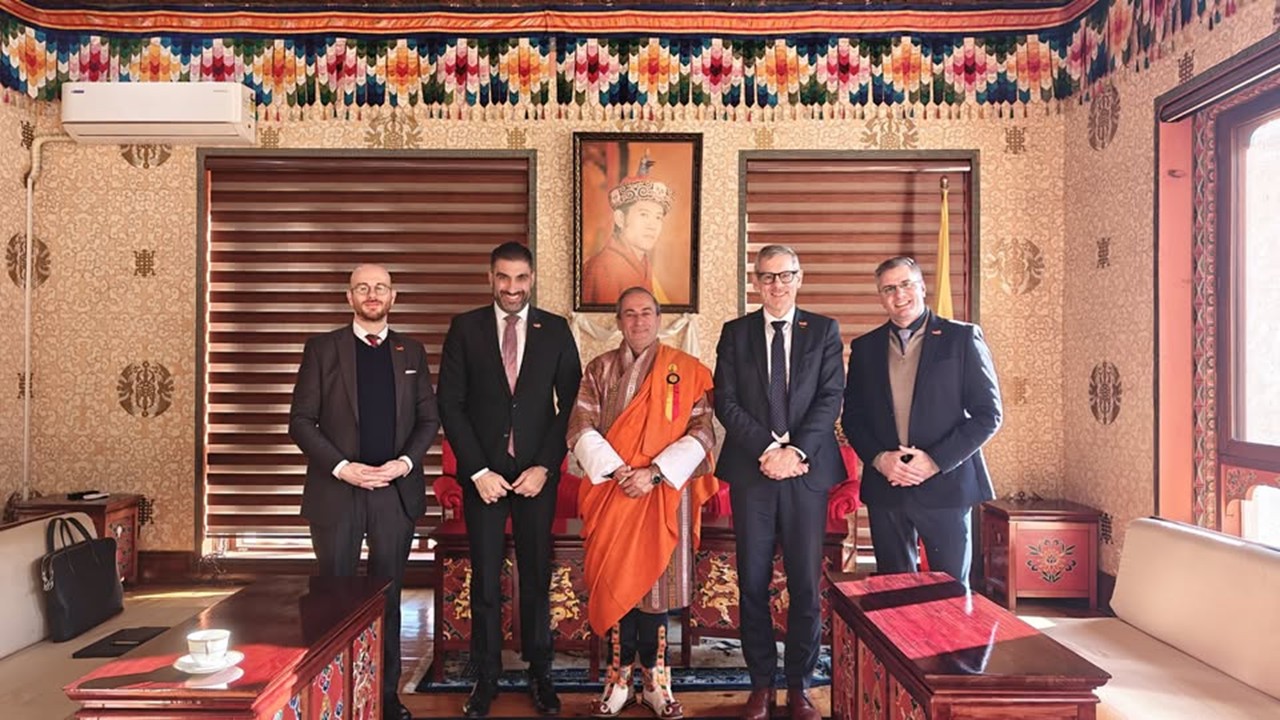
The opportunities were discussed during a meeting between Bhutan's Foreign Minister, Lyonpo D.N. Dhungyel, and a German business delegation led by Alexandre Callegaro, Minister Counsellor and Head of Economic and Global Affairs at the Embassy of the Federal Republic of Germany in New Delhi.
The discussions focused on expanding economic relations beyond traditional diplomatic engagement, with both sides expressing interest in developing partnerships between Bhutanese and German companies.
Dhungyel highlighted emerging investment opportunities in Bhutan and encouraged German businesses to participate more actively in the country's development priorities. The delegation, in turn, expressed interest in exploring investment prospects and strengthening commercial partnerships.
The relatively small scale of existing bilateral trade highlights the potential for expansion. Bhutan's reported merchandise imports from Germany amounted to approximately US$6.19 million in 2025, while its exports to Germany were about US$169,580, putting combined trade at approximately US$6.36 million, according to UN Comtrade data.
German-reported export figures, however, put shipments to Bhutan at approximately US$3.7 million in 2025, illustrating differences between the two countries' trade reporting systems.
The limited trade relationship suggests that the more significant opportunity may lie in investment, technology transfer and services rather than simply increasing conventional merchandise exchanges.
Renewable energy is one of the most promising areas. Bhutan has built much of its economic development around hydropower, which is also an important source of export earnings. German companies could potentially contribute expertise in hydropower engineering, energy efficiency, transmission infrastructure, grid management and energy storage.
Carbon markets and green financing offer another potential avenue. Bhutan's environmental commitments and forest resources provide a basis for cooperation in carbon measurement, verification, sustainable finance and climate-related investment.
For German businesses, Bhutan could offer opportunities to participate in a developing green economy while supporting projects aligned with Europe's growing focus on climate objectives and sustainable supply chains.
The meeting also addressed the importance of air connectivity between Bhutan and Europe, with Dhungyel identifying Germany as a key European partner in strengthening aviation links.
Improved connectivity could support tourism, business travel and investment exchanges, particularly as Bhutan seeks to develop higher-value tourism and attract international commercial partnerships.
Both sides discussed practical ways to strengthen business-to-business engagement, including business exchanges, participation in trade fairs and sustained interaction between their respective business communities.
The German delegation indicated that it would share observations and practical recommendations following its visit, potentially providing a basis for identifying specific projects and future commercial partnerships.
For Bhutan, the engagement represents an opportunity to diversify its international economic relationships and attract European expertise into strategic sectors. For Germany, it offers a potential foothold in a market where the commercial relationship remains relatively underdeveloped but where renewable energy, environmental services and sustainable investment could provide longer-term opportunities.