

Myanmar: Five years of ASEAN diplomacy, but what is the plan again?
This distinction matters. ASEAN has not expelled Myanmar from the organisation, nor has it prohibited the country from participating in all regional meetings. Its restrictions apply to the highest political gatherings, while participation in other sectoral ministerial mechanisms remains open.
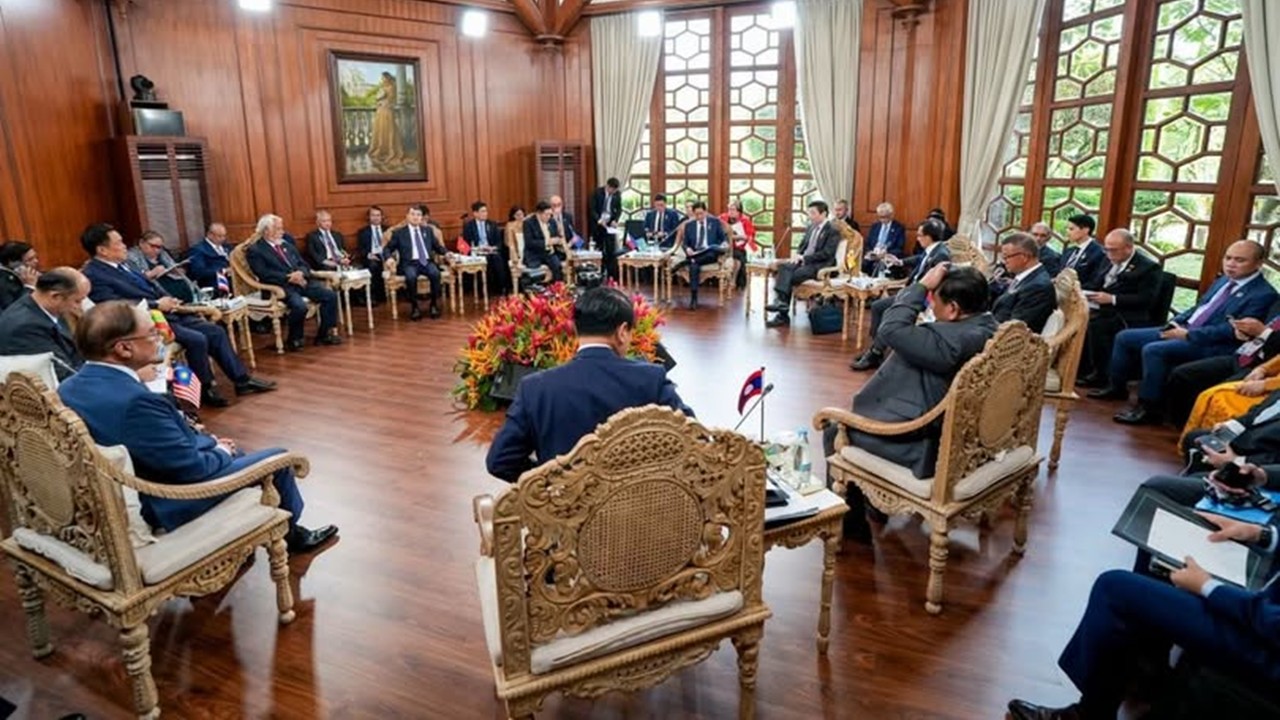
Opinion | MANILA: ASEAN leaders have once again told Myanmar's military authorities what they want them to hear. Stop the violence, allow humanitarian assistance, engage in meaningful dialogue and implement the Five-Point Consensus.
They have condemned attacks against civilians, expressed deep concern over the humanitarian situation and maintained the restriction preventing Myanmar's military leadership from attending ASEAN summits and foreign ministers' meetings.
But after five years of conflict, countless diplomatic meetings and repeated declarations of concern, the question is no longer whether ASEAN understands the problem. It is whether the regional organisation has the political will, influence and imagination to do anything substantially different about it.
The outcome of the 49th ASEAN Summit in Manila on November 15 is difficult to regard as a breakthrough. It is, at best, another reaffirmation of a position that has yet to deliver the political settlement ASEAN originally promised to pursue.
Myanmar was represented at the summit by Han Win Aung, Director-General of the ASEAN Affairs Department in its Foreign Ministry. He was permitted to attend in a non-political capacity, while the country's military leadership and senior political representatives remained excluded from the summit and foreign ministers' meetings.
This distinction matters. ASEAN has not expelled Myanmar from the organisation, nor has it prohibited the country from participating in all regional meetings. Its restrictions apply to the highest political gatherings, while participation in other sectoral ministerial mechanisms remains open.
The policy dates back to October 2021, following the military coup in February that year and the failure of the military authorities to make meaningful progress on ASEAN's peace initiative. It was a significant diplomatic decision for an organisation that traditionally operates through consensus, non-interference and engagement.
The Five-Point Consensus, agreed by ASEAN leaders in April 2021, was supposed to provide a pathway out of the crisis. It called for an immediate cessation of violence, constructive dialogue among all parties, mediation by an ASEAN-appointed special envoy, humanitarian assistance and access for the envoy to meet all relevant stakeholders.
It was a reasonable starting point. But a starting point is not a strategy, and five years later ASEAN is still asking for essentially the same things.
The Manila declaration is particularly telling because ASEAN leaders themselves acknowledged insufficient progress in implementing the consensus. They condemned violence against civilians and civilian infrastructure and called on all parties, particularly the armed forces, security forces and armed groups, to de-escalate.
Yet the response remains largely familiar: reaffirm the consensus, urge restraint, provide humanitarian assistance, encourage dialogue and continue diplomatic engagement.
What is missing is a credible mechanism to establish what constitutes progress, how it will be measured, who will be held accountable and what happens if the demands are ignored.
There is also a danger that the language of phased engagement could eventually become a diplomatic route towards normalisation without sufficient political change on the ground.
ASEAN has now said that Myanmar's full political representation may be gradually restored if there is sustained and concrete progress in implementing the Five-Point Consensus. That condition is important, but it raises another question: who determines whether the progress is sufficient, and against what independently verifiable criteria?
The concern is not that ASEAN should permanently shut Myanmar out. Myanmar is an integral part of Southeast Asia, and its people should not be isolated from the regional community because of the actions of their rulers. The concern is that political rehabilitation of the authorities must not be confused with reconciliation within the country.
The distinction between the people of Myanmar and the military leadership is fundamental to any credible ASEAN approach.
Philippine President Ferdinand Marcos Jr appeared to recognise this when he reminded leaders that the crisis was ultimately about displaced families, communities requiring humanitarian assistance and young people whose futures had been interrupted by conflict.
He asked what more ASEAN could do, five years into the crisis, and called for practical and forward-looking discussions.
That was perhaps the most important question to emerge from the summit.
Philippine Foreign Secretary Ma. Theresa Lazaro, serving as ASEAN's 2026 ministerial chair and Special Envoy on Myanmar, also made clear that there was no easing of the existing approach. Thailand, meanwhile, has been among the members advocating renewed engagement, with Foreign Minister Sihasak Phuangketkeow acknowledging Myanmar's desire to return to ASEAN's political meetings.
These positions illustrate the difficulty of maintaining a common regional approach. Some members favour stronger engagement, while others remain concerned that allowing the military leadership back into high-level meetings without meaningful progress would undermine the credibility of ASEAN's own decisions.
The Manila outcome attempts to accommodate both positions. It maintains the political restrictions but opens the door to more flexible, phased engagement. Individual ASEAN members are encouraged to engage relevant stakeholders in Myanmar, in consultation with the ASEAN chair.
There are also some tangible developments worth acknowledging. The Philippines' Special Envoy has engaged different Myanmar stakeholders, including ethnic armed organisations and representatives of the National Solidarity and Peacemaking Negotiation Committee. ASEAN also welcomed a humanitarian monitoring mission in October that began assistance to more than 11,000 households, including in four townships not previously reached by the AHA Centre.
These efforts matter. Humanitarian assistance should not be held hostage to political negotiations, and every successful delivery to a community in need is worthwhile.
But humanitarian relief cannot become a substitute for a political solution.
The other concern is ASEAN's continued reliance on the concept of a Myanmar-owned and Myanmar-led resolution. In principle, this is appropriate. No lasting settlement can be imposed from outside. But the process must also be genuinely inclusive, involving the different political, ethnic and armed stakeholders whose participation is necessary for peace.
A process that is effectively dependent on the willingness of the military authorities to cooperate cannot be the only route forward, particularly when the authorities themselves are a party to the conflict.
ASEAN needs to demonstrate that its engagement extends beyond the military leadership and that the voices of the country's wider political and ethnic communities are not simply being acknowledged in diplomatic documents.
The decision to explore a longer-term ASEAN Special Envoy on Myanmar is a potentially useful development. Continuity matters in a crisis that has outlasted several ASEAN chairmanships. Each new chair should not have to rebuild relationships, repeat introductory meetings and start diplomatic efforts from scratch.
However, continuity without a clear mandate, measurable objectives and political backing will simply institutionalise the same lack of progress.
There is also a wider regional cost to allowing the situation to continue indefinitely. Conflict in Myanmar affects neighbouring countries through refugee movements, cross-border insecurity, trafficking, drug networks and organised criminal operations. It also undermines ASEAN's credibility as a regional organisation capable of managing major political and security crises within its own neighbourhood.
The issue is therefore not simply about Myanmar's internal affairs. It is about whether ASEAN can translate its stated commitment to regional peace and stability into something more than carefully negotiated language.
The organisation has repeatedly demonstrated that it can reach consensus on the principles of a solution. What it has not demonstrated is an effective means of bringing the parties closer to one.
The Manila summit should have been an opportunity to ask whether the Five-Point Consensus, in its present form, remains adequate after five years of limited progress. Instead, leaders have reaffirmed it and introduced further language around calibrated engagement.
There is nothing inherently wrong with diplomacy, patience or keeping channels open. But patience must not become an excuse for inaction, and engagement must not become an end in itself.
ASEAN does not need to abandon the Five-Point Consensus. It needs to explain how it intends to make it work, establish clear benchmarks, maintain sustained engagement with all relevant stakeholders and demonstrate that the absence of progress will have consequences for the political relationship with Myanmar's authorities.
Above all, it needs to remember that the credibility of the Five-Point Consensus should be measured not by how many times ASEAN leaders reaffirm it, but by whether it helps stop the violence, deliver assistance and create the conditions for an inclusive political settlement.
Five years on, the people of Myanmar deserve more than another summit declaration.