

Agentic AI adoption outpaces enterprise readiness
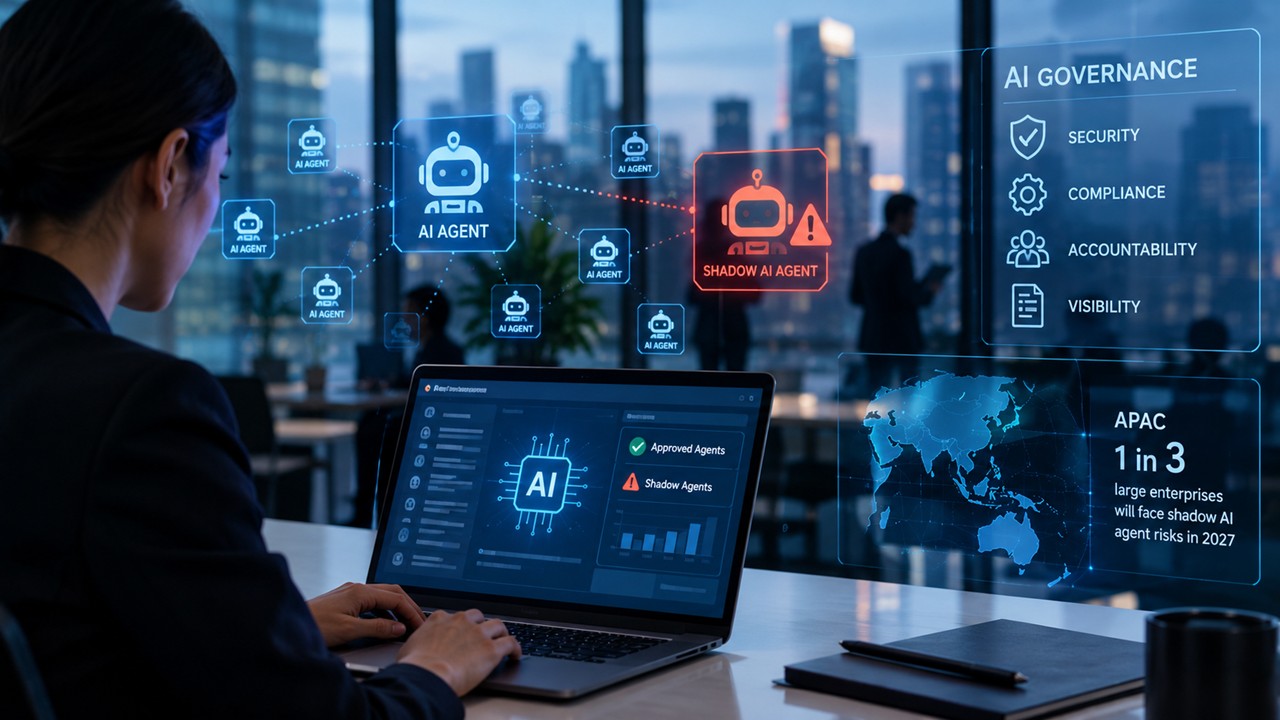
While 82% of executives believe their organisations can keep pace with governing AI agents, only 26% say they are well prepared to resolve conflicts across agents, systems and automated workflows, highlighting a growing challenge as businesses move towards autonomous AI.

SINGAPORE — Enterprises are moving towards a new era of artificial intelligence in which AI agents can coordinate tasks, interact with business systems and execute complex workflows, but new research suggests many organisations lack the operational controls needed to manage these systems safely at scale.
A report by OutSystems, developed in collaboration with CIO Dive and KPMG, found that 82% of executives believe their organisations can keep pace with governing, integrating and monitoring AI agents as they enter production. However, only 26% said they were well prepared to resolve conflicts between agents, systems and automated workflows.
The findings point to a gap between executive confidence and practical readiness as companies move beyond AI experimentation towards wider deployment across business operations.
The report, Engineering Business Outcomes: The Shift to Agentic Systems, is based on an online survey of 858 executives conducted by CIO Dive in June 2026.
Over the next five years, 71% of respondents expect applications to coordinate work across systems, teams and business processes, or support more complex, multi-step workflows.
The shift will require businesses to look beyond deploying individual AI agents and develop ways to manage interactions between multiple agents, enterprise applications, data sources and third-party tools.
Governance remains a key challenge
Although 83% of respondents said their organisations rely on existing IT, security or compliance processes, specialised reviews, or centralised policies and monitoring to oversee AI agents, only 5% reported having automated controls, audit trails and formal human review points in place.
This suggests that many organisations continue to depend on human-led procedures rather than automated safeguards that operate continuously as AI agents execute tasks.
Tiago Azevedo, chief information officer of OutSystems, said the gap between confidence in governance and the ability to resolve conflicts was where much of the work remained.
He argued that safety needed to be built into the platforms on which AI agents operate, rather than relying on reviews conducted after deployment.
Michael Harper, managing director at KPMG, similarly highlighted the need to embed assurance into agentic systems from the outset, including policy-based controls and safeguards that operate while workflows are running.
Integration and reliability take priority
As businesses develop more complex AI systems, integration with existing technology infrastructure is emerging as a priority.
The survey found that 74% of executives prioritised integration with existing applications and systems, while 63% highlighted the need to coordinate AI agents across different systems. Another 62% valued the ability to switch between AI models, vendors and platforms over time.
Reliability across entire workflows is also becoming central to enterprise adoption. Some 81% of respondents said testing, evaluating and validating AI agent behaviour was very or extremely important when selecting AI platforms or tools.
Meanwhile, 35% identified data consistency and context sharing as a major challenge in coordinating agents, underscoring the importance of ensuring AI systems operate with reliable enterprise data and an understanding of business processes.
Business impact remains uneven
The research found that companies are increasingly assessing AI adoption through operational outcomes rather than deployment alone.
Error reduction was the leading measure of impact, cited by 64% of respondents, followed by compliance and risk reduction, employee productivity and cost reduction.
However, only 12% said agentic AI had accelerated the launch of new products, services or customer experiences.
The findings suggest that while businesses are beginning to pursue operational improvements, translating agentic AI into broader business transformation remains a work in progress.
For enterprise leaders, the challenge is no longer simply enabling AI agents to perform tasks. It is ensuring they can operate across interconnected systems without creating conflicting actions, compromising security or undermining business controls.
As organisations move towards more autonomous workflows, the ability to govern and coordinate AI agents may prove as important as the technology's ability to execute them.