


Desk-Worker Reality: How Stretching Can Combat the Hidden Damage of Prolonged Sitting
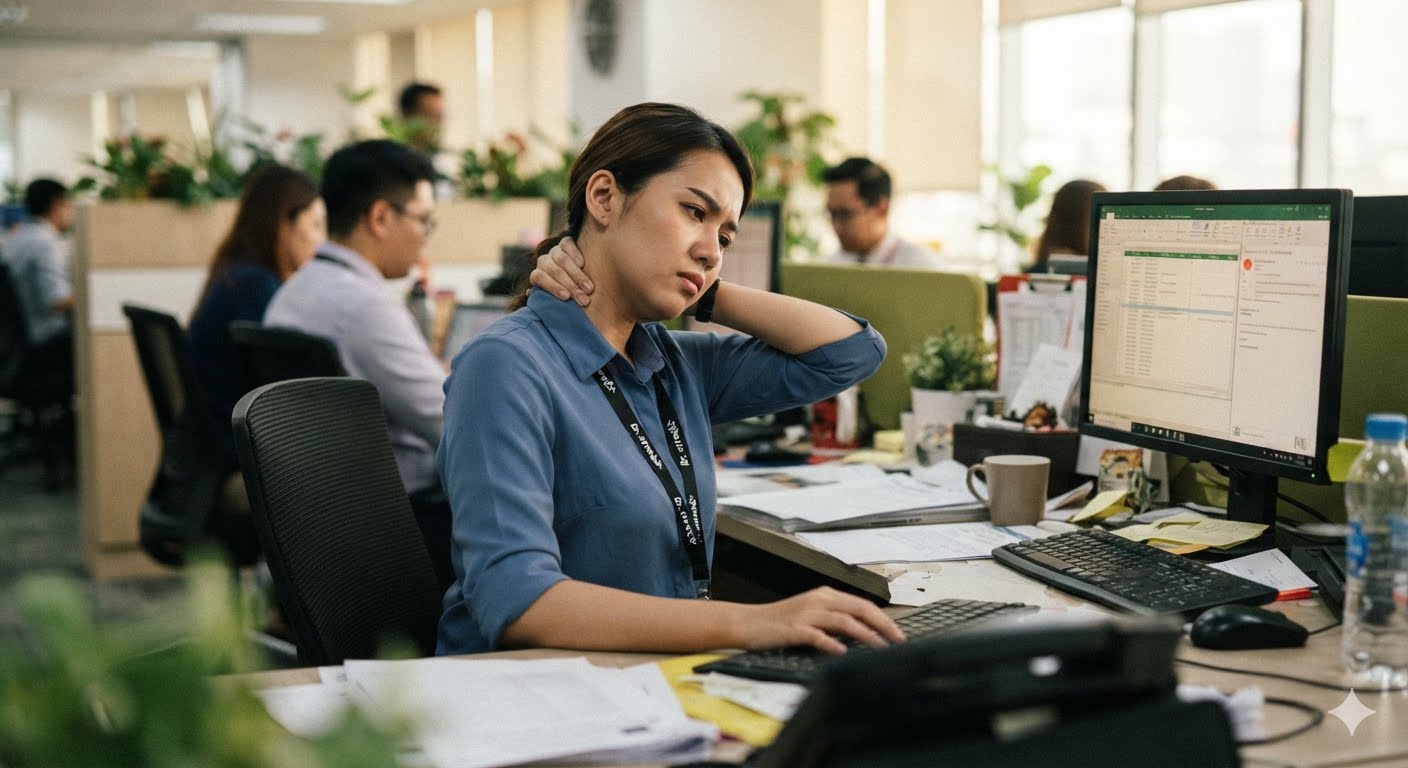
For many Malaysians, a typical workday looks like this: hours at a desk, eyes fixed on a screen, shoulders slowly creeping upward as deadlines pile on. By the time the workday ends, the back feels stiff, the neck won’t turn properly, and there’s a dull ache that somehow follows you home. It’s so common that most people brush it off as “normal office life” but the reality is, prolonged sitting is quietly doing more damage than we realise.
Studies show that office workers spend an average of 9 to 10 hours a day sitting, and research published in The Lancet links prolonged sitting to increased risks of back pain, poor circulation, and musculoskeletal issues. In fact, one regional workplace health survey found that nearly 70% of desk workers experience recurring neck or shoulder pain. The problem isn’t just sitting, it's staying in the same position for too long, day after day.
“At Dr.stretch, we see a lot of clients who think their pain comes from exercise or sleeping wrong,” says Aniez at Dr.stretch Malaysia. “But once we assess their movement, it’s clear that long hours at the desk are the main culprit. Tight hips, shortened muscles, and weak core support all add up.”
When you sit for extended periods, certain muscles especially the hip flexors, chest, and neck become shortened and tight, while others weaken. This imbalance pulls the body out of alignment, leading to slouched posture, reduced blood flow, and constant tension. According to the American Chiropractic Association, poor posture from prolonged sitting can increase spinal pressure by up to 40% compared to standing.
Stretching plays a crucial role in reversing this damage, especially when it’s done actively and with guidance. Active stretching helps lengthen shortened muscles while re-engaging underused ones, restoring balance and improving circulation. Research from the Journal of Bodywork and Movement Therapies shows that regular assisted stretching can reduce lower back pain by up to 35% and significantly improve posture awareness in office workers.
“Clients are often surprised by how much better they feel after just one session,” shares Efrah, a Dr.stretch therapist. “We hear comments like, ‘I didn’t realise my shoulders could sit this low,’ or ‘My back feels lighter.’ That’s usually when they understand how much tension they’ve been carrying.”
Beyond pain relief, improved blood flow is another major benefit. Sitting for long periods slows circulation, especially in the lower body, which can lead to fatigue and stiffness. Stretching encourages better blood flow, delivering oxygen to muscles and helping the body recover faster. Many clients report feeling more energised and focused after sessions, even on busy workdays.
For desk workers looking to address these issues at the root, Dr.stretch Malaysia offers targeted core-balance and posture-improvement stretch sessions designed specifically for office-related strain. These sessions focus on stabilising the core, opening up tight areas, and retraining the body to maintain better posture throughout the day.
“Sitting doesn’t have to ruin your body,” Azri explains. “But you do need to undo what hours at a desk are doing to you. Stretching is maintenance just like servicing a car.”
If your workday leaves you stiff, sore, or constantly cracking your neck for relief, it may be time to try something different. Investing in your mobility now could mean fewer aches, better posture, and a body that actually supports your career, not one that suffers because of it.