

Indonesia secures major EU market access deal as 90.4% of export tariff lines move towards zero
Indonesia and the European Union have signed a landmark Comprehensive Economic Partnership Agreement after more than a decade of negotiations, opening wider access to a 450-million-consumer market. Palm oil, textiles, footwear and other labour-intensive industries stand to benefit, while the agreement also creates new investment opportunities in electric vehicles, renewable energy and advanced manufacturing.
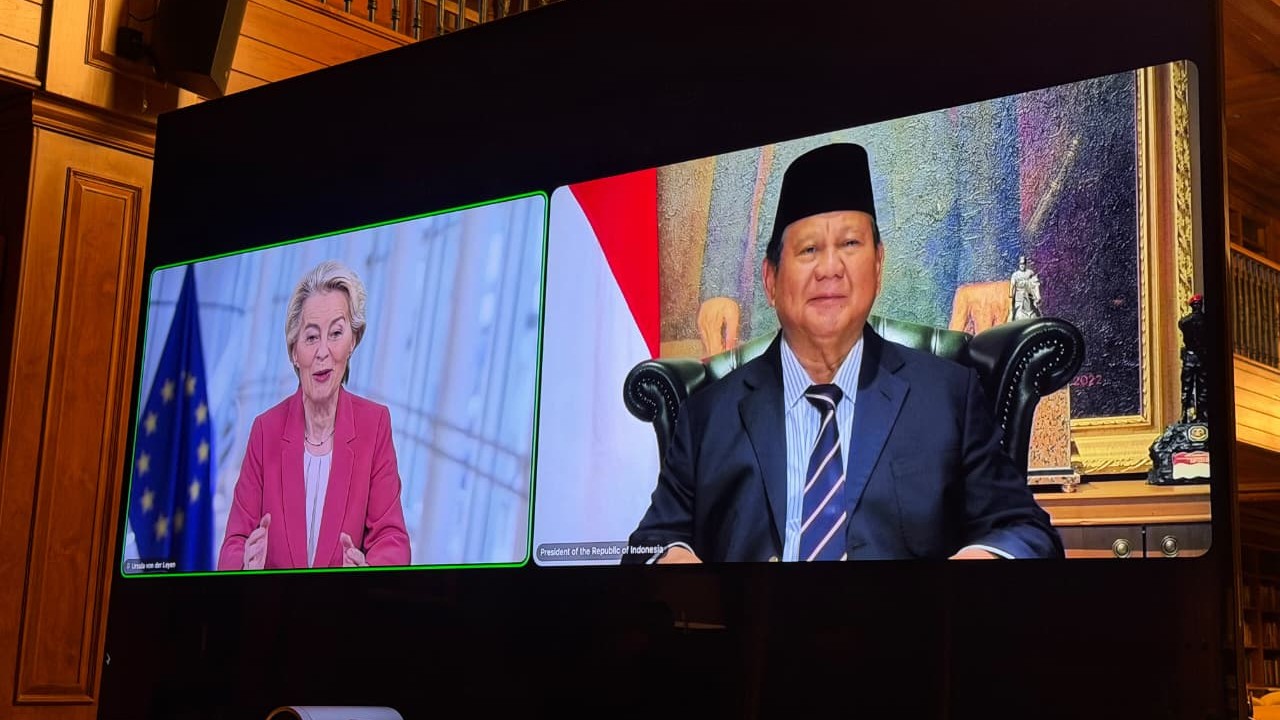
JAKARTA – Indonesia has secured a major trade breakthrough with the European Union after signing the Indonesia–European Union Comprehensive Economic Partnership Agreement (IEU-CEPA) and a separate Investment Protection Agreement (IPA), paving the way for substantial tariff reductions and expanded investment flows between the two economies.
The agreements were signed at the European Commission headquarters in Brussels on Saturday, November 21, bringing to a close more than a decade of negotiations between Southeast Asia's largest economy and the 27-member European bloc.
Under the IEU-CEPA, 90.4 per cent of EU tariff lines applicable to Indonesian exports will receive immediate zero-tariff treatment once the agreement enters into force. A further 7.92 per cent will be liberalised progressively over three to 15 years, bringing overall tariff liberalisation to 98.35 per cent of EU tariff lines, according to Indonesia's Ministry of Foreign Affairs.
The Indonesian government is targeting January 1, 2027 for implementation, subject to ratification procedures on both sides.
For Indonesian exporters, the timing is particularly important as the European Union's Generalised Scheme of Preferences (GSP) facility for Indonesia is due to expire at the end of 2026. The new agreement is intended to provide continuity of preferential market access while establishing a longer-term framework for trade.
Among the sectors expected to benefit are palm oil and its derivatives, textiles, garments, leather footwear, sneakers and sports shoes. These industries have historically faced import duties that could reduce their competitiveness against suppliers enjoying preferential access to European markets.
Indonesian Coordinating Minister for Economic Affairs Airlangga Hartarto said the agreement would improve market access for labour-intensive industries, with some Indonesian products previously facing European import duties of between 7 and 12 per cent.
The Indonesian government also expects the agreement to strengthen the country's attractiveness as an investment destination, particularly in electronics, electric vehicles, renewable energy, pharmaceuticals, footwear and downstream palm oil processing.
European Union investment in Indonesia reached US$14.8 billion between 2021 and 2026, with capital flowing into chemicals, pharmaceuticals, food and beverages and power generation, according to the Indonesian government.
The accompanying Investment Protection Agreement is designed to provide greater legal certainty for investors, establish safeguards against discriminatory treatment and strengthen confidence in long-term investment decisions.
The trade relationship already has a substantial economic foundation. Bilateral trade between Indonesia and the EU is valued at approximately US$32 billion, while the European Union represents a market of around 450 million consumers and a combined gross domestic product of approximately US$19.4 trillion.
The European Commission, meanwhile, expects its exports to Indonesia to benefit from the removal of import duties on 98.5 per cent of tariff lines covering EU goods entering the Indonesian market. The agreement is also projected to save European exporters more than €600 million annually in customs duties.
This makes the agreement a two-way market-opening exercise rather than simply a preferential export arrangement for Indonesia.
For the palm oil industry, the agreement carries particular significance. Indonesia is the world's largest palm oil producer, and improved tariff access could strengthen the competitiveness of its crude palm oil, processed palm products and downstream derivatives in Europe.
However, market access will not automatically translate into higher exports. Indonesian producers will still need to meet European requirements relating to sustainability, traceability, environmental protection and supply-chain transparency.
The European Commission has confirmed that the agreement includes a dedicated palm oil protocol alongside commitments on climate, environmental protection and workers' rights. It also provides for cooperation on sustainability and regulatory issues, making implementation and compliance important considerations for the industry.
Beyond traditional commodity trade, the agreement reflects a broader effort to integrate Indonesia into European industrial and technology supply chains. Cooperation in critical raw materials, electric vehicles, electronics and renewable energy could provide opportunities for technology transfer, industrial investment and employment creation.
The European Commission estimates that EU exports to Indonesia could increase by almost 40 per cent over 15 years, while Indonesian exports of goods and services to the EU are expected to grow by more than 14 per cent over the same period.
The agreements must now complete the respective ratification procedures before entering into force, with both sides targeting early 2027.
For Indonesia, the challenge will be converting improved market access into stronger domestic manufacturing, higher-value exports and sustainable investment. For European companies, the agreement offers a more predictable framework for accessing one of Southeast Asia's largest and fastest-developing economies.
The signing marks a significant milestone in economic relations between the two sides, but its real commercial value will ultimately be measured by how effectively businesses use the new opportunities.
Sources: Indonesia's Presidential Secretariat; Indonesian Ministry of Foreign Affairs; Indonesian Coordinating Ministry for Economic Affairs; European Commission, November 21–22, 2026.