

Beyond the Perfect Score: Why Elite Asian Applicants Are Being Overlooked by Ivy League Admissions
Speaking during a four-city Asia roadshow organised by True North Education across Bangkok, Kuala Lumpur, Hong Kong and Shanghai, he argued that the rise of generative artificial intelligence has accelerated an already growing problem.
For decades, the formula seemed simple. Study harder, achieve perfect grades, excel in competitions, build an impressive list of extracurricular activities and the doors to the world's most prestigious universities would eventually open.
That formula no longer works.
Across Asia, families continue to invest enormous sums in international schools, private tutors, Olympiads, music qualifications and leadership programmes, believing academic perfection remains the passport to the Ivy League. Yet admission rates at institutions such as Harvard, Yale, Princeton and Columbia remain stubbornly low, even as the number of near-perfect applicants continues to rise.
The problem is no longer a lack of achievement.
It is a lack of distinction.
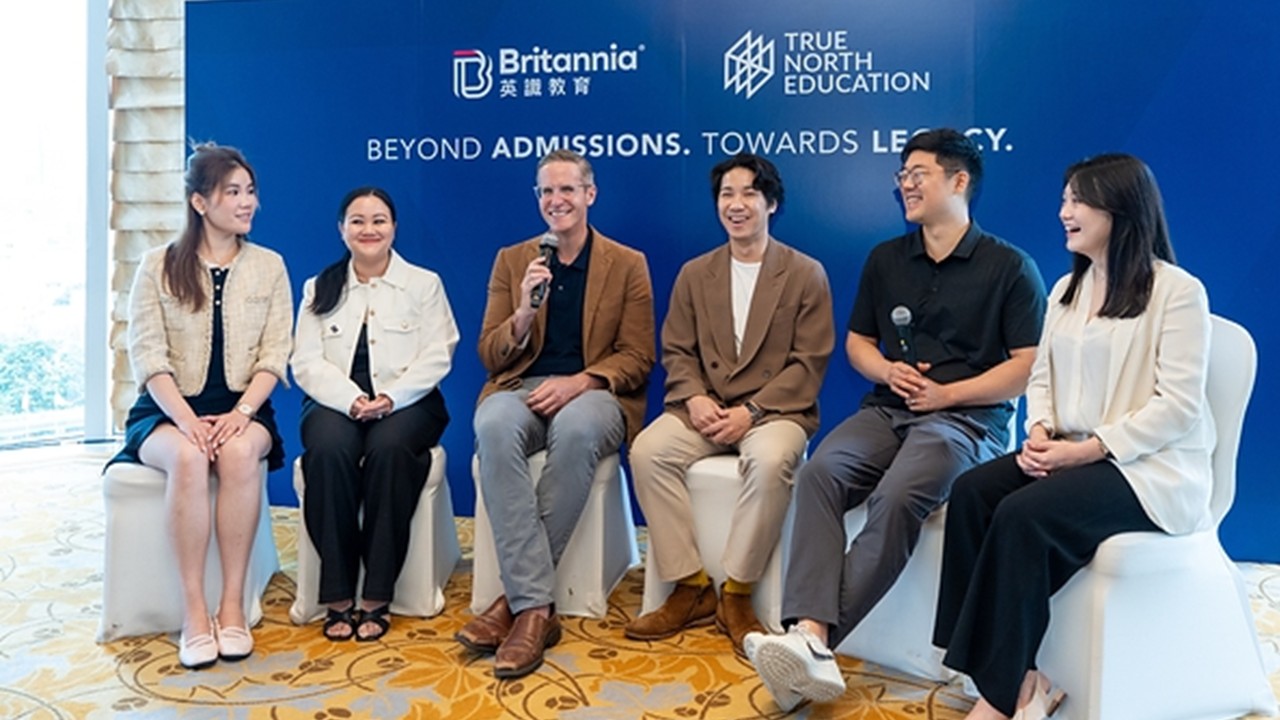
Former Ivy League admissions officer Topher Bordeau, who spent two decades reviewing more than 15,000 applications, believes the admissions process has entered a new phase. Speaking during a four-city Asia roadshow organised by True North Education across Bangkok, Kuala Lumpur, Hong Kong and Shanghai, he argued that the rise of generative artificial intelligence has accelerated an already growing problem.
Applications are becoming increasingly indistinguishable.
According to Bordeau, many applicants now rely heavily on AI-assisted essays, professionally engineered personal branding and highly structured activity portfolios. The result is a generation of candidates with exceptional academic credentials whose applications often sound remarkably similar.
Admissions officers, he suggests, are no longer searching for the perfect applicant.
They are searching for the authentic one.
This represents a significant cultural shift, particularly for many Asian education systems where standardised testing, measurable achievement and predictable pathways have traditionally been rewarded.
The irony is striking.
Students spend years eliminating weaknesses, polishing every sentence and perfecting every achievement, only to discover that perfection itself has become a disadvantage.
As Bordeau observed, admissions officers can often recognise AI-generated writing almost immediately. Essays that attempt to solve global problems through sweeping narratives frequently fail to resonate because they lack personal insight. By contrast, applicants who write passionately about a highly specific interest, whether battery chemistry, marine biology or community volunteering, often leave a stronger impression because their experiences feel genuine.
Authenticity has become a competitive advantage.
Another overlooked element is the recommendation letter.
Edward Lee, Managing Partner of True North Education, argues that many Asian students underestimate how influential these letters can be. Teachers under heavy workloads frequently rely on standard templates filled with generic praise. Admissions officers, who may read hundreds of recommendations each week, quickly learn to distinguish between routine endorsements and those that genuinely capture a student's character.
Strong recommendations are rarely produced at the last minute.
They are earned through years of meaningful engagement between students and teachers.
Perhaps the biggest challenge, however, lies with parents.
Across much of Asia, university admissions remain deeply intertwined with social mobility. Families often see elite universities as validation that years of financial sacrifice have been worthwhile. This has created an educational arms race where every competition, leadership camp and overseas internship becomes another item to add to an increasingly crowded résumé.
Samuel Chan, Chief Executive Officer of True North Education, believes many families continue to engineer children's lives around what they think admissions officers want to see rather than encouraging genuine curiosity.
It is an understandable strategy.
But it may now be producing precisely the opposite effect.
Research projects assembled purely for university applications, internships secured through family networks and carefully choreographed volunteer programmes increasingly resemble one another. Admissions officers have become adept at recognising these patterns.
The question is no longer whether a student has participated.
It is whether the experience genuinely changed them.
This shift is particularly relevant in Southeast Asia.
Students from Malaysia, Thailand and Singapore often enjoy excellent international school opportunities, bilingual education and broad international exposure. Yet these advantages can also create a tendency to follow familiar pathways rather than drawing upon the unique cultural experiences that distinguish the region.
A student who can explain how growing up in Kuala Lumpur, Penang or Bangkok shaped their worldview may ultimately present a more memorable application than someone with another catalogue of international competitions.
The same lesson applies in mainland China, where competition for both domestic and overseas university places has intensified dramatically. Increasingly, employers are also looking beyond prestigious degrees to identify graduates who demonstrate originality, resilience and independent thinking.
In other words, the admissions process is beginning to resemble the workplace itself.
The broader lesson extends well beyond Ivy League admissions.
Artificial intelligence is making it easier than ever to produce flawless writing, polished presentations and perfectly structured applications. As these become commonplace, the qualities that cannot easily be automated—curiosity, empathy, resilience, humour and authentic experience—become more valuable.
Ironically, the future may belong not to the student with the perfect score, but to the one with the imperfect story that only they could tell.
Because in an era where almost everyone looks exceptional on paper, authenticity may be the rarest qualification of all.