

Türkiye's Growing Importance in Managing Russia
From brokering the Black Sea Grain Initiative to maintaining strategic energy and diplomatic ties with Moscow, Ankara has established itself as an indispensable interlocutor with Russia. Following Trump's midterm setback and the Democrats' capture of Congress, Turkey's ability to keep channels open could become increasingly important.
As Washington faces a more complicated domestic political landscape following the US midterm elections, Turkey's ability to maintain working relations with Moscow while remaining a NATO member is becoming increasingly important. From Black Sea security and food supplies to energy, trade and regional diplomacy, Ankara occupies a position few other countries can replicate.
Turkey's importance in managing relations with Russia extends well beyond its membership of NATO or its geographical position between Europe and Asia. It has developed a distinctive diplomatic role as one of the few countries capable of maintaining meaningful political, economic and security engagement with Moscow while continuing to work closely with Western governments.
That role could become even more consequential as the United States enters a period of greater domestic political uncertainty following the November 2026 midterm elections. With President Donald Trump potentially facing a more hostile Congress, and an administration increasingly required to devote political attention to domestic priorities, Washington may find it more difficult to sustain the same level of diplomatic focus on multiple international crises.
This does not mean the United States will withdraw from international affairs. Rather, it raises the value of capable regional partners that can maintain channels of communication, facilitate negotiations and help prevent strategic disagreements from escalating into wider confrontations.
Turkey is particularly well placed to fulfil that role.
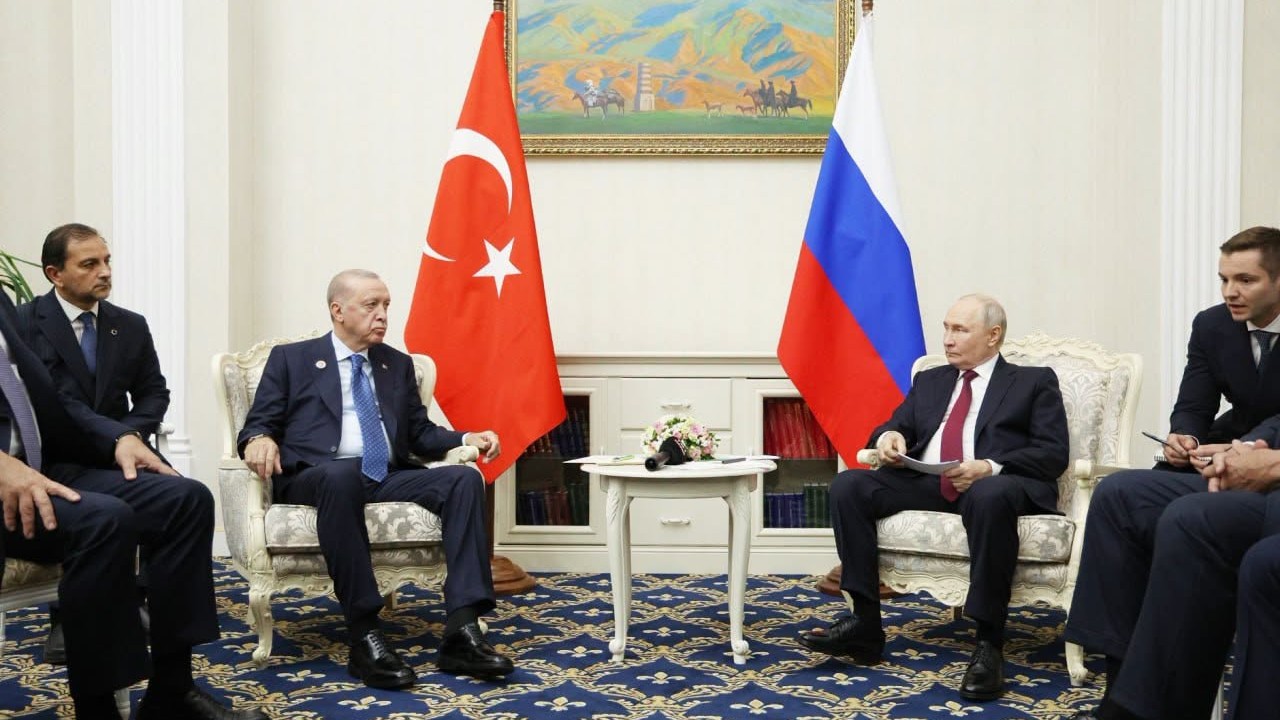
The significance of this relationship was underscored during Russian President Vladimir Putin's September 1 meeting with Turkish President Recep Tayyip Erdoğan, following the Shanghai Cooperation Organisation summit. Putin described Turkey as one of Russia's most privileged partners in international relations and the economy, highlighting the importance of direct leadership engagement in sustaining bilateral cooperation.
That assessment is particularly revealing because the relationship is not built exclusively around the Ukraine conflict. It encompasses long-term energy cooperation, infrastructure investment, tourism, agriculture and trade, creating a network of shared interests that gives both governments a strong incentive to maintain regular dialogue even when their positions diverge on international issues.
A central example is the Akkuyu Nuclear Power Plant, being developed with Russian involvement on Turkey's Mediterranean coast. During the September meeting, Putin said construction was approaching the commissioning of its first generating unit, with discussions on additional generating units and future power plants also envisaged. The project represents a substantial long-term strategic commitment, linking Russia to Turkey's energy infrastructure and giving Ankara another important dimension to its relationship with Moscow.
Energy cooperation also extends to the TurkStream natural gas pipeline, which transports Russian gas to Turkey and European markets. These projects illustrate why the bilateral relationship cannot be understood simply through the prism of the Ukraine war. Russia remains an important energy supplier, while Turkey's geographical position and infrastructure make it a significant transit and distribution country.
For Ankara, maintaining these links provides economic and strategic advantages. For Moscow, Turkey offers access to an important regional market, a major tourism destination for Russian citizens and a diplomatic partner that remains outside the Western sanctions framework. The relationship is nevertheless pragmatic rather than an alliance: both countries have competing interests in several regional theatres, including Syria and the South Caucasus.
The importance of this pragmatic engagement became especially apparent following Russia's full-scale invasion of Ukraine in February 2022. While Turkey condemned violations of Ukraine's territorial integrity, supplied military equipment to Kyiv and supported its sovereignty, it also refused to sever relations with Moscow or join the broad Western sanctions campaign.
This combination of positions gave Erdoğan diplomatic room to engage both sides at a time when communication between Russia and Western governments had become increasingly difficult.
Turkey's geographical position was equally important. Controlling the Bosphorus and Dardanelles, which connect the Black Sea to the Mediterranean, Ankara holds a central role in the movement of naval vessels and commercial shipping between the two bodies of water. By invoking the 1936 Montreux Convention after the invasion, Turkey restricted the passage of warships belonging to the belligerents, limiting the potential for the conflict to expand through naval reinforcements.
Perhaps the most visible demonstration of Turkey's diplomatic value came through the Black Sea Grain Initiative, negotiated with the United Nations in July 2022. The arrangement allowed nearly 33 million tonnes of Ukrainian agricultural commodities to reach international markets despite the continuing war.
At a time when disruptions to Ukrainian exports were contributing to concerns over global food supplies, particularly in countries dependent on imported wheat and other agricultural commodities, the agreement demonstrated that practical cooperation with Moscow remained possible even amid a major military confrontation.
Russia withdrew from the initiative in July 2023, arguing that its own agricultural and fertiliser exports continued to face obstacles. However, Ankara has not abandoned the possibility of restoring a framework for safe commercial shipping. In August 2026, Foreign Minister Hakan Fidan confirmed that Turkey had prepared a plan for the safe passage of grain through the Black Sea and was discussing it with both Moscow and Kyiv.
The diplomatic channel has also remained active at the highest levels. In June 2026, Fidan travelled to Moscow for talks with Russian Foreign Minister Sergey Lavrov, discussing energy, trade, Ukraine and Black Sea navigation. Fidan reiterated Turkey's willingness to host further negotiations between Russia and Ukraine, while stressing that the safety of commercial shipping had become an increasingly important concern.
Erdoğan and Putin also spoke by telephone on October 7, with discussions covering bilateral relations, regional developments and maritime security. Erdoğan reaffirmed Turkey's readiness to help facilitate direct contacts between Moscow and Kyiv. The frequency of these exchanges demonstrates that the relationship has acquired an institutional and strategic dimension that goes beyond occasional diplomatic intervention.
For Washington, these developments have taken on additional significance following the November 3 midterm elections. Democrats have secured control of both the House of Representatives and the Senate, delivering a major political setback to Trump and ushering in a period of divided government when the new Congress convenes in January.
The implications for the administration could be considerable. Democratic control of both chambers will give the opposition greater power to investigate the administration, scrutinise its foreign policy and challenge legislative priorities. The Senate can also obstruct presidential nominations, while the House can use its investigative and budgetary powers to place significant pressure on the White House.
Trump will therefore have to devote more political attention to managing Congress, defending his domestic agenda and addressing the political consequences of the election. Although the president retains considerable authority over foreign policy, a more confrontational domestic environment could complicate the administration's ability to sustain diplomatic initiatives across several international theatres simultaneously.
This is where Turkey's strategic value becomes more apparent. Ankara cannot replace American diplomatic or military influence, nor can it independently deliver a settlement acceptable to Moscow and Kyiv. However, it can maintain a channel to the Kremlin, facilitate discussions, help manage maritime risks and contribute to practical arrangements involving trade, energy and food security.
Importantly, Turkey's position within NATO makes this role particularly valuable. It is not an external power attempting to influence the alliance from outside, but a member with its own security interests, direct access to the Black Sea and an established relationship with the Russian leadership. Its ability to maintain relations with both Ukraine and Russia gives it a degree of diplomatic flexibility that few NATO members possess.
There are, of course, limits to this balancing act. Moscow and Ankara have not always shared strategic objectives, and Turkey's military cooperation with Ukraine, its NATO commitments and its support for Ukrainian territorial integrity remain sources of tension with Russia. Equally, Western governments have concerns about the extent of Turkish economic engagement with Moscow and the possibility that trade channels could be exploited to circumvent sanctions.
Yet these contradictions are precisely what make the relationship significant. Turkey's value is not that it agrees with Russia or that it can always persuade Putin to change course. Rather, it has demonstrated that disagreements do not necessarily have to eliminate the possibility of dialogue and practical cooperation.
As the international system becomes increasingly fragmented, the ability to maintain relationships across competing geopolitical camps is becoming a strategic asset in its own right. For the United States, particularly at a time when Trump's political room for manoeuvre is likely to be constrained by domestic opposition, having a NATO partner capable of engaging Moscow directly offers an important diplomatic advantage.
The September meeting between Putin and Erdoğan was therefore more than another bilateral encounter. It was a reminder that Russia's relationship with Turkey is underpinned by long-term economic and strategic interests, while Ankara's position gives it leverage and access that can be useful to Washington, Europe and the wider international community.
Ultimately, any sustainable approach to managing Russia, whether through negotiations over Ukraine, Black Sea security, energy supplies or global food markets, will require more than pressure and sanctions. It will also require countries capable of keeping communication open when relations between the major powers become difficult.
Turkey has already demonstrated that it can play that role. Its importance to the next phase of international diplomacy may be greater still.