

Japan links Middle East conflicts to Indo-Pacific security, Malacca Strait at centre of maritime strategy
Tokyo is warning that instability in the Middle East, Ukraine and the Indo-Pacific can no longer be treated as separate geopolitical challenges, highlighting the strategic importance of the Strait of Malacca and Singapore to global energy supplies, trade connectivity and regional security.
TOKYO – Japan is increasingly positioning maritime security as a central pillar of its foreign and economic policy, linking conflicts in the Middle East and Europe with the security of critical shipping routes in Southeast Asia.
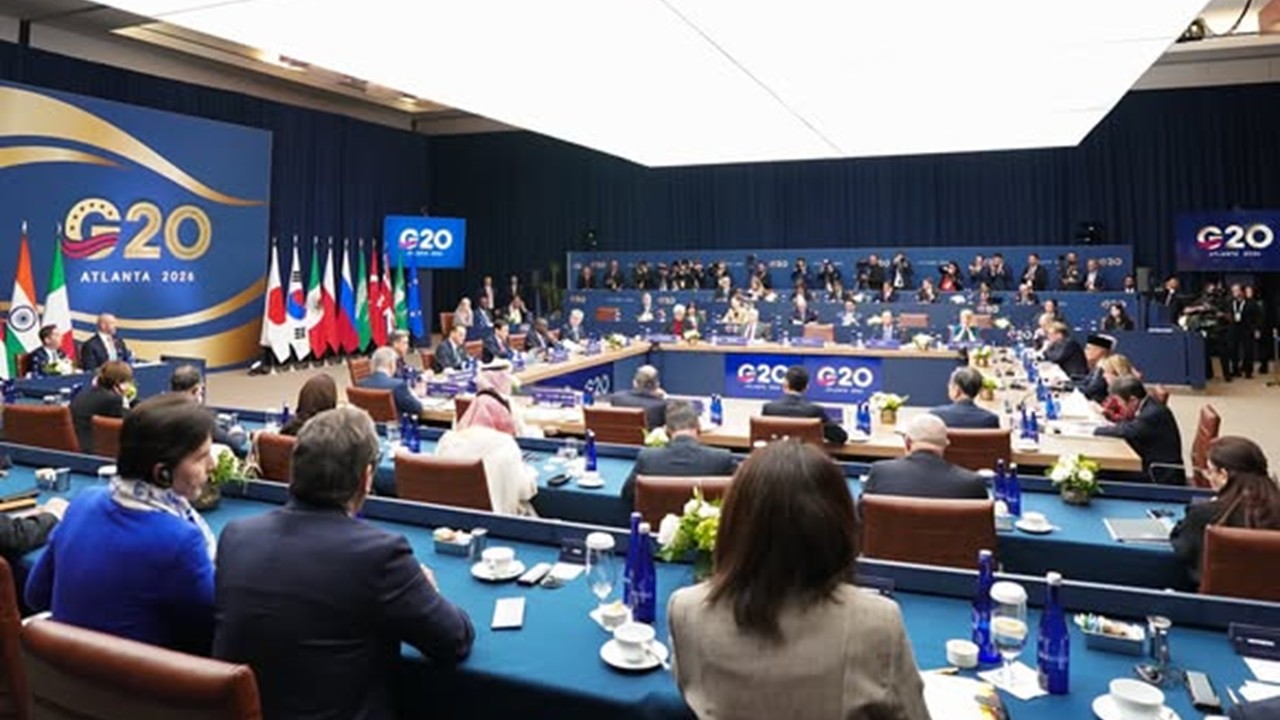
The message was delivered by Japanese Foreign Minister Toshimitsu Motegi at the G20 Foreign Ministers' Meeting in Atlanta on October 30, where he argued that developments in the Middle East, Europe and the Indo-Pacific were deeply interconnected.
Of particular significance to Southeast Asia was Japan's explicit reference to the Straits of Malacca and Singapore, two of the world's most important maritime passages, as part of its broader strategy to maintain a free and open maritime order.
Tokyo is promoting practical cooperation in developing ports, improving navigational aids in the two straits, strengthening regional connectivity and establishing rules governing passage through these waterways.
The emphasis suggests that Japan sees Southeast Asia not simply as a region affected by global geopolitical developments, but as an essential part of the infrastructure underpinning international trade, energy security and economic resilience.
For Japan, whose economy depends heavily on imported energy and the uninterrupted movement of goods, the security of maritime corridors is a strategic national interest.
The significance of that interest has become more apparent amid instability affecting the Strait of Hormuz and the Bab el-Mandeb Strait, both of which Motegi identified as critical logistical chokepoints.
He warned that disruption to navigation through the two waterways was already having negative consequences for global energy supplies.
Japan's position is that military tensions must be eased and free and safe navigation restored. Motegi said Tokyo had been making diplomatic efforts towards de-escalation, including urging Iran to exercise maximum flexibility.
The message reflects a broader concern: a disruption in one maritime corridor can have consequences far beyond its immediate geographical location, affecting energy prices, shipping costs, supply chains and industrial production in distant economies.
Malacca and Singapore become more strategically important
Japan's reference to the Straits of Malacca and Singapore deserves particular attention.
The waterways connect the Indian Ocean with the South China Sea and the wider Pacific, making them essential to commercial shipping between the Middle East, Europe and East Asia.
For Malaysia, Singapore and Indonesia, their strategic importance is already well established. However, Japan's latest statement reinforces the extent to which major industrial economies view the security and efficiency of these passages as an international economic concern.
Tokyo's proposed cooperation in developing navigational aids and improving port infrastructure is particularly relevant. These are practical investments that can strengthen maritime safety, improve connectivity and support the movement of commercial vessels.
The reference to developing rules governing passage through the straits is also important. It points towards Japan's interest in a predictable maritime environment based on international law, rather than one in which access and navigation could become subject to unilateral political or military pressure.
For Southeast Asian countries, this creates opportunities for closer cooperation with Japan in maritime infrastructure, technology, port development and capacity-building.
It also highlights the importance of maintaining regional ownership and cooperation. The security of the Malacca and Singapore straits cannot be separated from the interests and responsibilities of their coastal states.
Japan's approach is therefore likely to depend on working with regional governments and maritime institutions rather than treating the waterways as a security issue that can be addressed by external powers alone.
A wider geopolitical picture
Motegi's remarks also provide an indication of how Japan is interpreting the changing international security environment.
On Ukraine, he reiterated Tokyo's support for a just and lasting peace, including assistance to strengthen the country's energy infrastructure through the provision of large-scale generators.
He also highlighted the importance of maintaining grain exports through Ukraine's Black Sea ports, linking maritime access directly to international food security.
On the Indo-Pacific, Japan reiterated its position on the complete denuclearisation of North Korea, the need to address malicious cyber activities and its opposition to unilateral attempts to change the status quo through force or coercion.
Motegi specifically referred to the East China Sea and South China Sea, where maritime disputes and competing territorial claims continue to shape regional security calculations.
Taken together, these positions illustrate the breadth of Japan's updated Free and Open Indo-Pacific (FOIP) strategy.
Rather than focusing exclusively on traditional military security, Tokyo is increasingly incorporating energy supplies, port infrastructure, shipping connectivity, digital security and economic resilience into its regional engagement.
This is an important distinction. In an increasingly interconnected global economy, the ability to keep trade routes open and supply chains functioning can be as consequential as conventional defence capabilities.
Japan's diplomatic activity around the G20 also reflects this wider approach. At a separate meeting on energy and economic growth, Motegi highlighted the responsibility of G20 members, which collectively account for more than 80% of global GDP and energy consumption, to address the current energy crisis.
He outlined three priorities: maintaining free and transparent energy trade, strengthening international coordination on oil stockpiles, and increasing cooperation between energy-producing and consuming countries.
Japan has also launched POWERR Asia, an initiative aimed at strengthening energy security and resilience across Asian economies through immediate supply measures, regional stockpiling and diversification of energy sources.
Tokyo is seeking to position itself as a connecting point between Middle Eastern energy producers and Asian consuming economies, including through cooperation with Gulf countries on energy infrastructure and resilience.
This gives Japan an economic as well as diplomatic reason to remain actively engaged in maritime security discussions.
What this means for Southeast Asia
For Malaysia and its neighbours, Japan's position presents both an opportunity and a strategic consideration.
The opportunity lies in deeper cooperation with one of Asia's largest industrial economies in port infrastructure, maritime technology, navigational safety, energy security and supply-chain resilience.
Malaysia's geographical position along the Malacca Strait gives it particular relevance in these discussions. Improvements in maritime infrastructure and navigational systems can generate benefits extending beyond shipping, supporting trade facilitation, logistics and regional investment.
However, the wider geopolitical environment also requires Southeast Asian countries to maintain a careful balance.
The South China Sea remains an area of competing claims and strategic interests involving China and several ASEAN members. Japan's opposition to unilateral changes to the status quo is consistent with its broader support for a maritime order based on international law.
For ASEAN, the challenge will be to strengthen cooperation with external partners while preserving regional decision-making and avoiding unnecessary escalation between major powers.
Japan's emphasis on infrastructure, connectivity and navigational safety offers a practical basis for cooperation, but the region will need to ensure that such initiatives reinforce existing regional arrangements and respect the rights and responsibilities of coastal states.
The wider message from Tokyo is that maritime security is no longer a geographically confined issue. Events in the Middle East can affect energy supplies in Asia, disruptions in the Black Sea can influence food security, and tensions in the South China Sea can affect international trade.
The Straits of Malacca and Singapore sit at the intersection of these interests.
Japan's latest intervention at the G20 therefore carries significance beyond diplomatic rhetoric. It signals that Tokyo intends to make the security of international maritime corridors, including those running through Southeast Asia, a more prominent part of its economic diplomacy and regional engagement.
For a trading region that depends on open sea lanes, that is a development ASEAN cannot afford to overlook.