

Turkey’s Defence Industry Ambitions Put Rare Earth Resources in Strategic Spotlight
Turkey's growing defence and aerospace industry gives its rare earth ambitions added strategic importance, but a Chinese-led geological investigation has raised questions about whether the country's largest known deposit can deliver the resources needed to support its long-term industrial ambitions.
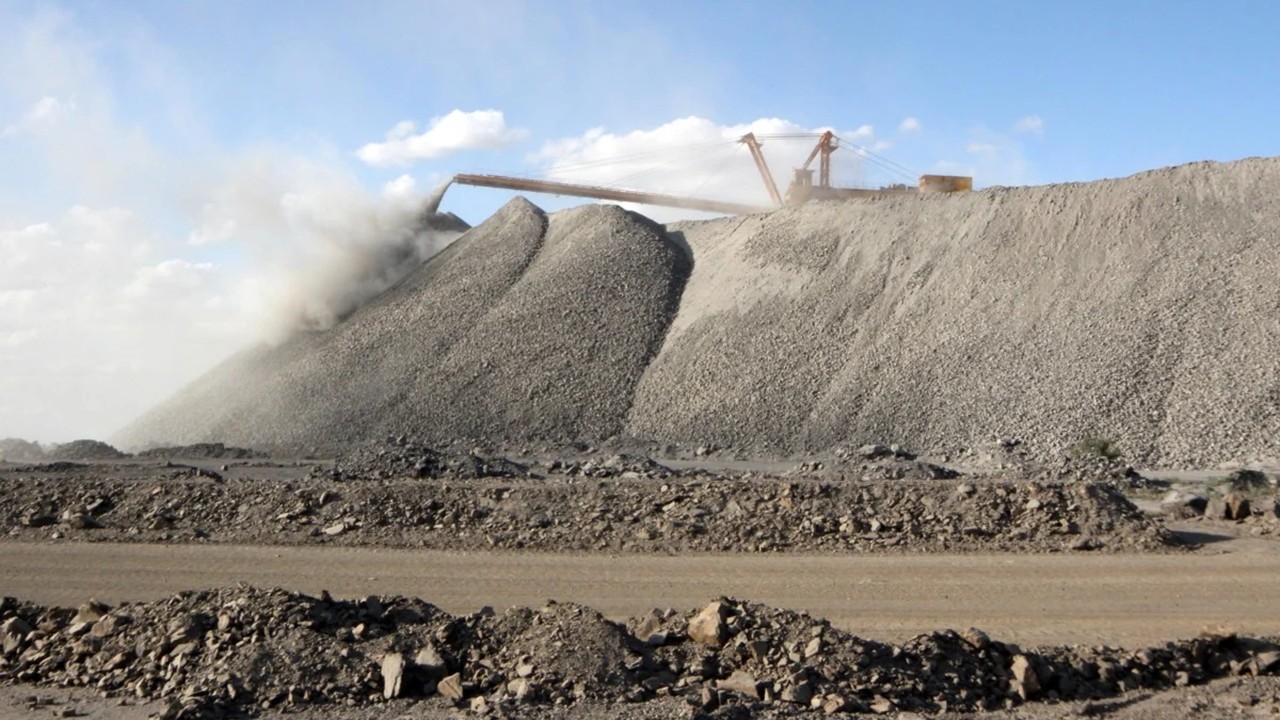
ANKARA: Turkey's ambitions to become a major independent defence manufacturing power are increasingly bringing its critical mineral resources into focus, as the country seeks to strengthen domestic production of military equipment, aerospace systems and advanced technologies.
However, a recent investigation by Chinese researchers into Turkey's Kizilcaoren rare earth deposit has introduced a note of caution, suggesting that its geological potential may be considerably less significant than previously anticipated.
The findings, reported by the South China Morning Post (SCMP), are important for Turkey because rare earth elements are increasingly essential to the advanced manufacturing industries underpinning modern military capabilities.
Turkey has spent more than two decades developing its domestic defence industry, moving away from heavy reliance on imported military equipment towards the design and manufacture of its own platforms, weapons systems and supporting technologies.
The results have been increasingly visible in its export performance.
Turkey's defence and aerospace exports reached US$10.05 billion in 2025, representing an increase of 48 per cent from the previous year, according to figures announced by the country's Defence Industries Secretariat.
The sector continued its expansion in 2026, with exports reaching US$5.79 billion in the first seven months, up 26.2 per cent year-on-year, according to figures released by the head of the secretariat, Haluk Görgün.
Turkey's defence manufacturing ecosystem now includes more than 4,500 companies, covering areas ranging from aerospace and electronics to weapons systems, naval platforms and military vehicles.
Among its best-known programmes are the Bayraktar unmanned aerial vehicle family, the Anka drone, the Kaan national fighter aircraft programme, the Atak helicopter and the Milgem naval vessel programme.
The country is also developing indigenous radar, electronic warfare, air defence and missile capabilities as part of its broader objective of reducing dependence on foreign suppliers.
This industrial expansion makes access to critical raw materials increasingly important.
Rare earth elements are used in permanent magnets, advanced electronics, sensors, precision-guidance systems, electric motors and other technologies relevant to military and aerospace applications. Neodymium, praseodymium, dysprosium and terbium are particularly important in high-performance permanent magnets.
These materials are also essential to civilian industries, including electric vehicles, renewable energy, robotics and advanced electronics.
For Turkey, establishing a dependable domestic supply of these materials could support its ambition to build a more integrated defence manufacturing ecosystem, reducing exposure to international supply disruptions and restrictions on critical technology exports.
The Kizilcaoren deposit, located in the Beylikova area of Eskisehir province, has attracted considerable attention since Turkey announced its rare earth resource potential in 2022.
At the time, the Turkish government announced an estimated 694 million tonnes of ore at the wider Beylikova site, describing it as one of the world's largest rare earth deposits.
However, the figure represents an estimated ore resource and should not be confused with an economically recoverable reserve or the quantity of rare earth oxides that can ultimately be produced.
The latest Chinese investigation, led by Professor Yang Xiaoyong of the University of Science and Technology of China and Hebei GEO University, examined the geological development of the Kizilcaoren deposit and the processes through which rare earth elements accumulated in its mineral formations.
According to the SCMP report published on October 24, Yang characterised the mineralisation as relatively small in scale and far from matching the world's major rare earth deposits.
He also said there was currently no evidence that Turkey or other Middle Eastern countries possessed substantial rare earth deposits capable of significantly changing the global supply picture.
The assessment raises questions about how quickly Turkey can translate its geological resources into commercially viable industrial production.
For the defence industry, the challenge extends beyond mining. Rare earth production requires sophisticated beneficiation, chemical separation, refining and metal-making capabilities before materials can be converted into the specialised alloys and magnets required by manufacturers.
This is an area where China maintains a commanding position.
The International Energy Agency has highlighted China's dominance across the rare earth supply chain, particularly in refining and permanent magnet manufacturing. This concentration has become a major concern for countries seeking to protect their defence, automotive, electronics and renewable energy industries from supply disruptions.
Turkey's military manufacturing ambitions therefore face a strategic question: how can it develop a more independent defence industry while remaining exposed to international supply chains for some of the critical materials and technologies required to manufacture advanced systems?
The issue is particularly relevant as military platforms become increasingly dependent on sophisticated electronics, precision sensors, communications equipment, electric propulsion and advanced guidance technologies.
Turkey's defence industry has demonstrated that domestic engineering, investment and industrial partnerships can build capabilities in areas previously dominated by established international manufacturers.
Its export performance also provides a commercial incentive to deepen local production. Defence and aerospace exports exceeded US$10 billion in 2025, giving the sector growing importance to the country's industrial and trade strategy.
But the rare earth investigation highlights that industrial independence cannot be achieved through manufacturing investment alone. It also requires access to reliable raw materials, processing technology and specialised components.
For Turkey, the development of the Beylikova project remains strategically relevant even if its commercial potential proves more limited than initially suggested. Further exploration, improved processing technology and partnerships with international mineral producers could still contribute to the country's critical minerals strategy.
The wider implications extend beyond Turkey. As governments increasingly seek to diversify rare earth supplies, the country's experience demonstrates the difference between possessing mineral resources and developing a complete industrial supply chain.
Turkey has established itself as an increasingly significant defence manufacturer and exporter. Its ability to secure the critical minerals needed to support that growth will be an important part of its next phase of industrial development.
The Chinese findings do not diminish the progress of Turkey's defence industry. Rather, they highlight a vulnerability that even an expanding manufacturing power must address: advanced military production ultimately depends on secure access to the materials, processing technologies and components that make modern systems possible.
Caption: