

Netherlands deepens strategic engagement with ASEAN
The Netherlands' centuries-old maritime relationship with Southeast Asia is evolving into a modern partnership centred on trade, investment, port infrastructure, water technology and sustainable agriculture, as Europe recognises ASEAN's growing economic and strategic importance.

JAKARTA – More than four centuries after Dutch trading vessels first established a major European commercial presence in Southeast Asia, the Netherlands is deepening its engagement with the region, shifting from a history shaped by maritime trade and colonial commerce to a modern relationship built around investment, technology and economic cooperation.
The enduring importance of Southeast Asia to Dutch interests was reflected in a meeting between ASEAN Secretary-General Dr Kao Kim Hourn and a delegation of Dutch ambassadors and consuls-general serving across the Asia-Pacific, led by Christiaan Rebergen, Vice-Minister and Secretary-General for Foreign Affairs of the Netherlands, at the ASEAN Headquarters in Jakarta.
Their discussions covered ASEAN's role in the region, cooperation with external partners and regional and international developments. While diplomatic in nature, the engagement reflects a broader Dutch interest in strengthening economic and strategic relationships with one of the world's most dynamic regions.
The historical connection between the Netherlands and Southeast Asia is inseparable from the sea. The establishment of the Dutch East India Company (VOC) in 1602 marked a defining moment in European commercial expansion into Asia, with Batavia, present-day Jakarta, becoming its administrative and trading headquarters. The Dutch established an extensive network of commercial connections across the Indonesian archipelago and beyond, seeking access to spices and other valuable commodities.
However, Southeast Asia was already home to sophisticated maritime trading networks connecting local kingdoms, Chinese merchants, Indian traders and Arab commercial communities. European trading companies entered an established regional economy, eventually becoming powerful commercial and political actors. The legacy of that period remains visible in Indonesia's historical architecture, institutions and cultural connections with the Netherlands.
Today, the relationship has fundamentally changed. Rather than trading monopolies and colonial control, the emphasis is on sovereign partnerships, investment, technology transfer and access to international markets. The sea, however, remains the common denominator.
The Netherlands became an ASEAN Development Partner in September 2023, formalising a relationship that had already developed through cooperation in diplomacy, education, maritime affairs and economic development. The subsequent adoption of the ASEAN-Netherlands Development Partnership Practical Cooperation Areas for 2025-2029 established a framework covering maritime cooperation, trade and investment, science and technology, green growth, energy transition, food security, sustainable agriculture, water management and the circular economy.
These priorities reflect the Netherlands' established areas of expertise and ASEAN's development requirements. With a regional population exceeding 660 million, expanding manufacturing capabilities and growing demand for infrastructure and technology, Southeast Asia offers Dutch businesses considerable commercial opportunities.
One of the most promising areas is maritime infrastructure. The Netherlands has developed internationally recognised expertise in port management, dredging, maritime engineering and logistics, supported by the global standing of the Port of Rotterdam, one of Europe's major maritime gateways. These capabilities are increasingly relevant to Southeast Asia, where port efficiency and shipping connectivity directly affect international competitiveness.
Malaysia, Indonesia, Singapore and Vietnam are particularly important because of their positions along major shipping routes. Dutch expertise in port development, navigational systems, coastal engineering and logistics could support regional efforts to improve trade connectivity while strengthening maritime safety.
Water management is another area where the Netherlands has considerable experience to offer. Flood mitigation, wastewater treatment, pollution control and efficient water distribution are increasingly important to Southeast Asian economies facing urbanisation, climate pressures and growing industrial demand. Dutch engineering and technology companies have opportunities to contribute to projects that combine commercial returns with long-term infrastructure resilience.
Indonesia provides an illustration of this potential. During a Dutch economic mission to the country in June 2025, a delegation involving 56 business, knowledge-institution and government representatives secured 18 agreements with Indonesian partners worth more than €800 million. The mission focused on horticulture, maritime activities and water management, demonstrating how historical commercial connections can be translated into contemporary investment and technology partnerships.
Agriculture and food security offer further opportunities. The Netherlands is recognised for its agricultural technology, greenhouse systems, seed development, horticulture and efficient use of resources. ASEAN countries, meanwhile, are looking to improve agricultural productivity, strengthen food security and develop more resilient supply chains. Cooperation in precision agriculture, irrigation, post-harvest management, research and food processing could create benefits for both sides.
For Malaysia and Indonesia, this also presents opportunities to connect Dutch technology with established agricultural industries, including the development of more efficient and sustainable production systems. The emphasis on sustainable agriculture and food security within the ASEAN-Netherlands cooperation framework provides an institutional foundation for such partnerships.
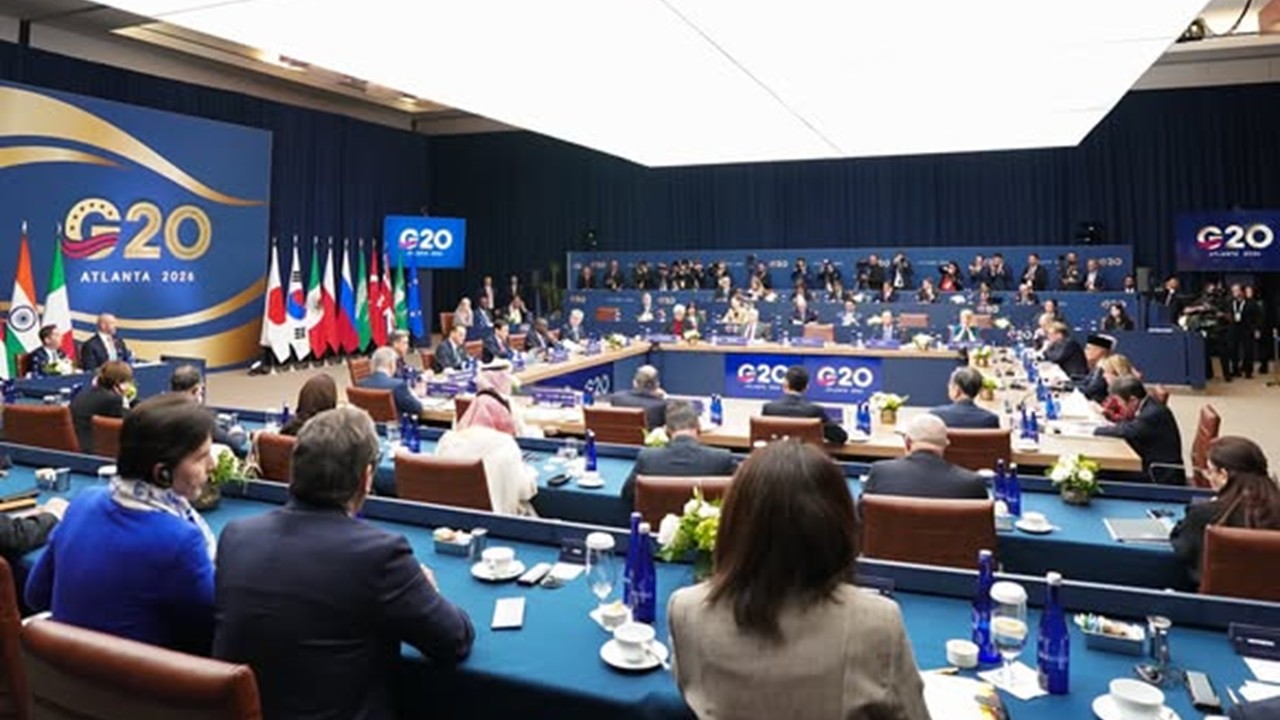
The renewed Dutch engagement also coincides with a wider international reassessment of maritime security. Japan, for example, has highlighted the strategic importance of the Straits of Malacca and Singapore in its discussions on international security and the protection of global shipping routes. At the G20 Foreign Ministers' Meeting in Atlanta on October 30, Japanese Foreign Minister Toshimitsu Motegi linked developments in the Middle East, Europe and the Indo-Pacific, emphasising the importance of maintaining safe and open maritime corridors.
The Straits of Malacca and Singapore connect the Indian Ocean with the South China Sea and the Pacific, providing an essential route for energy shipments and manufactured goods moving between Europe, the Middle East and East Asia. For Malaysia, Indonesia and Singapore, maintaining safe and efficient waterways is therefore both a national responsibility and an international economic interest.
Japan's maritime-security priorities and the Netherlands' renewed engagement with ASEAN are separate diplomatic initiatives, but both demonstrate how Southeast Asia's maritime geography continues to shape the calculations of major trading nations. The region is not simply a destination for investment; it is a critical link in the infrastructure supporting global commerce.
The Netherlands is also operating within the wider European Union's economic relationship with ASEAN. EU merchandise trade with the region reached €274.9 billion in 2025, while European foreign direct investment stock in ASEAN stood at €363.4 billion in 2024. These figures represent the wider EU relationship rather than Dutch trade and investment alone, but illustrate the scale of the economic partnership within which Dutch companies operate.
For ASEAN, the opportunity is to turn diplomatic engagement into commercially meaningful partnerships that deliver investment, employment, technology transfer and stronger domestic capabilities. For the Netherlands, the region offers a growing market in which its expertise in maritime engineering, water management, agriculture and logistics can find new applications.
More than four centuries after Dutch trading vessels made the Indonesian archipelago a central part of their Asian commercial network, Southeast Asia remains strategically relevant to the Netherlands. The difference is that today's relationship is increasingly defined not by control of trading routes, but by the ability to build partnerships, strengthen supply chains and participate in the region's economic transformation.