

Russia seeks to deepen ASEAN partnership
Moscow is pushing to translate the momentum of its 35-year relationship with ASEAN into practical cooperation across energy, trade, technology and regional security, as Foreign Minister Sergey Lavrov holds discussions with ASEAN ambassadors following the bloc's November summit in Manila.
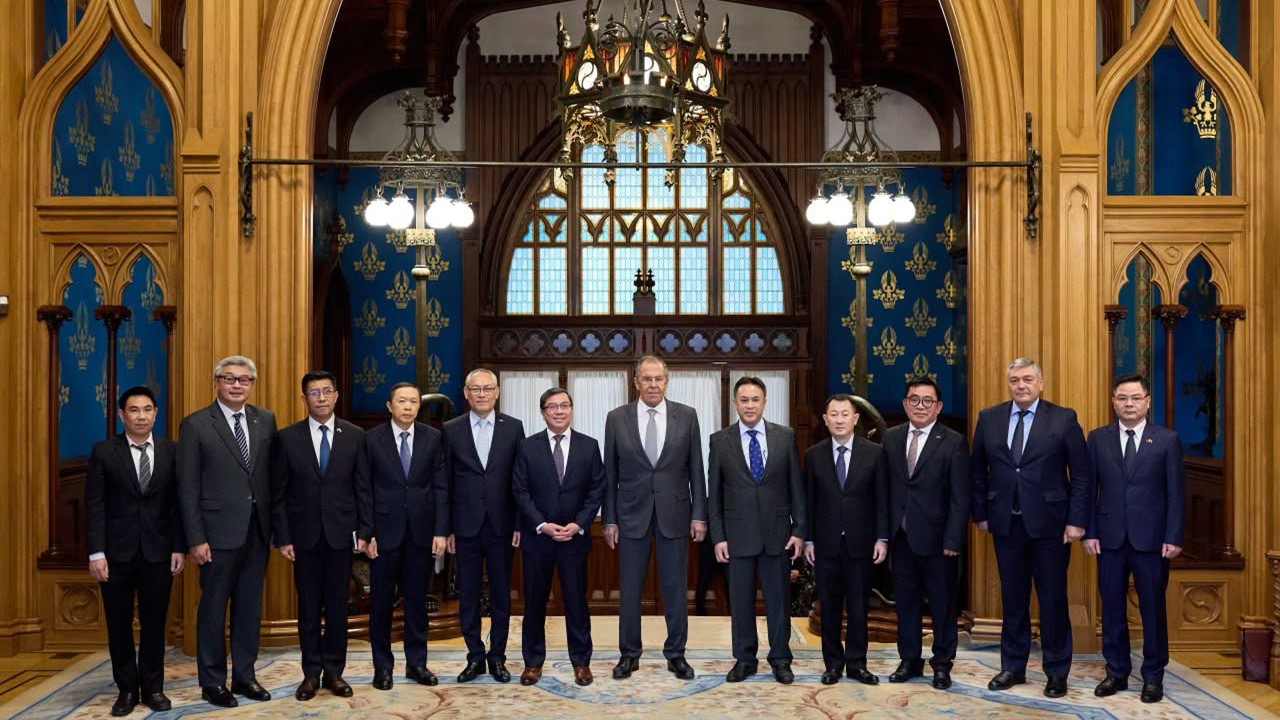
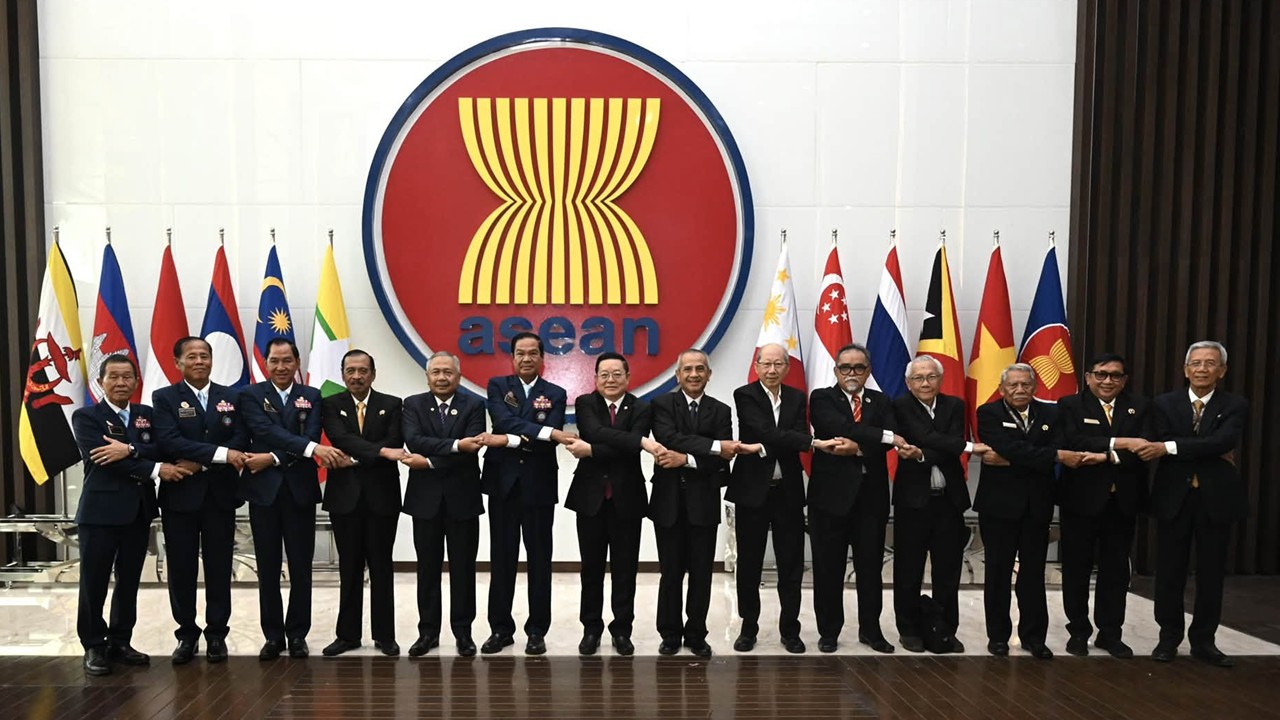
Russia is seeking to strengthen its strategic engagement with Southeast Asia, with Foreign Minister Sergey Lavrov meeting ambassadors of the Association of Southeast Asian Nations (ASEAN) member states based in Moscow on November 23 to review progress in implementing agreements reached at the Russia-ASEAN Commemorative Summit in Kazan in June.
According to the Russian Foreign Ministry, the meeting examined the programme of activities marking the 35th anniversary of Russia-ASEAN relations, celebrated in 2026, and assessed progress in implementing decisions taken at the anniversary summit on June 17-18.
Both sides expressed their commitment to expanding cooperation into new areas, while also exchanging views on developments in the Asia-Pacific and the work of ASEAN-centred regional mechanisms, including the East Asia Summit (EAS), ASEAN Regional Forum (ARF) and ASEAN Defence Ministers' Meeting Plus (ADMM-Plus).
The discussions placed particular emphasis on preserving equality, consensus and practical cooperation within these regional platforms, principles which underpin ASEAN's approach to regional diplomacy and its central role in the wider security architecture.
The November 23 meeting followed a significant diplomatic engagement between ASEAN and Russia earlier this month, when Lavrov participated in the 21st East Asia Summit in Manila on November 17, as part of the 49th ASEAN Summit and Related Summits hosted by the Philippines from November 15-17.
In his remarks at the East Asia Summit, Lavrov described the June Kazan meeting as having provided substantial momentum to the strategic partnership, particularly in implementing the 2026-2030 Comprehensive Plan of Action.
He also argued that the ASEAN-centred regional architecture, built around inclusive and consensus-based institutions, should be preserved amid growing geopolitical competition. His remarks raised concerns about the expansion of military blocs and the involvement of NATO capabilities in the Indo-Pacific, reflecting Moscow's interest in maintaining ASEAN-led platforms as central venues for regional dialogue.
At the November 17 East Asia Summit, Lavrov specifically warned against what Moscow described as attempts by Western countries to undermine ASEAN-led regional mechanisms through exclusive military groupings. He also criticised NATO's growing Indo-Pacific presence. This is a significant geopolitical dimension to the November 23 meeting.
The East Asia Summit adopted a declaration titled Navigating Our Future Together: Stability and Renewal, which reaffirmed the importance of dialogue, diplomacy and coordination as foundations for regional stability and prosperity. However, the declaration should be understood as a broader regional commitment rather than an endorsement of Russia's individual geopolitical positions.
The June summit in Kazan, which brought together Russian President Vladimir Putin and ASEAN leaders or their representatives, marked 35 years of dialogue relations established in 1991. It produced four important documents: the Kazan Declaration 2026, the Comprehensive Plan of Action for 2026-2030, and joint statements on energy and cultural cooperation.
The agreements provide a framework for cooperation across political-security, economic and socio-cultural areas, with particular attention to energy and food security, transport and logistics, agriculture, digitalisation, artificial intelligence, science and technology, tourism and creative industries.
One particularly important outcome was the joint statement on energy cooperation, reflecting the potential for closer engagement at a time when energy security and affordability have become increasingly important to Southeast Asian economies.
The Kazan Declaration also identified maritime cooperation, biological safety, transnational crime, trade and investment as areas for closer collaboration. It called for stronger links between ASEAN and wider Eurasian institutions, including the Eurasian Economic Union (EAEU) and the Shanghai Cooperation Organisation (SCO).
The economic dimension was further highlighted during the ASEAN-Russia Business Forum held alongside the Kazan summit. ASEAN Secretary-General Dr Kao Kim Hourn identified opportunities in energy security, food security, supply-chain connectivity, manufacturing and digital transformation, while encouraging stronger business-to-business engagement and investment partnerships.
The diplomatic groundwork has continued beyond Kazan. In October, Kao undertook a working visit to Moscow at Lavrov's invitation, from October 13-15, to follow up on the anniversary summit and advance implementation of the five-year action plan.
For ASEAN, engagement with Russia remains part of its wider policy of maintaining inclusive regional dialogue and cooperation with external partners. The emphasis on ASEAN centrality, international law and consensus allows the bloc to maintain diplomatic and economic channels with major powers despite differences in their geopolitical interests.
The November 23 meeting therefore represents another step in translating the anniversary commitments into sustained diplomatic engagement, with the challenge now being to turn the extensive cooperation agenda into tangible economic, technological and security outcomes.