Economics, interpretation and Southeast Asia
For governments and businesses across the region, the distinction between what can be measured and what must be understood is increasingly important. Investment decisions, supply-chain strategies and economic policies are being made against a backdrop of technological disruption, geopolitical uncertainty and rapidly changing regulations.
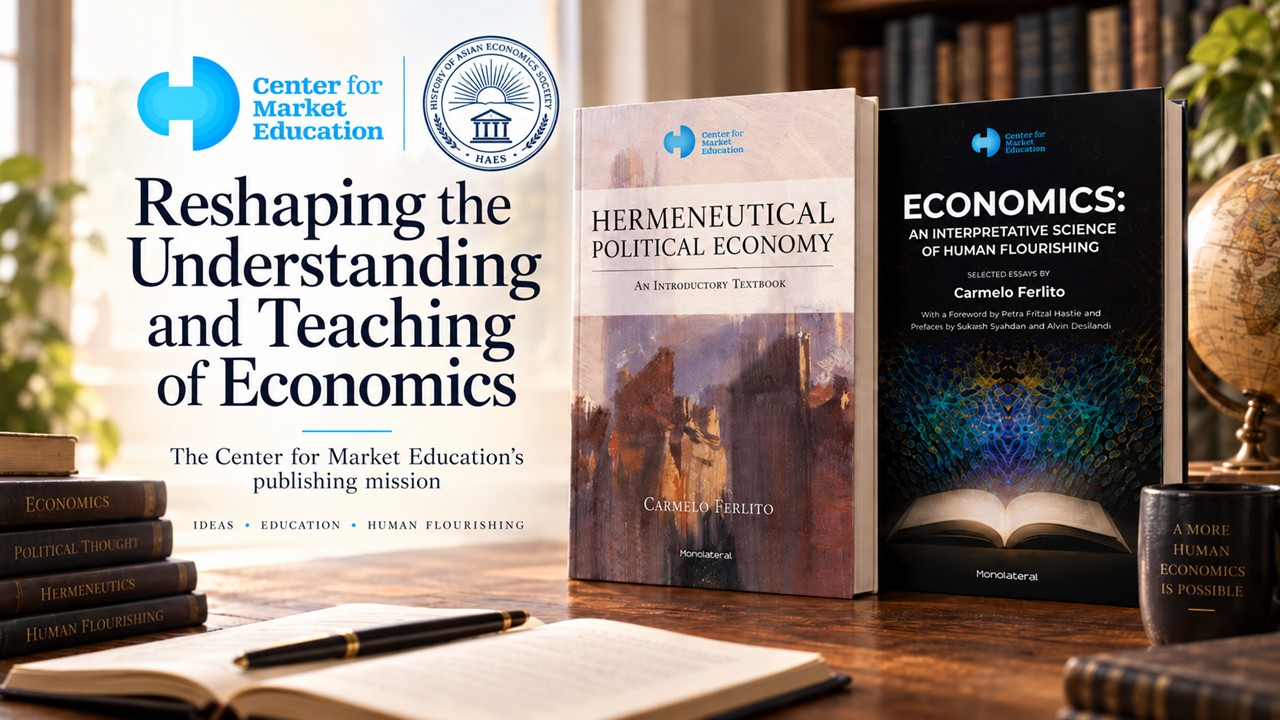
CME combines what it describes as the intellectual drive of a think tank with the operational rigour of a consulting firm, providing business advisory services, economic and policy analysis and tailored capacity-building programmes.
Its work includes supporting international companies seeking to enter Southeast Asian markets, with services covering market intelligence, strategic business-model guidance and legal and institutional support. The organisation also undertakes policy research and advocacy focused on developing a more business-friendly environment grounded in innovation, openness and free-trade principles.
That regional perspective adds another dimension to Hermeneutical Political Economy. The book's emphasis on institutions, uncertainty, interpretation and human decision-making is particularly relevant in Southeast Asia, where companies entering new markets must navigate not only economic indicators but also regulatory systems, institutional structures and different business environments.
For governments and businesses across the region, the distinction between what can be measured and what must be understood is increasingly important. Investment decisions, supply-chain strategies and economic policies are being made against a backdrop of technological disruption, geopolitical uncertainty and rapidly changing regulations.
In that environment, Ferlito's argument is ultimately about the limits of economic certainty. Data and models remain important tools, but they do not remove the need for interpretation and judgement.
For a discipline increasingly surrounded by artificial intelligence, big data and sophisticated forecasting systems, Hermeneutical Political Economy offers a reminder that economic life remains fundamentally human — shaped by expectations, institutions, entrepreneurship and decisions made in circumstances where the future cannot be known with certainty.