


China, Central and Eastern Europe trade climbs 11% in first half
Trade between China and Central and Eastern European countries continued its strong upward trajectory in the first half of 2026, rising 11 per cent year on year as growing demand for agricultural products, advanced manufacturing and infrastructure cooperation reinforced economic ties despite an increasingly uncertain global trade environment.
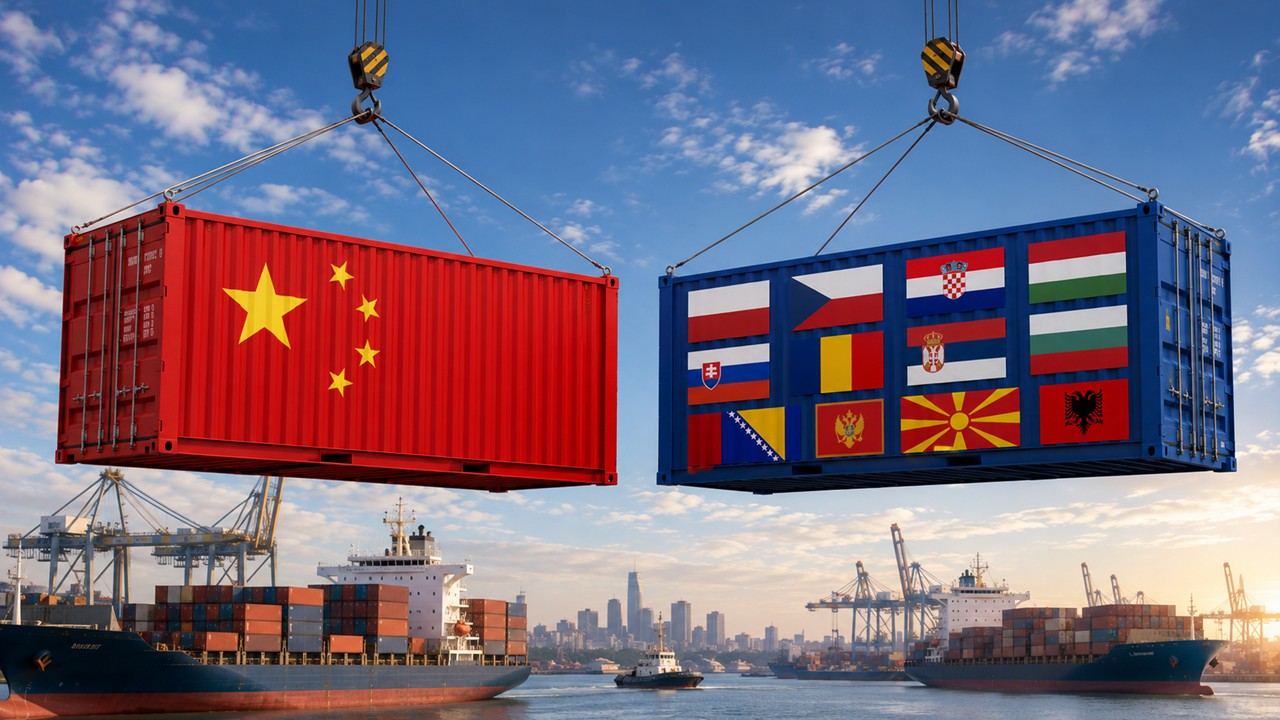
BEIJING – Trade between China and Central and Eastern European Countries (CEEC) reached 580.12 billion yuan (US$85.6 billion) during the first half of 2026, an increase of 11 per cent compared with the same period last year, according to data released by China's General Administration of Customs.
The latest figures underscore the continued expansion of economic ties between China and the 14 Central and Eastern European nations participating in the China-CEEC cooperation framework. Bilateral trade has now grown to 3.7 times its level in the first half of 2012, reflecting more than a decade of sustained expansion.
Manufacturing remained a major driver of growth, with trade in vehicles and automotive parts reaching 59.53 billion yuan (US$8.8 billion), while trade in lithium ion batteries totalled 30.01 billion yuan (US$4.4 billion). Chinese investment in vehicle manufacturing, battery production and research facilities across countries including Serbia, Poland and Hungary has helped deepen industrial cooperation.
Infrastructure projects under the Belt and Road Initiative also continued to support trade by improving regional connectivity and increasing demand for Chinese construction machinery and rail transit equipment. Exports linked to overseas contracted projects in the region more than doubled during the first six months of the year, with exports of construction machinery rising 22.3 per cent and rail transit equipment increasing 57.3 per cent.
Agricultural trade was another standout performer. Bilateral agricultural trade reached 7.58 billion yuan (US$1.1 billion), an increase of 16.2 per cent from a year earlier, reflecting stronger cooperation on food safety, animal and plant quarantine, and market access.
China's imports of agricultural products from Central and Eastern Europe climbed 34.8 per cent, led by cocoa products and aquatic products, which recorded growth of 57.6 per cent and 36.8 per cent respectively. Chinese agricultural exports to the region also increased 11.8 per cent, with walnut exports rising 28.3 per cent and pet food exports growing 13.7 per cent.
Economic cooperation is also expanding into emerging technologies. Chinese companies are collaborating with partners in Serbia on a humanoid robot production facility, highlighting the growing role of artificial intelligence and advanced manufacturing in bilateral trade and investment.
Officials said customs cooperation has played an increasingly important role in facilitating trade. Since the establishment of the China-CEEC Customs Information Center in 2021, customs authorities have worked together on policy coordination, trade risk monitoring and customs clearance improvements to enhance supply chain security and efficiency.
The latest figures come as China continues to strengthen commercial relationships with emerging markets while diversifying its export destinations amid shifting global trade patterns. For Central and Eastern European economies, greater access to the Chinese market is creating new opportunities for exporters of food products, consumer goods and advanced manufactured products, while Chinese investment continues to support industrial development across the region.
Economists say the resilience of China-CEEC trade demonstrates the growing importance of diversified supply chains and long term investment partnerships, with cooperation expected to expand further in green technology, electric vehicles, digital innovation and high value manufacturing.