

Carbon Negative by 2040: Technology Vision Sets New Direction for Palm Oil Industry
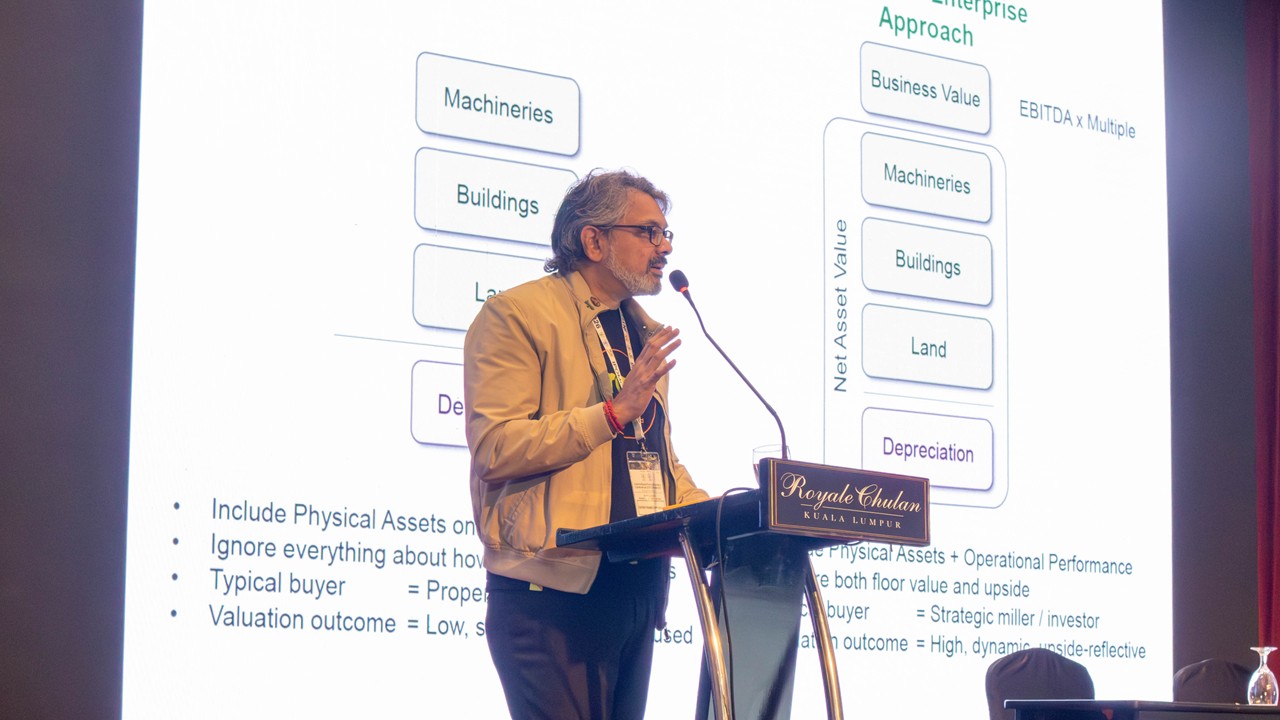
Girish Ramachandran, Managing Director of IRGA Advisory, addresses delegates at the International Palm Oil Congress (IPC26) in Kuala Lumpur, where he outlined how technology, sustainability and comprehensive carbon accounting can help transform the palm oil industry into a carbon negative sector by 2040.

KUALA LUMPUR – A bold vision to transform the global palm oil industry into a carbon negative sector by 2040 has been put forward as industry leaders seek to reposition oil palm as both a profitable agricultural commodity and a key contributor to global climate solutions.
Speaking at the International Palm Oil Congress (IPC26), Girish Ramachandran outlined a technology driven roadmap that calls for a fundamental shift in how plantations are managed, arguing that digital transformation, sustainability and productivity must advance together if the industry is to remain competitive in the decades ahead.
The proposal comes at a time when the palm oil sector faces growing scrutiny over environmental performance, evolving sustainability regulations and changing consumer preferences, particularly among younger generations. Surveys cited during the presentation indicate that nearly half of millennials actively avoid products containing palm oil that is perceived to be unsustainably produced, reinforcing the need for stronger environmental credentials and more effective industry communication.
Despite the sector's economic importance, plantation performance varies significantly across the region. Malaysian oil palm yields have declined from historical averages of around 20 to 21 tonnes per hectare to approximately 15 tonnes per hectare, largely due to labour shortages, ageing estates and slower than expected replanting programmes.
Financial performance also differs widely between plantation companies. While leading operators generate profits exceeding US$4,400 (approximately RM18,700) per hectare, weaker performers achieve returns of only around US$276 (RM1,160) per hectare. Average profitability across the sector stands at about RM8,300 per hectare, highlighting considerable room for productivity improvements through better management and technology adoption.
At the same time, Malaysian plantation assets continue to command a valuation premium of around 80 per cent over comparable Indonesian estates, with enterprise values averaging close to RM90,000 per hectare, reflecting investor confidence in higher standards of governance, infrastructure and sustainability.

Girish Ramachandran (second from right), Managing Director of IRGA Advisory, joins fellow industry leaders during the panel discussion, "Palm Oil Industry: Meeting the Demands of a Changing World", at the International Palm Oil Congress (IPC26) in Kuala Lumpur. The session explored the challenges and opportunities facing the global palm oil industry, including sustainability, productivity, market competitiveness and the role of technology in shaping its future. Photo: News Desk Asia.
Central to the proposed roadmap is the recognition that oil palm is not only a high yielding crop but also an effective carbon sink. As a perennial tree crop, oil palms continuously absorb and store carbon dioxide throughout their productive life, giving the industry an opportunity to play a larger role in climate mitigation as governments and businesses pursue increasingly ambitious decarbonisation targets.
The presentation argued that achieving national and global net zero ambitions by 2050 will require more than reducing emissions from energy generation and transport. Agriculture, particularly plantation crops capable of significant carbon sequestration, will need to become an integral part of the climate solution.
Rather than focusing solely on emissions reduction at the mill, the roadmap proposes lowering carbon emissions across the entire value chain. Opportunities were identified in nursery operations and land preparation, plantation maintenance, harvesting, field collection and transport, milling activities and downstream logistics, with each stage offering measurable emission reduction potential through operational improvements and new technologies.
Increasing regulatory expectations are also accelerating the need for change. New sustainability disclosure requirements aligned with International Sustainability Standards Board (ISSB) frameworks require companies to measure and report Scope 1, Scope 2 and Scope 3 emissions, making comprehensive carbon accounting an increasingly important component of corporate reporting and investor confidence.
Technology is positioned as the primary enabler of this transformation. The roadmap envisages plantations operating through integrated digital ecosystems that combine mobile applications capable of capturing thousands of daily field observations, sensor networks monitoring soil and water conditions, drone surveillance, automated harvesting support, artificial intelligence driven analytics and emerging robotics technologies.
The objective is to move beyond isolated technology deployments towards fully connected plantation management systems capable of improving productivity, reducing waste, lowering emissions and supporting faster operational decision making.
The presentation also emphasised that technological transformation cannot occur in isolation. Delivering carbon negative plantations will require closer collaboration between plantation operators, biological scientists, software developers, robotics engineers, sustainability specialists and policymakers to integrate innovations across the industry's entire value chain.
Beyond sustainability, the roadmap outlined a commercial opportunity to reposition palm oil as a premium global food ingredient. By combining stronger environmental credentials with growing scientific evidence supporting palm oil's nutritional qualities, the industry could strengthen consumer confidence while pursuing higher value market positioning and improved commodity prices.
The proposed Carbon Negative 2040 vision represents one of the industry's most ambitious long term strategies to date, seeking to align environmental stewardship with commercial performance. If successfully implemented, it could redefine the role of palm oil from being viewed primarily as a commodity crop to becoming a technology enabled, climate positive agricultural sector capable of delivering stronger returns while contributing meaningfully to global decarbonisation efforts.