

Beyond Traditional Markets: Amarjeet Singh Ghai's Vision for Malaysia's African Opportunity
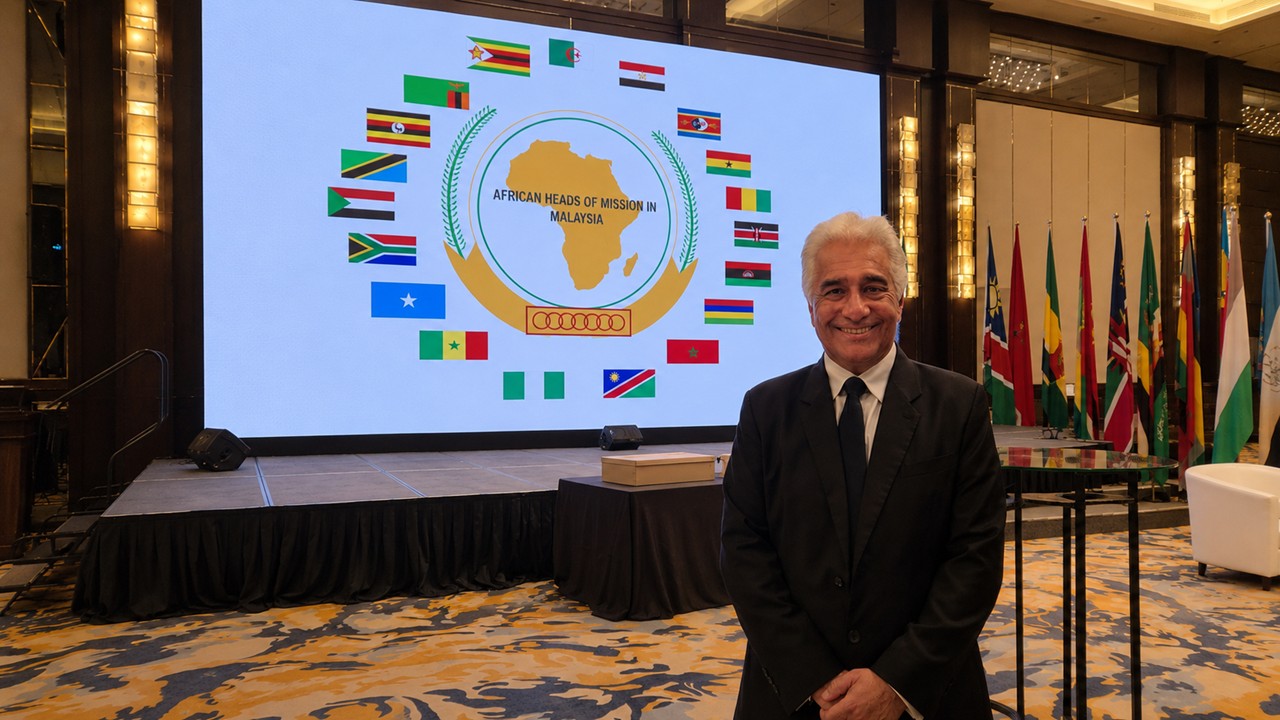
In a world reshaped by geopolitical uncertainty and changing trade dynamics, Malaysia Africa Chamber of Commerce and Industry President Amarjeet Singh Ghai believes Africa represents one of the world's most compelling growth frontiers. Through education, partnership and long term engagement, he is encouraging Malaysian businesses to rethink where the next decade of opportunity lies.
As businesses navigate an increasingly fragmented global economy, the search for new markets has become less about ambition and more about resilience.
Supply chains continue to shift. Trade routes are being redrawn by geopolitical tensions. Conflicts in Europe and the Middle East, rising protectionism and economic nationalism have prompted companies worldwide to reconsider where future growth will come from.
For Amarjeet Singh Ghai, President of the Malaysia Africa Chamber of Commerce and Industry (MACCI), these global changes present not just a challenge but an opportunity.
He believes Malaysian businesses are standing at the threshold of one of the world's most significant growth stories, provided they are willing to broaden their perspective beyond traditional export destinations.
"Africa is no longer a market of tomorrow," Amarjeet says during an interview with News Desk Asia. "It is a market of today. The companies that begin building relationships now will be the ones that enjoy the greatest opportunities over the next decade."
His conviction stems from years of working alongside governments, businesses and trade organisations across the African continent, helping Malaysian companies better understand markets that remain unfamiliar to many exporters.
Yet his first lesson often surprises people. "The first thing I tell every business is that Africa is not one country," he says. "It is a continent made up of 54 countries, each with its own regulations, culture, consumer behaviour, political environment and business ecosystem. There isn't a single strategy for Africa. Success comes from understanding each market individually."
It is a message he repeats often because he believes it is fundamental to changing perceptions. "For too long, many businesses have viewed Africa as a single destination. That mindset limits opportunity. Once you begin to understand the diversity of the continent, you start to see dozens of markets rather than one."
That philosophy has shaped MACCI's evolving role. Rather than functioning solely as a networking organisation, the chamber increasingly sees itself as an educator, advisor and bridge builder, helping Malaysian businesses navigate unfamiliar territory with confidence.
"Our role is not simply introducing companies to potential buyers," Amarjeet explains. "Our responsibility is to educate businesses about the realities of entering African markets, helping them understand regulations, identify trustworthy partners and appreciate cultural differences. Good preparation reduces risk."
He believes education has become one of the most valuable trade enablers in today's business environment. "There is tremendous excitement whenever businesses hear about Africa because they recognise the scale of the opportunity," he says. "But every new market requires a helping hand. Companies need reliable information, trusted introductions and practical guidance. That is where organisations like MACCI add real value."
The timing, he believes, has never been more significant. Global commerce is undergoing one of its most profound transformations in decades. Manufacturers are diversifying supply chains. Exporters are reducing dependence on individual markets. Businesses are searching for new consumers and new investment destinations capable of sustaining long term growth.
For Amarjeet, Africa fits naturally into that conversation. "The world has experienced considerable disruption over recent years," he says. "From geopolitical conflicts and supply chain interruptions to changing trade policies, businesses have learned that relying too heavily on a small number of markets creates vulnerability."
He is careful not to frame Africa as a replacement for Malaysia's established trading partners. "This is not about choosing one market over another," he explains. "It is about diversification. The strongest businesses are those with balanced portfolios of customers and markets. Africa offers Malaysian exporters an opportunity to build resilience while accessing economies with enormous long term potential."
Across the continent, rapid urbanisation, population growth, infrastructure investment and industrial development are reshaping economies. The African Continental Free Trade Area continues to create new possibilities for cross border commerce, while growing middle income populations are driving demand for quality products and services.
For Malaysia, Amarjeet sees natural alignment, that needs to be addressed quickly, "Our strengths complement Africa's ambitions," he says. "Malaysia has built internationally respected capabilities in halal products, food manufacturing, palm oil, healthcare, medical devices, education, digital technology, engineering and industrial development. These are sectors where many African economies are investing heavily."
Palm oil, in particular, remains an important area of opportunity. "Malaysia is recognised globally for sustainable palm oil production, downstream processing and technical expertise. African countries are interested not only in products but also in knowledge transfer, value addition and industrial capability. The general population knows Malaysian palm oil."
Equally promising, he says, are halal industries, pharmaceuticals, logistics, education services and financial technology. Yet Amarjeet repeatedly returns to one point. Relationships come before transactions. "Businesses cannot simply fly in expecting immediate success," he says. "Africa, like Asia, values relationships. Trust takes time to build. Companies that invest in understanding local markets, respecting local culture and working alongside local partners will create businesses that last."
Those relationships, he believes, will define the next generation of Malaysia-Africa cooperation. "What excites me most is not individual deals," Amarjeet says. "It is seeing Malaysian companies become part of Africa's long term growth story while African businesses become stronger partners for Malaysia. Sustainable trade benefits both sides."
That philosophy extends beyond commerce. Education, skills development, technology transfer and institutional partnerships, he says, will increasingly become important pillars of bilateral engagement. "We should think beyond buying and selling products. There are opportunities in innovation, professional services, education, healthcare and digital transformation. The future relationship between Malaysia and Africa should be broad, collaborative and built on mutual growth."
One practical example of that growing engagement will be the 2026 Lagos International Trade Fair, organised by the Lagos Chamber of Commerce and Industry. Celebrating its 40th anniversary, the event will take place from 6 to 15 November at Tafawa Balewa Square in Lagos, Nigeria, bringing together more than 1,000 exhibitors and an estimated 300,000 visitors from over 20 countries.
For Malaysian businesses, Amarjeet says the fair provides more than exhibition space. "It is an opportunity to experience one of Africa's largest commercial platforms firsthand," he says. "Companies will meet buyers, investors, distributors and government representatives from across the continent. More importantly, they begin building relationships that can continue long after the exhibition closes."
Malaysian participation is expected across sectors including palm oil and downstream products, halal food and beverages, healthcare, pharmaceuticals, logistics, manufacturing, consumer products and industrial services. "It symbolises Malaysia's growing engagement with Africa at a time when global business is looking for new opportunities," he says. "The companies that explore these markets today will be better positioned for tomorrow."
His optimism is grounded in realism. He readily acknowledges that Africa presents challenges. Regulatory frameworks differ from country to country. Logistics require planning. Market intelligence is essential. Cultural understanding cannot be overlooked.
But those are precisely the reasons organisations such as MACCI exist. "Our role is to shorten the learning curve," Amarjeet explains. "We help Malaysian companies understand where opportunities exist, who they should speak to and how they should approach each market. Good preparation gives businesses confidence."
Listening to Amarjeet, one gets the sense that his vision extends beyond trade statistics or export figures. He is advocating a change in mindset.
For decades, Malaysian exporters have built successful businesses across Asia, Europe, the Middle East and North America. Amarjeet believes the next chapter should increasingly include Africa, not because it is fashionable, but because it reflects the realities of a changing world.
"As global trade evolves, successful businesses will be those that remain curious, adaptable and willing to explore new partnerships," he says.
"The future belongs to companies that understand the value of diversification. Africa offers tremendous possibilities, but success begins with learning. When Malaysian businesses understand Africa for what it truly is, a continent of extraordinary diversity, innovation and opportunity, they will discover that some of their greatest growth opportunities may still lie ahead."
For Amarjeet Singh Ghai, that future has already begun. His mission now is to ensure more Malaysian businesses are ready to be part of it.