

ASEAN Faces Myanmar Test as Calls Grow for Progress Before Political Reintegration
Malaysia's renewed engagement with Myanmar has reopened debate over the country's place in ASEAN, but analysts warn that restoring its political standing without measurable progress on the bloc's peace plan could undermine the organisation's credibility.
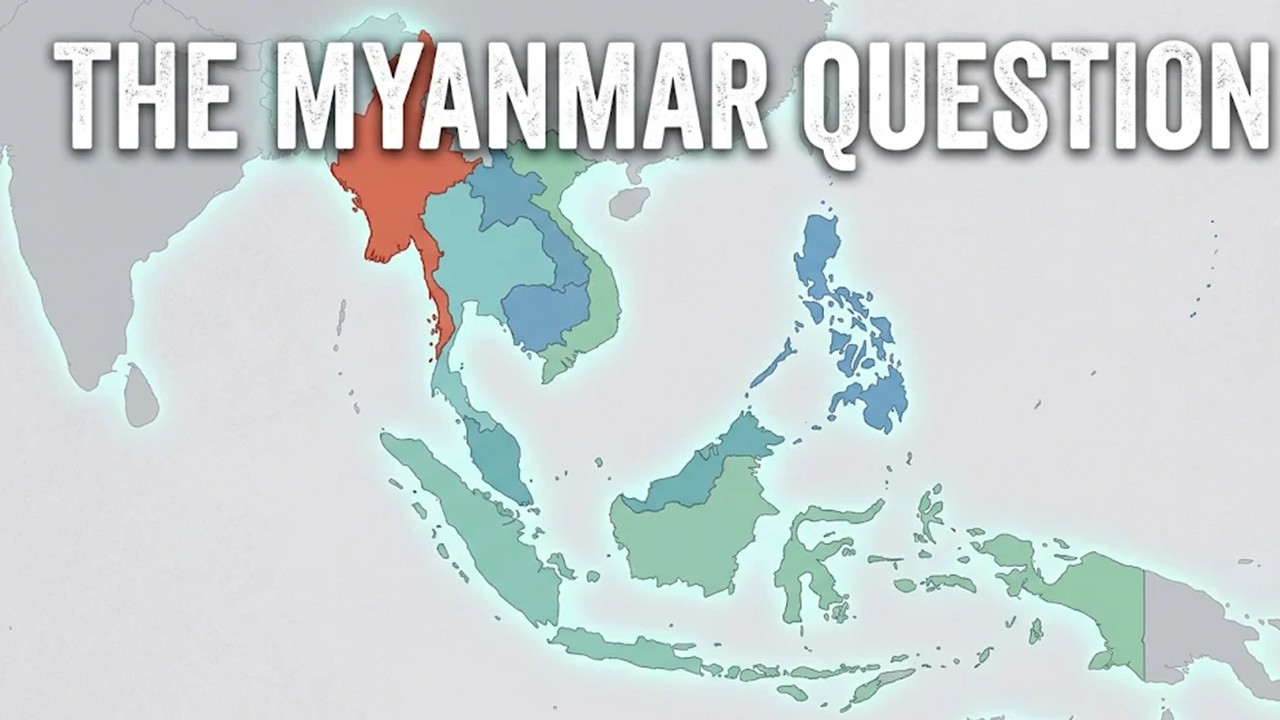
ASEAN should make Myanmar's full political reintegration conditional on demonstrable progress towards peace and an end to violence, rather than restore its political standing in the expectation that engagement will eventually deliver results, according to regional analyst Joanne Lin.
In a commentary published by Channel News Asia, Lin, a senior fellow at the ISEAS–Yusof Ishak Institute, argues that ASEAN must distinguish between maintaining diplomatic contact with Myanmar and allowing its military leadership to resume full political participation in the regional organisation.
The debate has gained renewed attention following Malaysian Prime Minister Anwar Ibrahim's meeting with Myanmar's military leader, Min Aung Hlaing, in October. Following the meeting, Anwar indicated that Malaysia would work towards Myanmar's full reintegration into ASEAN, signalling a willingness to pursue a more active diplomatic approach after years of restricted engagement.
However, the issue presents ASEAN with a difficult balancing act. Myanmar remains a member of the organisation, but its political representation at leaders' summits and high-level meetings has been restricted since the military coup of February 2021, which overthrew the elected government of Aung San Suu Kyi.
The restrictions were imposed after the military authorities failed to demonstrate meaningful progress on the Five-Point Consensus, ASEAN's principal diplomatic framework for addressing the crisis.
The Five-Point Consensus, agreed by ASEAN leaders in Jakarta in April 2021, called for an immediate cessation of violence, constructive dialogue among all parties, mediation by an ASEAN special envoy, humanitarian assistance through the ASEAN Coordinating Centre for Humanitarian Assistance (AHA Centre), and a visit by the special envoy to Myanmar to meet all relevant parties.
More than five years later, implementation remains limited. Fighting continues between the military, ethnic armed organisations and resistance forces, while the humanitarian situation remains severe. The military authorities have also resisted aspects of the ASEAN framework, raising questions about whether the consensus remains an effective basis for resolving the conflict.
Lin argues that ASEAN does not need to demand that all five elements be fully achieved before considering any change in Myanmar's political representation. Instead, the bloc should establish practical and measurable benchmarks.
She points to three areas highlighted by Singapore Foreign Minister Vivian Balakrishnan: reducing violence against civilians, releasing political detainees, including former state counsellor Aung San Suu Kyi, and ensuring humanitarian assistance reaches communities throughout the country regardless of political allegiance.
These benchmarks could include evidence of declining civilian casualties, compliance with local ceasefires or humanitarian pauses, the release of political prisoners and access for humanitarian organisations to areas beyond the military government's control.
The distinction is important because ASEAN has limited power to compel Myanmar's competing political and military groups to negotiate. The country's opposition is also fragmented, involving the National Unity Government, ethnic armed organisations and People's Defence Forces, which do not necessarily share the same political objectives.
Lin suggests ASEAN should therefore concentrate on maintaining communication with all relevant parties and creating opportunities for dialogue, rather than treating engagement with the military authorities as evidence of progress towards reconciliation.
She also raises concerns about the effectiveness of ASEAN's rotating special envoy system. With the position changing alongside the bloc's annual chairmanship, diplomatic relationships and institutional knowledge must repeatedly be rebuilt. A longer-term envoy and a formal benchmarking mechanism could provide greater continuity.
The issue will become particularly significant when Singapore assumes the ASEAN chairmanship in 2027. The organisation will need to balance the desire to restore Myanmar's full participation with the need to demonstrate that its collective decisions carry meaning.
For Malaysia, which has pursued direct engagement with Min Aung Hlaing, the debate highlights the difference between keeping diplomatic channels open and supporting the restoration of Myanmar's political standing within ASEAN.
The challenge is not whether Myanmar should eventually return to full participation in the regional organisation, but what conditions should make that possible. Lin's central argument is that reintegration must be earned through observable improvements on the ground, rather than granted as an incentive without evidence of change.