

Australia's Pacific Soft Power Strategy Builds
Australia's decision to bring 25 Indo-Pacific officials, including a representative from the Federated States of Micronesia, to Canberra for diplomatic training reflects a broader strategy of building regional influence through institutional partnerships, professional networks and long-term development investment.
Australia is strengthening its diplomatic relationships across the Pacific through an approach that goes beyond traditional development assistance, investing in professional training, institutional capacity and personal relationships that can shape regional cooperation for years to come.
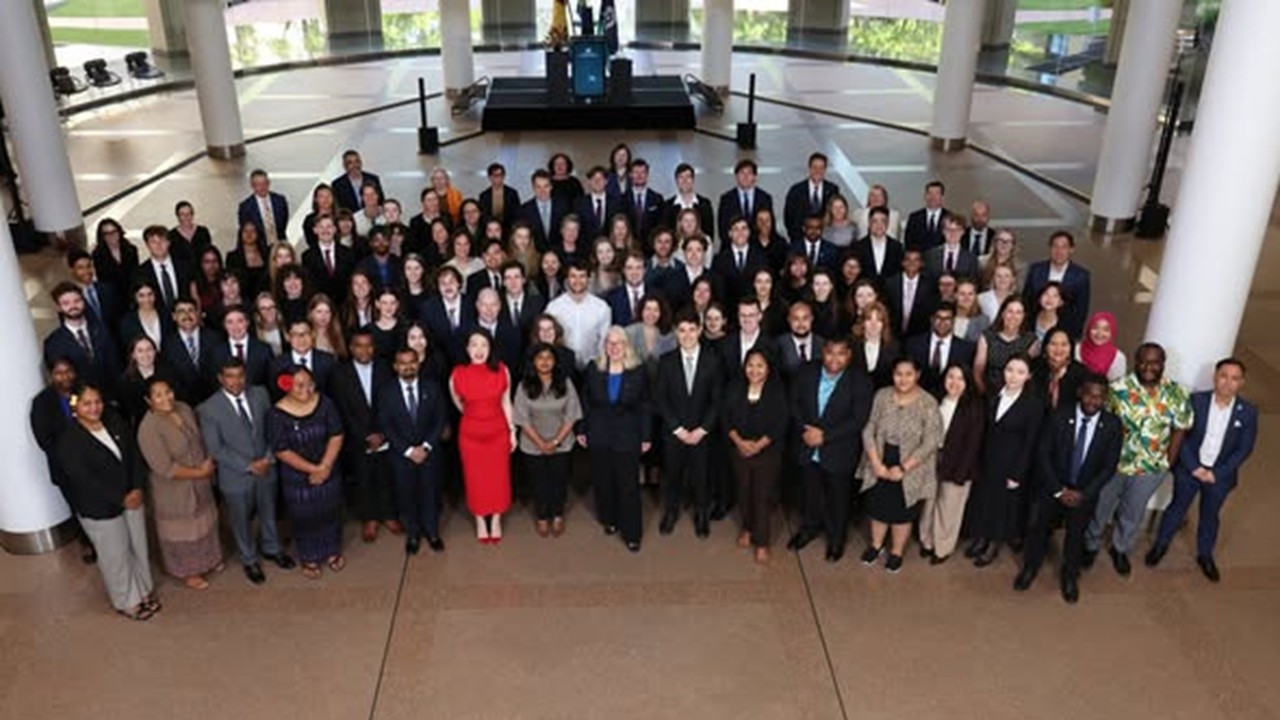
The latest example is the 2026 International Graduate Program (IGP), which has brought 25 officials from across the Indo-Pacific to Canberra for a month of professional development alongside graduates of Australia's Department of Foreign Affairs and Trade (DFAT).
Among the participants is Bridget Endor, a Foreign Affairs Officer from the Federated States of Micronesia (FSM), highlighting the importance Canberra places on maintaining close working relationships with smaller Pacific Island nations.
During the programme, participants will work together, exchange experiences and develop diplomatic and administrative skills intended to strengthen cooperation between their respective governments.
The programme, which dates back to the 1960s, is being held for the first time since the Covid-19 pandemic. Its return signals a renewed emphasis on building relationships through direct engagement between officials, rather than relying exclusively on formal diplomatic channels.
For Australia, this represents an important dimension of its regional soft power strategy.
Diplomatic training creates professional relationships that can endure beyond individual political administrations. Officials who develop working relationships in Canberra may carry those connections into future negotiations, regional institutions and government decision-making.
The programme also gives Australia an opportunity to share its institutional experience and develop a deeper understanding of the priorities and challenges facing its Pacific neighbours.
This people-to-people approach sits alongside a substantial financial commitment.
According to Australia's Department of Foreign Affairs and Trade, the country allocated approximately A$2.16 billion in official development assistance to the Pacific in 2025–26, with the amount budgeted to increase to A$2.22 billion in 2026–27.
The funding supports a broad range of priorities, including infrastructure, education, healthcare, climate resilience, governance and economic development.
For the Federated States of Micronesia, Australia's estimated development assistance allocation was A$11.4 million in 2025–26, with A$8.3 million budgeted for 2026–27.
While the IGP is a relatively small component of this wider engagement, its strategic value lies in developing relationships and institutional familiarity that financial assistance alone cannot necessarily achieve.
Australia's regional approach also reflects its broader geopolitical interests. The Pacific has become increasingly important in the strategic competition involving Australia, China and other international partners, with infrastructure financing, security cooperation, climate policy and development assistance all contributing to diplomatic influence.
Canberra has increasingly presented its engagement as a partnership built around Pacific priorities, while seeking to reinforce its position as a reliable and long-term regional partner.
The distinction is important for Pacific Island governments, which have consistently emphasised their sovereignty and their right to work with multiple international partners.
For Australia, programmes such as the International Graduate Program offer a relatively direct way to demonstrate commitment without requiring major infrastructure projects or high-profile diplomatic agreements.
By bringing officials together, investing in their professional development and creating networks across government institutions, Australia is building relationships that could prove valuable long after the participants return home.
The participation of an FSM foreign affairs officer is therefore more than a training opportunity. It is another example of how Australia's influence in the Pacific is being developed through education, institutional cooperation and the cultivation of long-term diplomatic relationships.