

Japan’s Naval Training Cruise Underscores Importance of Indo-Pacific Partnerships
A 161-day voyage by Japan’s Maritime Self-Defense Force has combined officer training with diplomatic engagement across five countries, as rising maritime tensions around Taiwan and the South China Sea underline the strategic importance of regional partnerships.
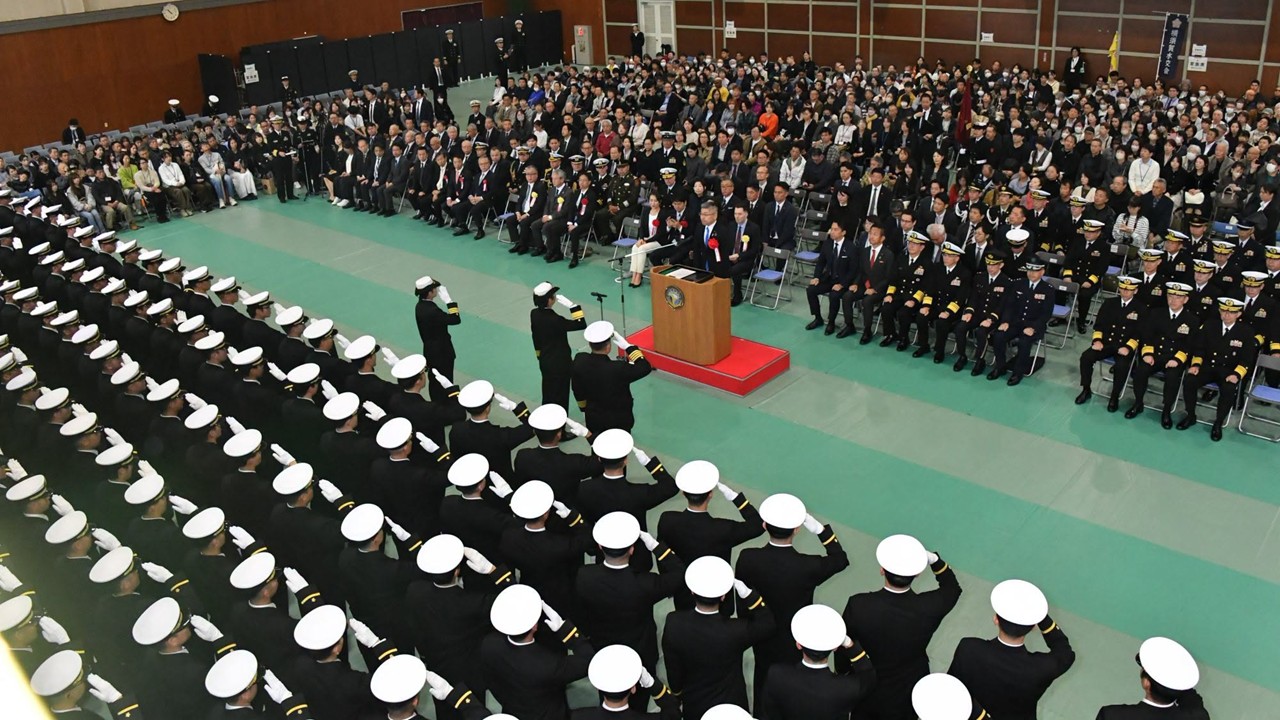
Japan has highlighted the diplomatic role of its maritime forces following the return of a 2026 overseas training cruise by newly commissioned officers, a voyage that took on added significance against a backdrop of growing security pressures across the Indo-Pacific.
Kazuhiro Fujii, Japan’s Parliamentary Vice-Minister for Foreign Affairs, attended the crew’s homecoming ceremony at the Japan Maritime Self-Defense Force’s Yokosuka Base on October 24, congratulating the officers on completing a 161-day voyage and recognising their role in strengthening Japan’s international relationships.
According to Japan’s Ministry of Foreign Affairs, the vessels departed Yokosuka on May 16, visited 11 ports in five countries and conducted bilateral exercises and exchange activities along the way. The programme is designed to develop the seamanship and professional capabilities of officers graduating from the Maritime Self-Defense Force Officer Candidate School, while using overseas engagements to build goodwill with partner countries.
The ministry said Fujii expressed appreciation for the officers’ efforts and emphasised the importance of international port visits and exchanges in fostering friendly relations. Diplomats from relevant countries’ embassies in Tokyo and Japanese lawmakers also attended the ceremony.
While Japan presented the cruise primarily as a training and diplomatic initiative, its broader significance is apparent at a time when maritime security has become an increasingly prominent concern for governments across East Asia and Southeast Asia.
On October 23, Reuters reported that Taiwan’s coast guard had accused China of combining maritime militia vessels with coast guard ships and research vessels in operations around Taiwan and the wider western Pacific. Taipei said the activity had increased since June in overlapping maritime economic zones involving Taiwan, Japan and the Philippines.
Taiwanese authorities described the operations as “grey-zone” activity — actions that use civilian, scientific or law-enforcement platforms to advance strategic interests without crossing the threshold of open military conflict. They warned that such activity increased surveillance and response demands on regional coast guards and could place additional pressure on the existing maritime order.
China maintains that its operations are legitimate and lawful, while Beijing claims Taiwan as part of its territory. Taiwan rejects Beijing’s sovereignty claim.
The developments are particularly relevant to Japan because its security and economic interests are closely connected to the stability of the surrounding seas. The East China Sea, the Taiwan Strait and the South China Sea form part of a wider maritime environment through which energy supplies, industrial inputs and manufactured goods move between East Asia and global markets.
Tensions have also been reported farther south. The US Naval Institute’s USNI News reported on October 9 that Chinese and Philippine forces had encountered one another at least six times since the beginning of that month around disputed features in the South China Sea and the Luzon Strait. The reported incidents included confrontations involving coast guard vessels, maritime militia boats and military aircraft.
The Luzon Strait is a strategically important passage between Taiwan and the northern Philippines, used by commercial and military vessels moving through the western Pacific. The reported encounters illustrate how local disputes can extend beyond individual territorial claims to affect regional maritime awareness, crisis management and the movement of vessels.
For Japan, naval training cruises provide an opportunity to develop operational skills while establishing professional relationships with counterparts in other countries. Port calls, joint exercises and exchanges can build familiarity between maritime forces, potentially improving communication and coordination when vessels encounter one another during routine operations or periods of heightened tension.
Such engagements are not a substitute for formal security agreements or diplomatic negotiations. Their value lies partly in creating regular contact between countries, helping to sustain relationships that may become important during a crisis.
The training programme also reflects the multiple responsibilities carried by Japan’s Maritime Self-Defense Force. Beyond developing combat readiness and seamanship, its overseas activities support defence diplomacy, regional engagement and Japan’s efforts to maintain a constructive presence among international partners.
For Southeast Asian countries, the distinction between diplomatic engagement and military escalation is important. Regional governments have sought to preserve economic ties with China while protecting their maritime rights and maintaining constructive relationships with Japan, the United States and other partners. The challenge is to strengthen deterrence and cooperation without increasing the risk of miscalculation.
Japan’s training cruise does not, by itself, signal a new security commitment or a response to any single regional incident. Rather, it demonstrates how military-to-military exchanges and international goodwill activities can form part of a country’s broader diplomatic engagement.
As maritime activity intensifies across the western Pacific, the effectiveness of regional security arrangements will depend not only on ships and equipment but also on communication, mutual understanding and the ability of governments to manage disagreements before they escalate.
The return of the Japanese officers therefore marks both the completion of a demanding professional voyage and a reminder that maritime diplomacy remains an important component of Japan’s engagement with a region facing increasingly complex security challenges.