

Ramos-Horta's Pacific Diplomacy Signals Timor-Leste's Growing Regional Ambition
President José Ramos-Horta's landmark State Visit to Vanuatu has capped an active period of regional diplomacy as Timor-Leste expands its international engagement through strategic partnerships, educational exchanges and regional cooperation ahead of its next phase of global integration.
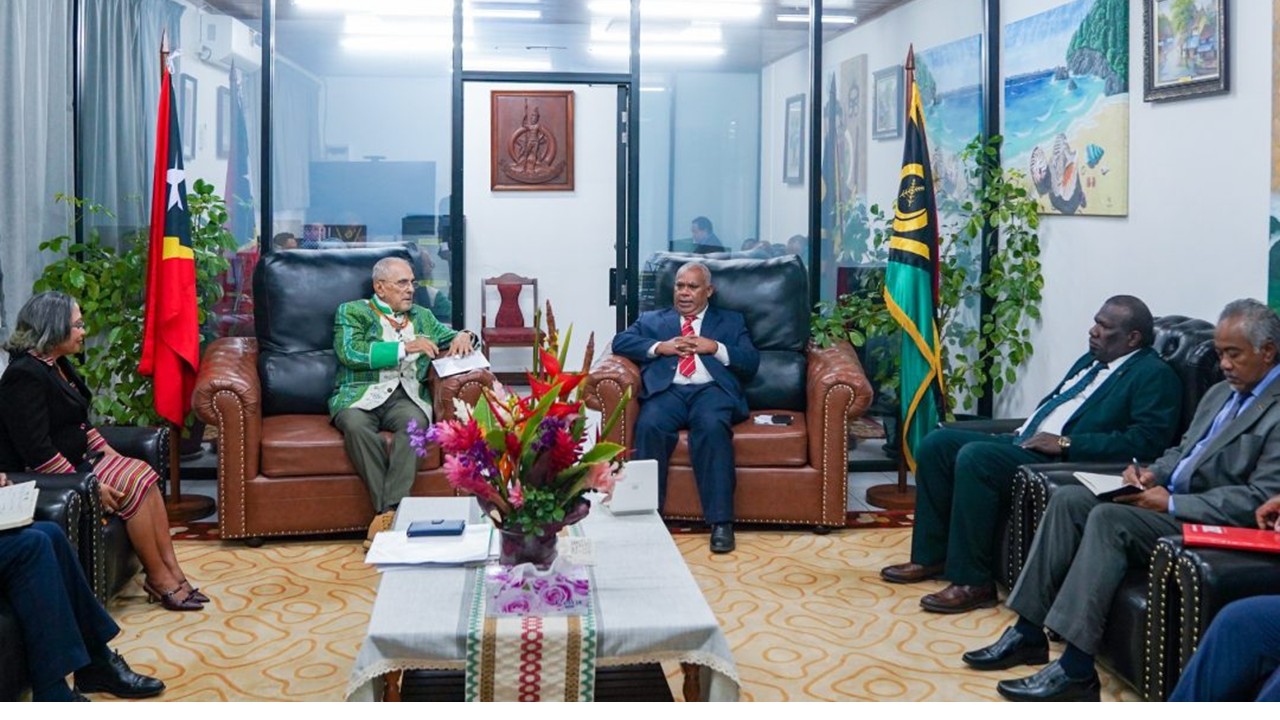
PORT VILA – President José Ramos-Horta has concluded a landmark State Visit to Vanuatu that not only strengthened bilateral relations but also highlighted Timor-Leste's increasingly active diplomatic engagement across the Asia-Pacific region as the young nation broadens its international partnerships.
The four-day visit, the first State Visit by a Timorese President to Vanuatu, coincided with the country's 46th Independence Day celebrations and delivered a series of tangible outcomes, including the signing of a Framework Agreement for Development Cooperation and a reciprocal visa exemption agreement designed to facilitate closer government, economic and people-to-people exchanges.
President Ramos-Horta held bilateral talks with President Nikenike Vurobaravu and Prime Minister Jotham Napat, with discussions focusing on sustainable development, climate resilience, regional security, governance and institutional cooperation. Both leaders reaffirmed the longstanding friendship between the two Small Island Developing States, a relationship dating back to Vanuatu's steadfast support for Timor-Leste's struggle for independence.
The State Visit extended well beyond formal diplomacy. In recognition of Vanuatu's historic support, President Ramos-Horta conferred the Order of Timor-Leste on senior Vanuatu leaders and police officers whose contributions were instrumental during Timor-Leste's path to independence. The honours reflected not only gratitude for past solidarity but also a shared commitment to strengthening future cooperation.
Education and public diplomacy also featured prominently during the visit. President Ramos-Horta delivered a lecture on peace-building at the National University of Vanuatu, drawing on Timor-Leste's own experience of conflict, reconciliation and democratic transition. Addressing students and academics, he highlighted dialogue, inclusive governance and education as essential foundations for lasting peace while encouraging a new generation of Pacific leaders to embrace regional cooperation.
The programme also included meetings with parliamentary leaders, traditional chiefs, community organisations and the Timorese diaspora, reinforcing Timor-Leste's diplomatic approach of combining high-level political engagement with cultural and community outreach.
The visit forms part of a broader period of intensified international engagement by the Timorese Presidency. Recent diplomatic activity has included hosting visiting heads of government, strengthening ties with ASEAN partners, expanding cooperation with Pacific neighbours and promoting Timor-Leste's role in regional dialogue on development, peace-building and climate resilience. The Presidency has increasingly positioned the country as a bridge between Southeast Asia and the Pacific, leveraging its unique geographic and historical position.
For Timor-Leste, diplomacy is becoming an increasingly important pillar of national development. Beyond traditional state-to-state relations, the country's foreign policy is placing greater emphasis on education, institutional partnerships, technical cooperation and people-to-people engagement as tools for economic development and regional integration.
The Vanuatu visit demonstrated that approach in practice. By combining diplomatic agreements, academic engagement, historical recognition and cultural exchanges within a single State Visit, Timor-Leste showcased a model of diplomacy that extends beyond protocol to build long-term partnerships across the Pacific.
As Timor-Leste continues to strengthen its international profile, President Ramos-Horta's visit to Vanuatu signals a foreign policy increasingly focused on creating enduring regional relationships that support peace, sustainable development and economic cooperation in an evolving Indo-Pacific landscape.