

Tajikistan and Mongolia sign new agreements to deepen trade and investment ties
Tajikistan and Mongolia have signed a series of bilateral cooperation agreements covering trade, investment, agriculture, transport and education, as both countries seek to strengthen economic cooperation and expand connectivity across Central and East Asia.
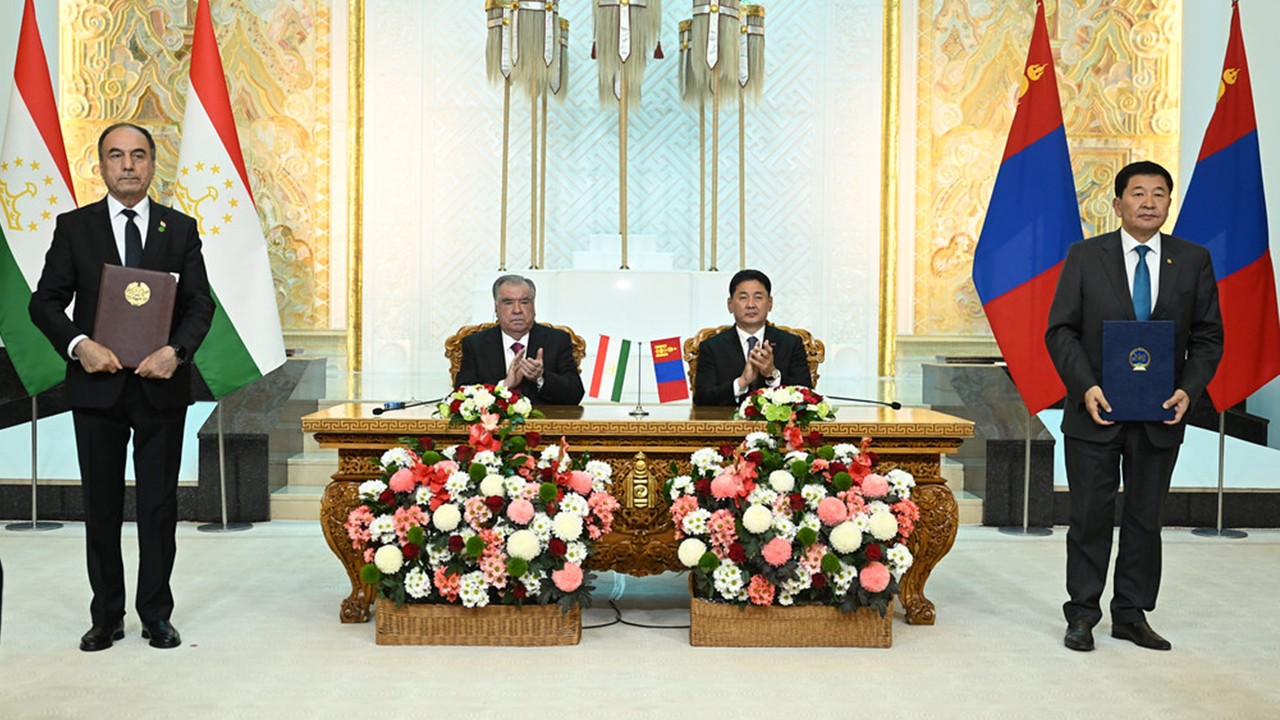
DUSHANBE – Tajikistan and Mongolia have strengthened their bilateral relationship by signing a package of new cooperation agreements aimed at expanding trade, investment and economic collaboration following high level talks between President Emomali Rahmon and Mongolian President Ukhnaagiin Khürelsükh.
The signing ceremony took place after official discussions between the two leaders in Dushanbe, marking a new phase in relations between the two countries as they look to diversify economic partnerships and promote regional cooperation.
The agreements cover a broad range of sectors, including trade and investment, agriculture, transport and logistics, tourism, education, science, culture and environmental cooperation.
Both governments also agreed to strengthen collaboration between their respective chambers of commerce and investment agencies, creating new opportunities for businesses to explore commercial partnerships and facilitate greater private sector engagement.
The expanded cooperation is expected to support increased bilateral trade by improving institutional links while encouraging investment in sectors where both countries have complementary strengths, including mining, agriculture and infrastructure development.
Officials said the agreements also aim to improve transport connectivity and facilitate the movement of goods between Central and East Asia, supporting broader regional economic integration.
The two presidents reaffirmed their commitment to strengthening political dialogue and expanding cooperation through international and regional organisations, while encouraging greater exchanges between businesses, academic institutions and cultural organisations.
For Tajikistan, the agreements form part of a wider strategy to deepen economic engagement with Asia, attract foreign investment and diversify export markets beyond its traditional trading partners.
Mongolia, meanwhile, continues to pursue stronger commercial links with Central Asia as part of its broader regional economic diplomacy, seeking new opportunities for trade, logistics and investment cooperation.
The latest agreements underscore the growing importance of cross regional partnerships as Asian economies look to enhance resilience, improve connectivity and unlock new sources of economic growth through closer bilateral cooperation.