


Asia Pacific leaders push for stronger cooperation to unlock low altitude economy
Asia Pacific leaders, researchers and industry executives have called for stronger regional collaboration to accelerate the development of the low altitude economy, positioning sustainable aviation technologies, drones and intelligent air mobility as key drivers of future economic growth.
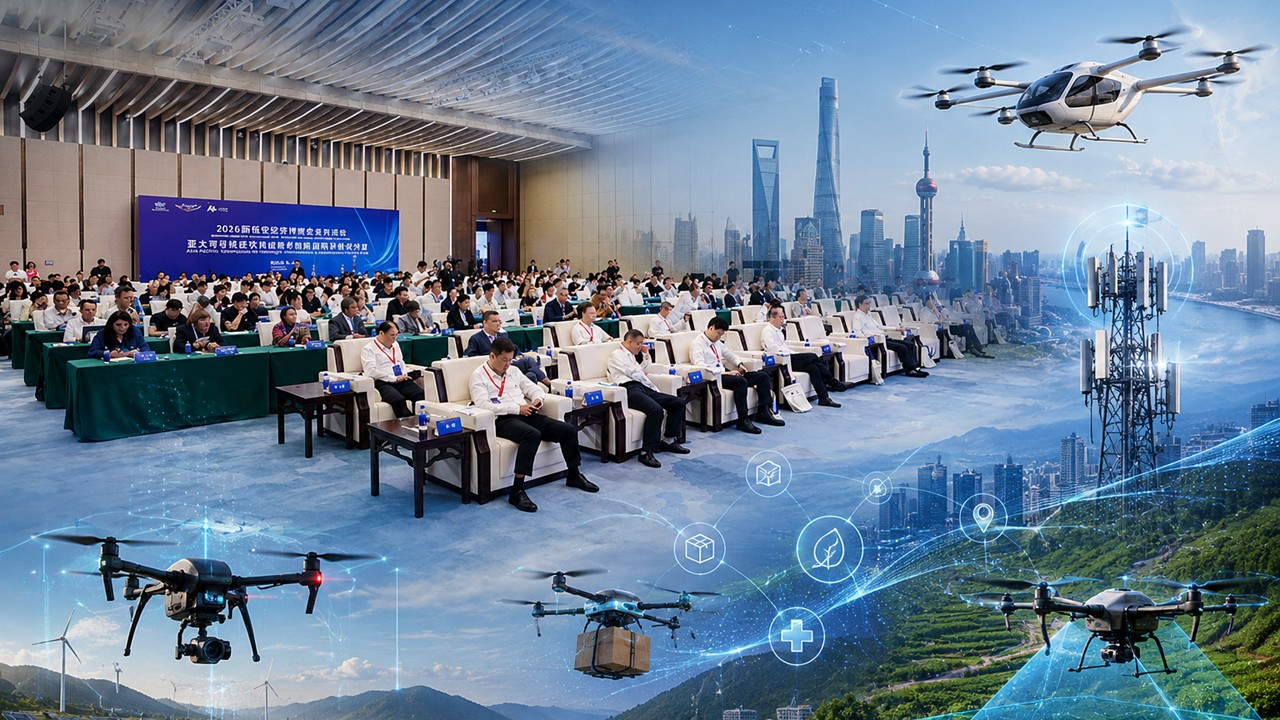
SHANGHAI – Governments, industry leaders and researchers from across the Asia Pacific have called for closer collaboration to accelerate the development of the region's low altitude economy, with sustainable technologies and cross border innovation expected to reshape industries ranging from logistics and agriculture to emergency response and urban mobility.
The call came during the Asia Pacific Symposium for Strategic Innovation in Sustainable Technology, held alongside the 2026 International Low Altitude Economy Expo in Shanghai, where policymakers, academics and technology companies gathered to discuss how regional cooperation can accelerate commercialisation of emerging aviation technologies.
The symposium focused on building practical partnerships to support the rapidly expanding low altitude economy, an emerging sector encompassing drones, electric vertical take off and landing aircraft (eVTOL), autonomous aerial systems, low altitude logistics and smart airspace management.
Participants agreed that the sector has the potential to become one of the Asia Pacific's next major economic growth engines, but warned that success will depend on harmonised regulations, technology standards and closer cooperation between governments and industry.
Organisers highlighted the importance of sustainable innovation, encouraging countries to work together on research, policy development and technology transfer to support safe and environmentally responsible growth.
Artificial intelligence featured prominently throughout the discussions, with experts examining how AI can improve autonomous flight, air traffic management, predictive maintenance and operational safety while reducing costs and improving efficiency across low altitude aviation networks.
Delegates also explored how emerging technologies can strengthen disaster response capabilities, environmental monitoring, precision agriculture, infrastructure inspections and healthcare logistics, particularly in remote and underserved communities.
The symposium emphasised that many of these applications require cross border collaboration, particularly as drone operations, digital infrastructure and intelligent aviation systems become increasingly interconnected throughout the region.
Industry representatives stressed that investment in research and development must be matched by policies that encourage innovation while ensuring public safety, cybersecurity and sustainable environmental outcomes.
The event also showcased advances in intelligent aviation technologies, smart manufacturing and integrated digital systems designed to support the next generation of aerial mobility. Companies demonstrated new solutions aimed at improving efficiency across transport, logistics and industrial operations while reducing carbon emissions.
Participants said the Asia Pacific region is well positioned to become a global leader in the low altitude economy due to its strong manufacturing base, growing technology ecosystem and increasing investment in digital infrastructure.
Government, industry, university and research representatives from APEC economies including China, the United States, Singapore, Indonesia, Japan, Malaysia, Thailand, the Philippines and Peru gathered in Shanghai. They engaged in in-depth exchanges on topics such as policy coordination, technological breakthroughs, application scenario implementation and industrial ecosystem co-construction, built consensus on industrial growth, and pushed forward deeper and more substantive pragmatic cooperation on the low-altitude economy in the Asia-Pacific.
The symposium concluded with a commitment to strengthen cooperation between governments, research institutions and private industry, with participants agreeing that practical partnerships will be essential to transforming technological innovation into commercial opportunities that benefit economies across the region.
As countries continue investing in next generation mobility and sustainable technologies, the low altitude economy is expected to play an increasingly important role in supporting economic diversification, improving connectivity and driving innovation across the Asia Pacific.