

Twenty nine nations sign agreement to establish global AI cooperation body
Twenty nine countries have signed an agreement to establish the World Artificial Intelligence Cooperation Organization, marking one of the most significant international efforts yet to coordinate AI governance, standards and collaboration as the technology reshapes economies, industries and global geopolitics.
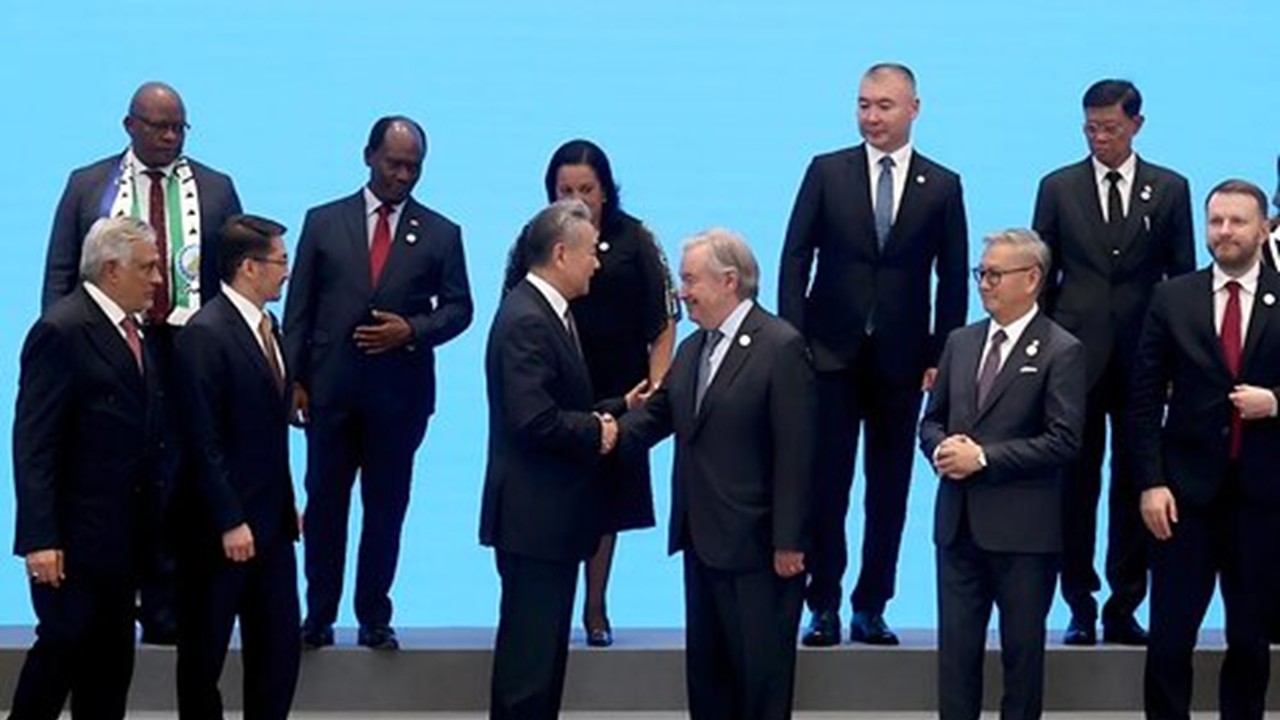
SHANGHAI – Representatives from 29 countries have signed an agreement establishing the World Artificial Intelligence Cooperation Organization (WAICO), a new intergovernmental body aimed at strengthening international cooperation and governance in artificial intelligence.
The agreement was signed during a ceremony in Shanghai, with the organisation to be headquartered in the Chinese financial hub. Its creation reflects growing international recognition that AI development requires greater coordination across borders as governments seek to balance innovation with safety, security and ethical oversight.
The founding members include countries from Asia, Africa, Europe and Latin America, among them Russia, Brazil, Pakistan, Indonesia, Kazakhstan, Serbia, Cuba and Belarus. The broad membership highlights increasing interest among emerging economies in shaping the future rules governing artificial intelligence rather than simply adopting standards developed elsewhere.
Chinese Foreign Minister Wang Yi, who signed the agreement on behalf of China, said the organisation would promote international cooperation on AI while supporting the technology's healthy, orderly and responsible development for the benefit of all nations.
The organisation is expected to provide a platform for member countries to collaborate on AI governance, technical standards, research cooperation, policy coordination and capacity building, while encouraging greater knowledge sharing between developed and developing economies.
The move comes as governments around the world accelerate efforts to establish regulatory frameworks for artificial intelligence amid rapid advances in generative AI, autonomous systems and large language models. Concerns surrounding privacy, cybersecurity, intellectual property, misinformation and workforce disruption have intensified calls for internationally coordinated governance.
The establishment of WAICO also reflects the increasingly strategic role artificial intelligence now plays in economic competitiveness and national security. Countries are investing billions of dollars in AI infrastructure, computing power, semiconductor manufacturing and talent development as they seek leadership in the next phase of digital transformation.
Industry observers say the creation of the organisation could further reshape the global AI landscape, particularly as countries pursue different approaches to regulation, innovation and technology cooperation.
The signing took place ahead of the World Artificial Intelligence Conference (WAIC) in Shanghai, one of the world's largest AI gatherings, which brings together government leaders, technology companies, researchers and policymakers to discuss the future of artificial intelligence and its applications across industries.
The launch of the new organisation adds another dimension to the growing international debate over how AI should be governed, with policymakers increasingly recognising that the technology's impact extends beyond national borders and requires collaborative approaches to maximise its benefits while managing potential risks.