


New Free Resource Explores the Evolution of Economic Thought Across Millennia
A new free publication traces the evolution of economic thought from ancient civilisations to modern debates, offering educators, students and policymakers an accessible guide to the ideas that continue to shape global economic policy and public discourse.
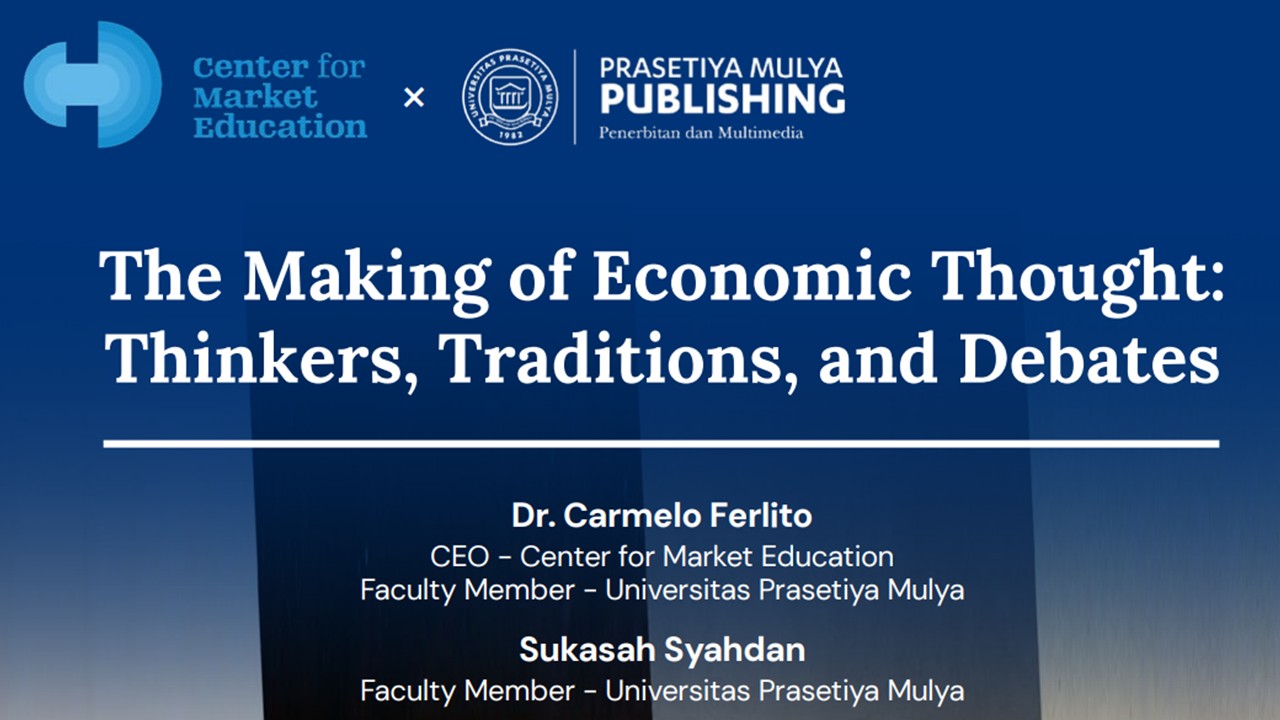
KUALA LUMPUR – A new educational publication tracing the evolution of economic ideas from the ancient world to contemporary debates has been released as a free resource for educators, students and anyone interested in understanding how economic thinking has developed over time.
Titled The Making of Economic Thought: Thinkers, Traditions, and Debates, the publication examines the intellectual traditions that have shaped economics over centuries, presenting the discipline as an ongoing dialogue rather than a collection of settled theories. The book is available as a free digital download and is intended to support university teaching, independent study and broader public understanding of the history of economic thought.
The volume follows the development of economic ideas from their foundations in the ancient, medieval and early Islamic worlds through the emergence of classical political economy, Marxism, the Historical and Austrian Schools, marginalism, Keynesianism, institutional economics, evolutionary economics and contemporary schools of thought. Rather than portraying economics as a linear progression towards a single body of accepted knowledge, it highlights the competing interpretations that continue to shape debates on markets, institutions, human behaviour, public policy and economic organisation.
According to the editors, the publication is designed as an accessible teaching resource that complements, rather than replaces, established scholarship in the field. It acknowledges the influential contributions of leading historians of economic thought, including Mark Blaug, Heinz Kurz and Alessandro Roncaglia, while providing a practical reference for classroom instruction and structured learning.
Each chapter places economic theories within their historical and intellectual context, explaining how ideas emerged in response to the political, social and economic challenges of their time. The publication also includes key concepts together with review and discussion questions, making it suitable for university courses and guided reading programmes.
One of the distinguishing features of the volume is its inclusion of more recent developments that have received comparatively less attention in traditional histories of economics. Among these are Humanomics and the hermeneutical approach to economics, which seek to broaden economic analysis by emphasising meaning, language, interpretation, moral values and human agency alongside quantitative measurement.
These perspectives argue that economics should not be viewed solely as a technical discipline concerned with measurable outcomes, but also as a social science that examines purposeful human action, institutions and the conditions that contribute to human flourishing. By incorporating these contemporary debates, the publication reflects the increasingly interdisciplinary nature of economic scholarship.
The release comes at a time when governments, businesses and universities are re-examining economic assumptions in response to geopolitical uncertainty, technological disruption, demographic change and evolving patterns of global trade. As policymakers confront issues ranging from supply chain resilience and industrial policy to artificial intelligence and sustainable development, understanding the historical evolution of economic ideas has taken on renewed relevance.
The editors hope the publication will encourage readers to see the history of economics not as a catalogue of outdated theories, but as a continuing conversation in which many of the questions confronting earlier generations remain central to today's policy debates.
The digital edition of The Making of Economic Thought: Thinkers, Traditions, and Debates is available as a free download. Printed economics titles published by the Centre for Market Education are also available through Amazon, while readers in Malaysia can obtain physical copies through Tintabudi Bookshop in Taman Tun Dr Ismail, Kuala Lumpur, or directly from the Centre for Market Education's offices in Kuala Lumpur and Jakarta.