

Hong Kong Gifted Students: AI Solutions for Society
From artificial intelligence-powered robotic arms designed to support elderly people to acoustic monitoring of bats, students showcased at InnoCarnival 2026 are demonstrating how gifted education can connect scientific learning with real-world challenges.
HONG KONG — Gifted students in Hong Kong are applying artificial intelligence, robotics and environmental science to problems ranging from elderly care to biodiversity conservation, highlighting an approach to education that connects advanced learning with practical social needs.
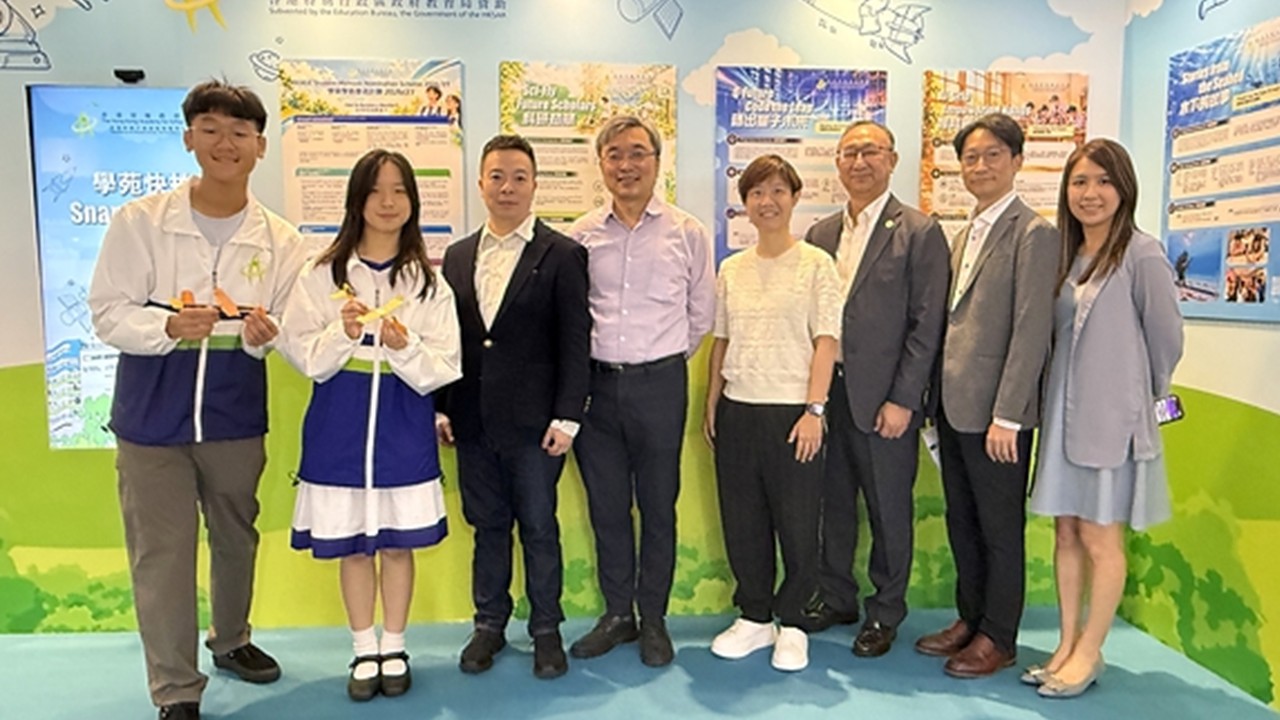
The Hong Kong Academy for Gifted Education (HKAGE) is presenting students’ projects at InnoCarnival 2026, a nine-day public exhibition at Hong Kong Science Park running from October 24 to November 1.
Under the theme “Technology for Good, Innovation for All”, the academy is showcasing how students have translated knowledge gained through specialised programmes into projects addressing challenges beyond the classroom.
The exhibits cover artificial intelligence, quantum computing, environmental science, underwater archaeology and sustainable development, reflecting the academy’s emphasis on developing both technical capabilities and social responsibility.
One featured project, developed through the academy’s Creative AI Robotic Arm for Inclusion course, explores how intelligent robotic arms could improve the quality of life of elderly people and support their caregivers.
Students learned the fundamentals of artificial intelligence, robotics and sensor applications before designing, testing and refining robotic arm prototypes. They used real-time data analysis and algorithms to develop their designs and explore potential applications.
The project illustrates how robotics education can move beyond programming exercises to consider the needs of people who may benefit from assistive technologies.
However, turning prototypes into practical care solutions would require further assessment of their safety, reliability, affordability and suitability for different users.
Another project focuses on environmental monitoring and wildlife conservation.
Through the Environmental Science Course, titled “Bat Echoes – Voices of the Night”, students recorded bat sounds and analysed acoustic data to study the animals’ activity and characteristics.
Acoustic monitoring can help researchers investigate wildlife in environments where direct observation is difficult. For students, the exercise offers an introduction to collecting and interpreting scientific data while exploring local biodiversity and potential approaches to ecological conservation.
The projects demonstrate how gifted education can combine technical learning with scientific inquiry, encouraging students to investigate problems, test ideas and consider how their findings might contribute to society.
The academy is also organising hands-on activities to introduce science and engineering to the wider public.
Its “Build Your Own Glider” parent-child workshop invites participants to learn about aerodynamics, including lift, gravity, thrust and drag. With guidance from instructors and HKAGE students, participants design, assemble and decorate their own gliders using lightweight, durable materials.
The activity offers families an opportunity to explore scientific principles through experimentation and practical construction.
The exhibition also features an interactive photography installation themed around the academy’s gifted education programmes.
Wong Chung Po, acting executive director of HKAGE, said the academy sought to provide gifted students with diverse learning opportunities and encourage them to translate their knowledge into innovations with positive social impact.
Participation in the carnival also gives students an opportunity to share their work with the public and demonstrate how specialised education can nurture creative, socially responsible talent.
Established in 2008 and supported by Hong Kong’s Education Bureau, HKAGE provides gifted education services to primary and secondary school students. It also offers information and support to teachers, parents and other stakeholders involved in gifted education.
Its programmes align with the Education Bureau’s Blueprint for Digital Education in Primary and Secondary Schools, which seeks to advance the digital transformation of education across Hong Kong.
The wider InnoCarnival provides a platform for this work to reach beyond specialist educational circles. Organised by the government’s Innovation and Technology Commission, the 2026 event brings together more than 40 programme partners, including universities, research and development centres, government departments and other organisations.
The carnival features exhibitions, interactive activities, workshops and online seminars covering a range of innovation and technology topics. Admission is free, although some activities require advance registration.
Hong Kong is seeking to strengthen the connections between education, research, technology and industry as it develops its innovation economy. Giving young people opportunities to apply scientific knowledge to practical challenges is one way to build those connections at an early stage.
The projects presented by HKAGE also highlight a broader question for education systems: how should success be measured when students have access to advanced learning opportunities?
Technical knowledge and academic achievement remain important, but the ability to identify problems, work with evidence and develop solutions that respond to human and environmental needs is increasingly relevant.
For the students at InnoCarnival 2026, the robotic arms and bat-monitoring projects offer an opportunity to demonstrate those capabilities. Their longer-term value will depend on whether the ideas can be developed further, tested in real-world settings and translated into meaningful benefits for the communities they are intended to serve.