Indonesia Moves to Science-Based Peatland Management Under Prabowo
Indonesia is moving towards a more integrated approach to managing its vast peatland areas, with President Prabowo Subianto calling for stronger scientific research, comprehensive mapping and greater involvement of communities living closest to fire-prone areas.
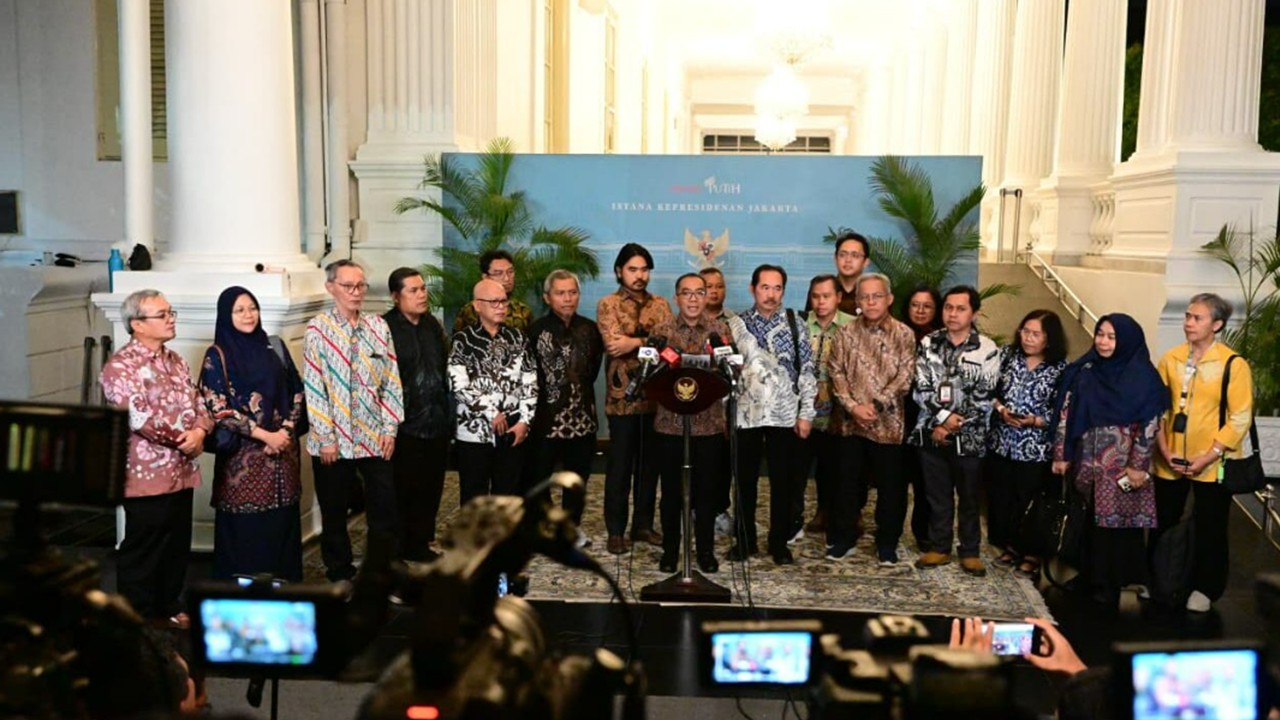
Indonesia is preparing to strengthen the management of its peatlands through a more science-based and coordinated approach, following discussions between President Prabowo Subianto, scientists and government officials at the Presidential Palace in Jakarta.
The meeting on Thursday focused on strategies to manage peatlands while improving the prevention and response to fires, with the government placing greater emphasis on research, scientific data, local knowledge and community participation.
According to Indonesia’s Presidential Secretariat, the discussions resulted in President Prabowo agreeing to the formation of the National Peatland and Mangrove Management Agency (BPGMN).
Minister of Higher Education, Science and Technology Brian Yuliarto said the proposed agency would provide a more integrated mechanism for managing information, permits and policies relating to peatlands.
The government’s intention is to bring data and management functions together within a single institution, allowing preventive measures and responses to peatland-related problems to be better coordinated.
For Indonesia, the issue is significant because peatlands are both environmentally sensitive ecosystems and areas where economic activity, agriculture, fisheries and communities intersect.
President Prabowo has therefore directed that scientists and researchers should have a stronger role in supporting the new agency. The approach is expected to include more comprehensive mapping of peatland characteristics and potential, helping determine which areas are suitable for agriculture, aquaculture and other forms of utilisation.
The emphasis on mapping also reflects a broader shift towards using scientific information to determine how peatlands should be managed rather than relying on a one-size-fits-all approach.
Yuliarto said scientists had also presented examples of local practices and indigenous knowledge that could be incorporated into future peatland management.
This is particularly important in fire prevention, where the government intends to strengthen the role of village-level communities through the Masyarakat Peduli Api (MPA) programme.
The Presidential Secretariat said experts had highlighted the importance of communities located closest to fire-prone areas because they can provide an early response when fires emerge.
The proposed approach includes practical measures such as rapid deployment of water pumps and improved calculations for aerial firefighting operations. These practices are expected to be considered as references for the new agency as it develops its operational framework.
The government is also looking at education as part of the longer-term strategy.
President Prabowo has called for greater awareness of peatland protection to be incorporated into schools and educational curricula, alongside continued research into peatland ecosystems, fire prevention and sustainable utilisation.
The scale of Indonesia’s peatland resource makes the issue particularly important. Yuliarto said Indonesia has more than 33 million hectares of peatland, underlining both the environmental importance of the resource and its potential contribution to productive economic activities when properly managed.
The government’s stated objective is therefore not simply to restrict the use of peatlands, but to establish a management framework that recognises their ecological characteristics while determining where productive activities can take place safely and sustainably.
The move also places scientific institutions, government agencies and local communities within the same management framework.
For Indonesia, that could have implications beyond fire prevention. Better mapping and more consistent data could potentially improve land-use planning, strengthen monitoring and provide clearer information for businesses and communities operating in peatland areas.
The initiative comes as Indonesia continues to deal with the complex challenges surrounding forest and land fires, including prevention, emergency response and the longer-term management of landscapes vulnerable to fire.
President Prabowo’s latest direction signals an effort to make science, local knowledge and community-level response part of a single national framework rather than treating peatland management solely as a firefighting issue.
The success of the proposed BPGMN will ultimately depend on how effectively those elements are translated into implementation, including the quality of its data, coordination between agencies, participation by local communities and the continued involvement of scientists.
For now, the government is positioning the new framework around a straightforward principle: Indonesia’s peatlands should be understood scientifically before they are managed economically, with prevention and local participation forming an important part of the equation.