

Fiji and Malaysia open new chapter in bilateral ties after first official visit
The visit therefore marks more than a diplomatic engagement between Kuala Lumpur and Suva. With energy security, trade, institutional cooperation, capacity building and high-level exchanges now on the agenda, both sides have identified a number of concrete areas where the relationship can develop.
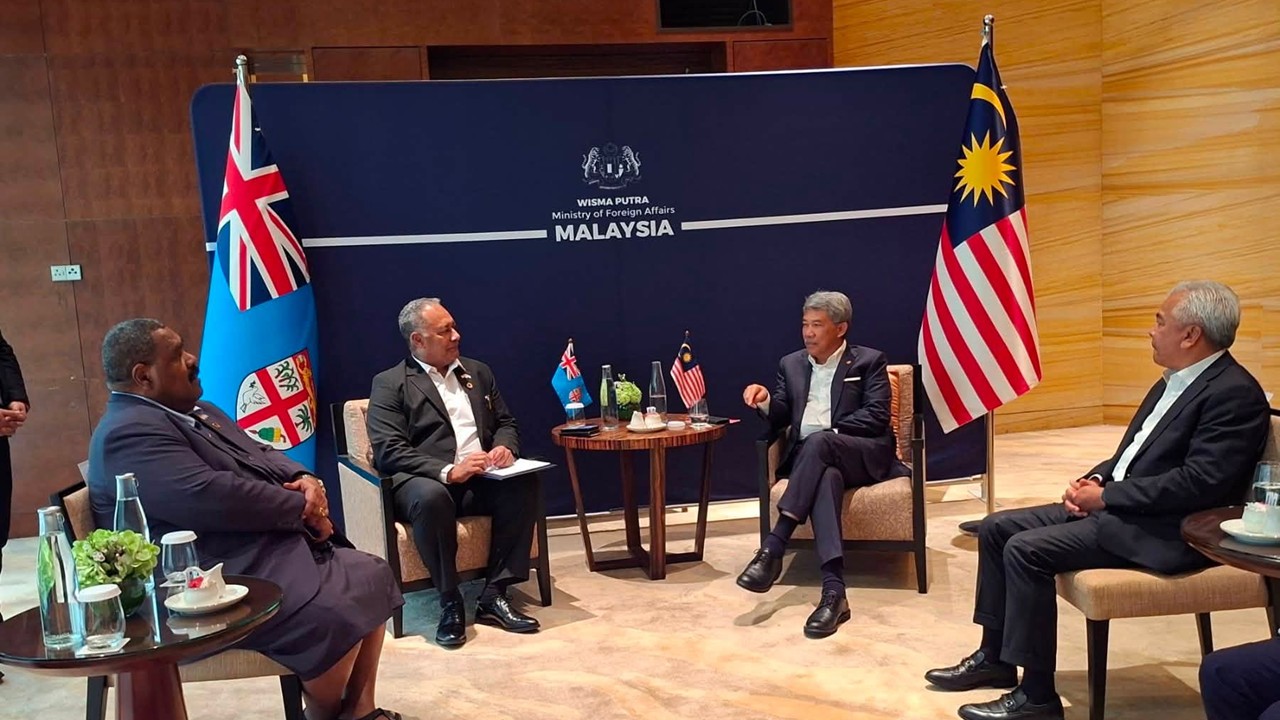
Fiji and Malaysia have identified a series of practical areas for deeper cooperation, including energy security, diplomatic capacity building, strategic fuel reserves and high-level exchanges, following Fiji Foreign Affairs and External Trade Minister Sakiasi Raisevu Ditoka’s first official visit to Malaysia.
Ditoka, who assumed office in January 2026, concluded his visit with a substantive meeting with Malaysia’s Foreign Minister, Dato’ Seri Utama Haji Mohamad bin Haji Hasan, at the Grand Hyatt Hotel in Kuala Lumpur.
In a statement following the meeting, Ditoka expressed Fiji’s appreciation for the reception extended to his delegation, describing the discussions as both “warm and substantive” and saying the visit had opened new opportunities for the two countries to deepen their relationship.
A key element of the visit was the restoration of Fiji’s permanent diplomatic presence in Kuala Lumpur. Ditoka thanked Malaysia for its support in facilitating the re-establishment of Fiji’s diplomatic presence, noting that the reopening of the Fiji High Commission in 2025 and the official opening of its Chancery during his visit had restored an important institutional link between the two countries.
“The reopening of the Fiji High Commission in 2025, and the official opening of our Chancery during this visit, restores an important permanent bridge between our two countries,” Ditoka said.
He said the renewed diplomatic presence would provide Fiji with a platform to sustain discussions with Malaysia and turn areas of mutual interest into longer-term cooperation.
Energy security emerged as one of the more significant areas discussed during the visit. Ditoka reiterated Fiji’s request for the country to be considered as Malaysia develops its strategic fuel resupply and stockpiling arrangements. The request had previously been raised with Malaysia’s Minister of Investment, Trade and Industry Datuk Seri Johari Abdul Ghani, as well as during discussions with national oil company PETRONAS.
Ditoka said recent disruptions in global energy markets had highlighted the particular vulnerability of small island economies such as Fiji. “The recent global fuel crisis has again demonstrated the vulnerability of small island economies like Fiji to disruptions in international energy supply chains,” he said.
Fiji is therefore looking at ways to build greater resilience into its fuel supply system, including potential strategic resupply, stockpiling and, where practical, resource-pooling arrangements with trusted regional partners. According to Ditoka, the proposal received a positive reception in Malaysia, with officials from both countries now expected to continue technical discussions and examine arrangements that could be mutually beneficial.
The two Foreign Ministers also discussed strengthening cooperation between their respective ministries, including possible exchanges and training opportunities for diplomats and government officials. The possibility of high-level visits between Fiji and Malaysia was also raised.
The discussions build on wider efforts to strengthen economic and institutional ties. During his visit, Ditoka also met Johari to explore opportunities for greater economic cooperation, while the establishment of the Malaysia–Fiji Business Council is intended to provide an additional platform for expanding commercial engagement.
In 2025, total bilateral trade between Malaysia and Fiji stood at RM880.01 million (USD206.2 million), with Malaysia’s exports valued at RM867.92 million (USD203.41 million) and imports from Fiji at RM12.09 million (USD2.80 million).
The reopening of Fiji’s diplomatic mission in Kuala Lumpur is expected to give greater momentum to efforts to expand that relationship.
With Fiji now maintaining a resident High Commission under High Commissioner Ratu Etueni Qiolele Caucau, Ditoka said the two countries have the institutional foundation needed to sustain the dialogue.
“We now have the institutional presence to sustain these conversations and steadily develop them into deeper cooperation between our two countries,” he said.
Ditoka also struck a personal note in reflecting on the conclusion of his first official visit, recounting a working lunch hosted by Mohamad Hasan before the delegation departed Kuala Lumpur.
The visit ended with what Ditoka described as “durian diplomacy”, after the Malaysian Foreign Minister personally introduced him to Malaysia’s famous “King of Fruits”.
“Gloves were provided, which perhaps should have been my first warning!” Ditoka wrote, adding that the experience provided a “wonderful and very human way” to conclude a substantive visit.
As he departed Malaysia, Ditoka said he was “grateful for the friendships renewed and encouraged by the doors that have been opened”.
He said the next challenge would be to maintain the momentum generated during the visit and translate the goodwill between the two governments into practical outcomes.
“The task ahead is to maintain that momentum and, wherever possible, translate the goodwill and understandings reached during this visit into practical outcomes for Fiji and Malaysia,” Ditoka said.
The visit therefore marks more than a diplomatic engagement between Kuala Lumpur and Suva. With energy security, trade, institutional cooperation, capacity building and high-level exchanges now on the agenda, both sides have identified a number of concrete areas where the relationship can develop.
For Fiji, the restoration of a permanent diplomatic presence in Malaysia provides a stronger base for engagement with Southeast Asia. For Malaysia, closer ties with Fiji strengthen its engagement with the Pacific and create opportunities for cooperation with one of the region’s important island states.
Ditoka concluded his message with a simple expression of appreciation to Malaysia: “Terima Kasih. Vinaka vakalevu.”