

Hong Kong and Cambridge Join Forces to Build Industry 5.0 Manufacturing Hub
City University of Hong Kong and the University of Cambridge have established a new research centre focused on advanced manufacturing, AI, sustainable materials and digital technologies as Hong Kong seeks to strengthen its role in the global industrial value chain.
Hong Kong is stepping up efforts to build a new generation of advanced manufacturing capabilities through a partnership between City University of Hong Kong and the University of Cambridge.
The two universities have established the Centre for Advanced and Smart Manufacturing (CASM) at Hong Kong Science Park, bringing together researchers from Hong Kong and overseas to develop technologies aimed at making manufacturing more intelligent, sustainable and resilient.
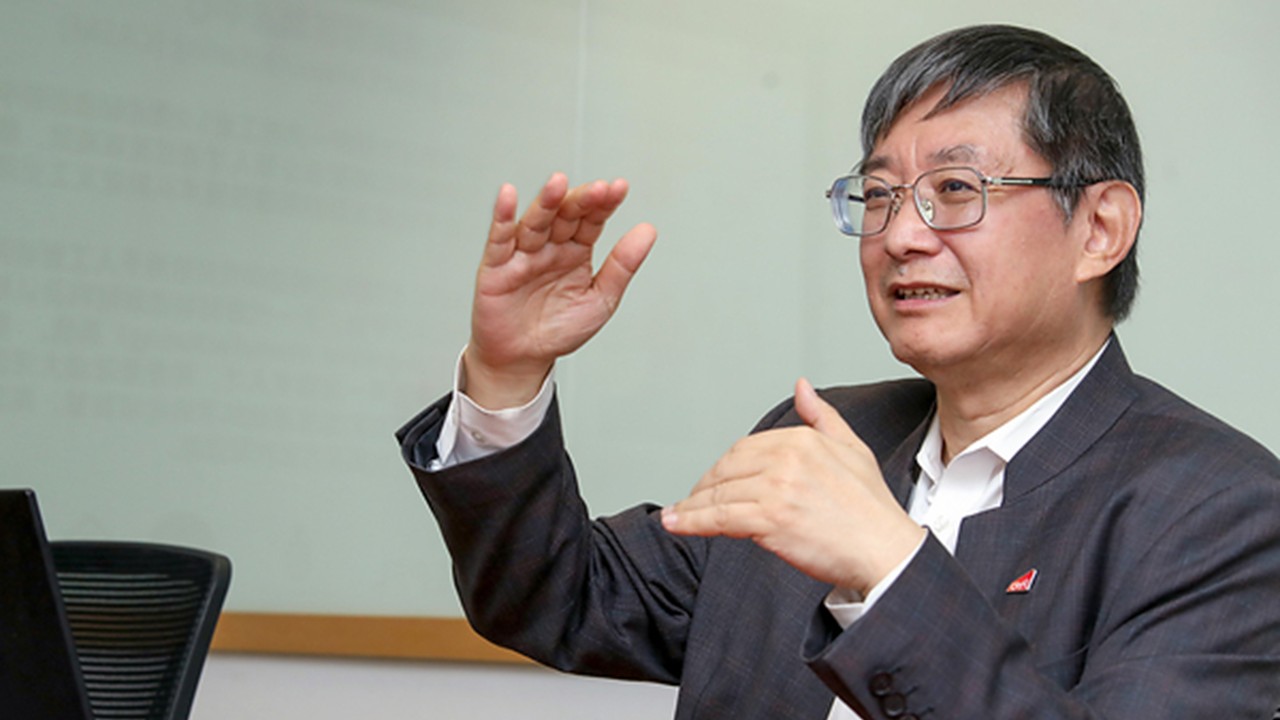
The centre is part of the Hong Kong Government's SEAM@InnoHK research cluster and is co-led by Professor Lu Jian of CityUHK and Professor Colm Durkan of the University of Cambridge. Its work is designed to connect research with commercial and industrial applications, particularly as artificial intelligence reshapes how products are designed, manufactured and used.
The initiative is built around the concept of Industry 5.0, which goes beyond the connected factories and automation associated with Industry 4.0.
Industry 5.0 places greater emphasis on combining advanced technologies with human expertise, environmental sustainability and social responsibility. For Hong Kong, the approach is also linked to efforts to strengthen its manufacturing base and support a broader process of new industrialisation.
Professor Lu said Hong Kong had previously been one of Asia's leading manufacturing centres and that advanced manufacturing could help reconnect the city with global industrial value chains.
CASM will use additive manufacturing, or 3D printing, as one of its core technology platforms, integrating materials design, digital engineering, manufacturing processes and end-use applications.
The centre's research will focus on four major areas: next-generation refrigeration, thermal management for data centres, green manufacturing for new energy vehicles, and innovative materials for electronics and consumer products.
One of the most immediate challenges being addressed is the energy required to operate data centres.
The rapid expansion of artificial intelligence is driving demand for computing infrastructure, while the resulting heat generated by high-performance computing equipment creates a major cooling requirement.
CASM researchers are developing new heat-exchange structures and high-performance metallic materials that could improve cooling efficiency and reduce the energy required to manage data-centre temperatures.
The research could have implications for the wider digital economy as governments and companies across Asia expand AI infrastructure and seek ways to manage its growing energy footprint. The centre is also examining how recycled aluminium can be used in new energy vehicles.
By combining AI-assisted design with additive manufacturing, researchers aim to produce lighter components without compromising performance or safety. The use of recycled aluminium can also reduce the energy required compared with producing primary aluminium, creating a potential link between advanced manufacturing, vehicle efficiency and lower-carbon production.
The partnership also illustrates the increasingly international character of Hong Kong's research and innovation ecosystem.
CASM is designed to bring together researchers from different institutions and disciplines, while creating opportunities for collaboration with industry. Earlier details released by CityUHK indicate that Cambridge researchers will establish satellite operations in Hong Kong, while CASM researchers will gain access to Cambridge facilities.
The centre will also function as a talent-development platform, with plans to involve PhD students, postdoctoral researchers and undergraduates through research projects, internships and international collaborations.
That talent pipeline could become an important component of Hong Kong's industrial strategy as companies increasingly require expertise spanning artificial intelligence, materials science, engineering, robotics and advanced manufacturing.
The geographical position of Hong Kong also gives the initiative a wider regional dimension.
CASM is being developed with the Guangdong-Hong Kong-Macao Greater Bay Area in mind, providing a potential bridge between Hong Kong's international research networks and the manufacturing capabilities of the wider Greater Bay Area.
For businesses, the significance of the centre may ultimately lie in how successfully its research can move from laboratories into commercial production.
The challenge for advanced manufacturing is no longer simply developing new technologies. It is also about reducing costs, improving efficiency, building sustainable supply chains and creating products that can compete in global markets.
CASM is therefore being positioned not only as a university research centre but as part of Hong Kong's broader effort to translate scientific research into industrial applications.
As AI, electric vehicles, advanced electronics and data infrastructure continue to reshape manufacturing across Asia, the partnership between CityUHK and Cambridge places Hong Kong within a wider regional race to develop the technologies and talent required for the next phase of industrial development.