

Beyond "Excess Capacity": The Real Competition Is the Future of Global Supply Chains
For decades, manufacturing decisions were largely driven by cost, labour availability, and production efficiency. Today, those considerations remain important, but they are no longer sufficient.
For much of the past two years, the international debate over China's so-called "excess capacity" has focused on a familiar question: Is China producing more than the world needs? China's recently published 41-page policy paper rejects that narrative, arguing that its industrial competitiveness is driven by innovation, market development, and global cooperation rather than unfair industrial expansion. Yet, from a business perspective, that debate may not be the most important one. The more significant question is this: What does the next generation of global manufacturing look like?
A Shift Beyond Cost
For decades, manufacturing decisions were largely driven by cost, labour availability, and production efficiency. Today, those considerations remain important, but they are no longer sufficient. Business leaders must now evaluate geopolitical risks, supply chain resilience, regulatory requirements, export controls, industrial policies, and market access alongside traditional operational factors. Manufacturing has become a strategic decision rather than simply an operational one.
Two Different Strategies
The United States has introduced policies encouraging domestic manufacturing, supply chain diversification, and reduced dependence on critical imports through initiatives such as onshoring and friend-shoring.
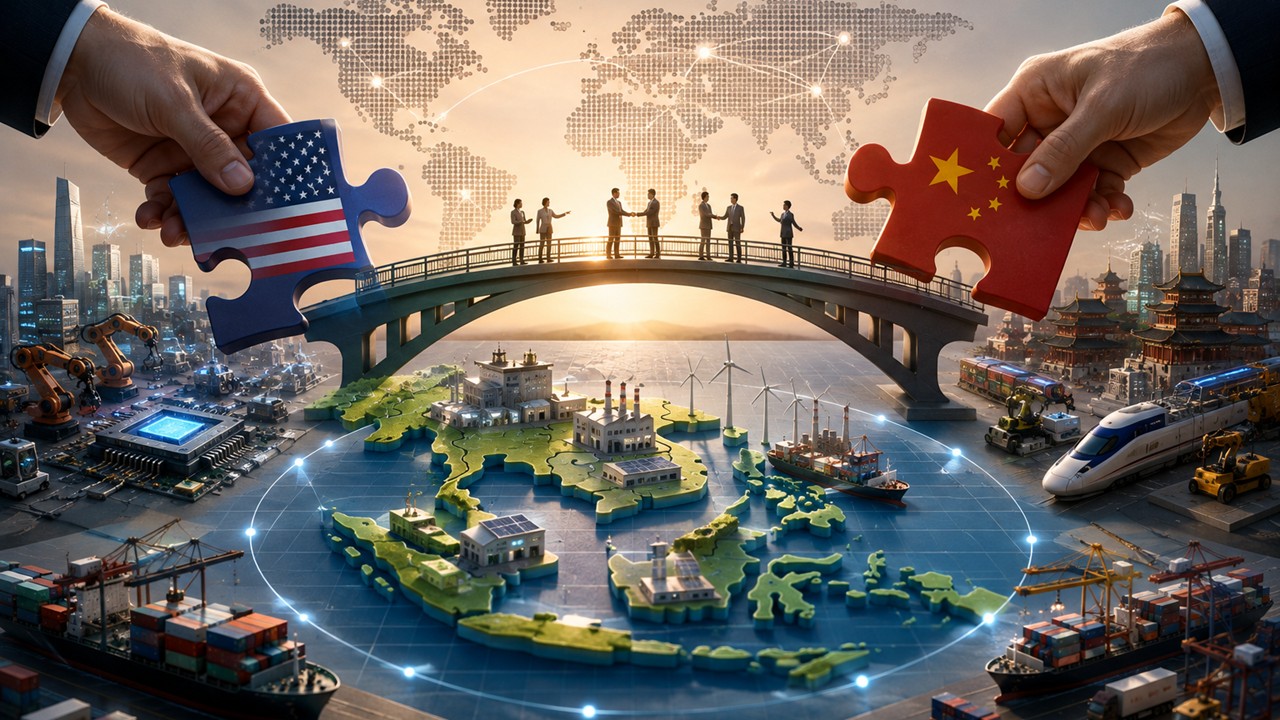
China, meanwhile, continues investing heavily in advanced manufacturing, industrial innovation, electric vehicles, renewable energy, artificial intelligence, and industrial upgrading, while emphasizing open global supply chains in its latest policy paper. These strategies are often presented as competing narratives. In reality, they may simply represent different approaches to strengthening national economic resilience.
ASEAN's Strategic Moment
Perhaps the greatest opportunity does not belong exclusively to either China or the United States. It belongs to ASEAN.
As companies diversify production and governments seek more resilient supply chains, Southeast Asia has become an increasingly attractive destination for manufacturing investment. Malaysia, Vietnam, Thailand, Indonesia, and the Philippines are benefiting from increased interest by companies seeking regional manufacturing capabilities.
At the same time, Chinese companies continue expanding internationally through overseas investment, regional partnerships, and manufacturing networks, while businesses from the United States, Europe, Japan, and other economies are strengthening their presence across ASEAN. Rather than replacing China, ASEAN is increasingly complementing the regional manufacturing ecosystem.
The New Competitive Advantage
The discussion should therefore move beyond whether one country is "winning" or another is "losing." The more relevant question for business leaders is whether their organizations are prepared for this new operating environment. Today's executives must consider:
- Is our supply chain sufficiently diversified?
- How will future trade measures affect our business?
- Are we prepared for evolving compliance requirements?
- Should future investment be concentrated in one jurisdiction or distributed across several markets?
- How do we balance resilience with efficiency?
These questions are no longer confined to operations departments. They influence boardroom discussions, investment decisions, corporate governance, risk management, finance, taxation, and long-term strategy.
Policy Is Becoming Business Strategy
One lesson is becoming increasingly clear. Businesses are rarely disrupted by regulations they already understand.
More often, they are affected by policy shifts they failed to anticipate. Governments are becoming more active participants in shaping industrial development, investment flows, and supply chain resilience. Whether those policies originate in Washington, Beijing, Brussels, or ASEAN capitals, businesses must understand not only the regulations themselves but also the strategic direction behind them.
Looking Ahead
The debate surrounding "excess capacity" will continue. Trade measures will evolve. Industrial policies will change. Supply chains will continue to adapt. The companies that succeed will not necessarily be those that choose one market over another. They will be those that remain agile enough to understand policy direction, anticipate change, and translate uncertainty into informed business decisions. In today's interconnected world, manufacturing is no longer simply about where products are made. It is increasingly about where strategy, policy, and resilience come together.
KY Kwan is a consultant and regular commentator on policy, governance and the changing winds in Asia. Known for her no nonsense approach of "Turning Policy into Business Strategy."