

Radiology Leaders Highlight AI Opportunities and Governance Gaps at AOCR 2026 in Singapore
Continual learning, sharing knowledge and learning from one another are essential if we are to keep improving the way we care for our patients and, ultimately, deliver the best possible outcomes for those we serve
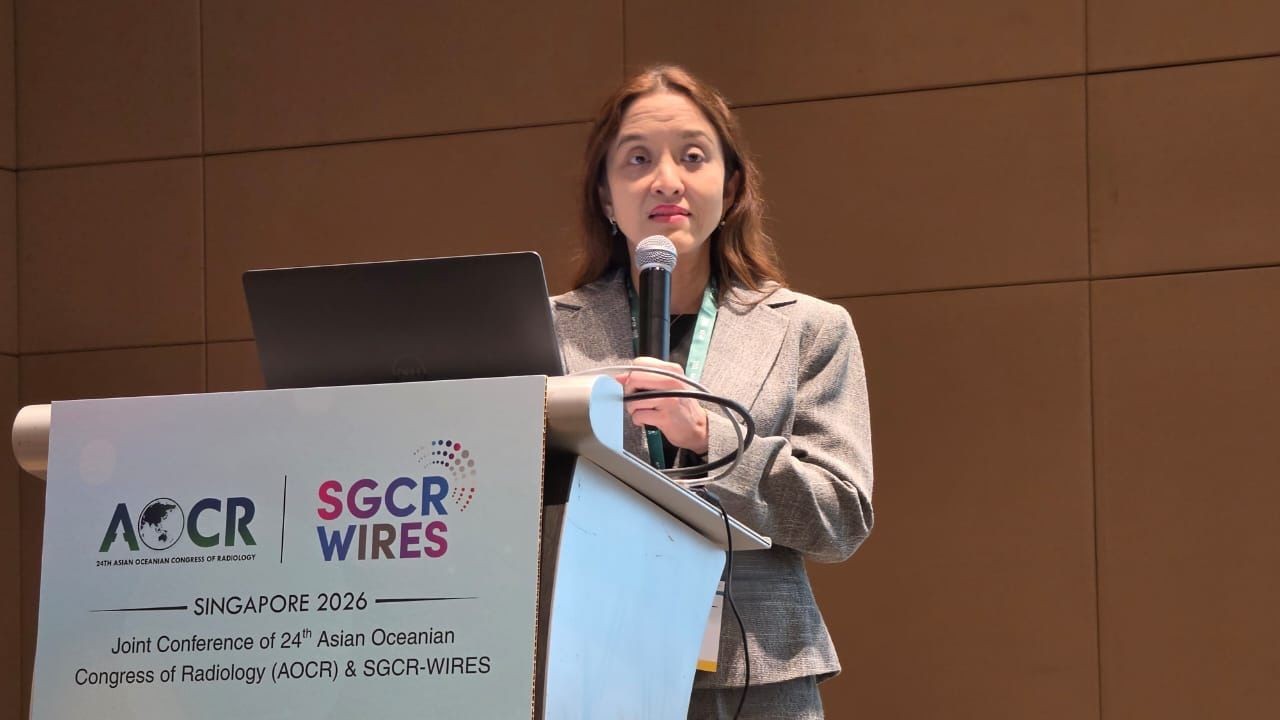
SINGAPORE — The growing use of artificial intelligence (AI) in medical imaging is creating new opportunities for radiologists, but stronger governance and oversight are needed to ensure the technology continues to serve patient welfare, a regional radiology forum has heard.
The issue was highlighted during the AOSR Emerging Trends Committee Session held as part of the joint conference of the 24th Asian Oceanian Congress of Radiology (AOCR) and SGCR-WIRES in Singapore.
The session brought together radiology professionals to discuss emerging developments in the field, including the adoption of AI in image based diagnostics and the implications for clinical practice.
“Healthcare is facing increasingly complex challenges that require us to work collaboratively across disciplines, institutions and borders,” said Dr Farhana Fadzli, Consultant Breast Radiologist and Nuclear Medicine Specialist at Hospital Picaso.
“Continual learning, sharing knowledge and learning from one another are essential if we are to keep improving the way we care for our patients and, ultimately, deliver the best possible outcomes for those we serve,” highlighted Dr. Farhana who is also the President of the College of Radiology, Academy of Medicine of Malaysia.
A recent survey presented during the session found that 29.5% of doctors involved in image based diagnostics were already using AI, while 67.0% indicated plans for future expansion. Among current users, AI was predominantly commercially sourced and used for task specific applications, particularly detection and quantification.
The survey also pointed to encouraging experiences among clinicians. Some 92.3% of respondents reported improved diagnostic confidence when using AI, although only 42.3% reported reduced reporting time.
However, the findings also highlighted significant gaps in AI governance. While 73.1% of respondents reported consistent radiologist review of AI outputs, only 7.7% had formal protocols for managing AI errors or disagreements. In addition, 34.6% had no designated person overseeing AI performance.
The findings underline the growing importance of balancing technological innovation with clinical accountability as AI becomes more integrated into radiology. The technology is developing rapidly, but its implementation must continue to be guided by patient welfare, appropriate professional oversight and clear processes for managing errors and disagreements.
The session also emphasised the importance of collaboration across disciplines, institutions and borders as healthcare systems respond to increasingly complex challenges.

Dr. Farhana concluded with "The technology is exciting, but there is more to be done to make sure the welfare of the patient is paramount."
As AI adoption continues to grow, the discussion reflects a broader shift in healthcare: technology can strengthen clinical practice, but its value ultimately depends on how responsibly it is implemented and how effectively it supports better outcomes for patients.
Looking to a sustainable future, continual learning and knowledge sharing will be increasingly important as radiologists and other healthcare professionals seek to understand both the opportunities and limitations of emerging technologies.
The AOCR 2026 conference provided an opportunity for members of the regional radiology community to exchange experiences and ideas on the future of medical imaging and the profession.