Southeast Asian businesses not ready for full autonomy
Digital travel platform Agoda has released a new study showing that software developers across Southeast Asia and India are rapidly transitioning from using AI assistants for individual tasks to deploying autonomous AI agents across the software-development lifecycle.
SINGAPORE: Artificial intelligence is moving from an employee productivity tool into the operating systems of businesses across Southeast Asia and India, but organisations are not yet ready to hand full control to autonomous AI agents.
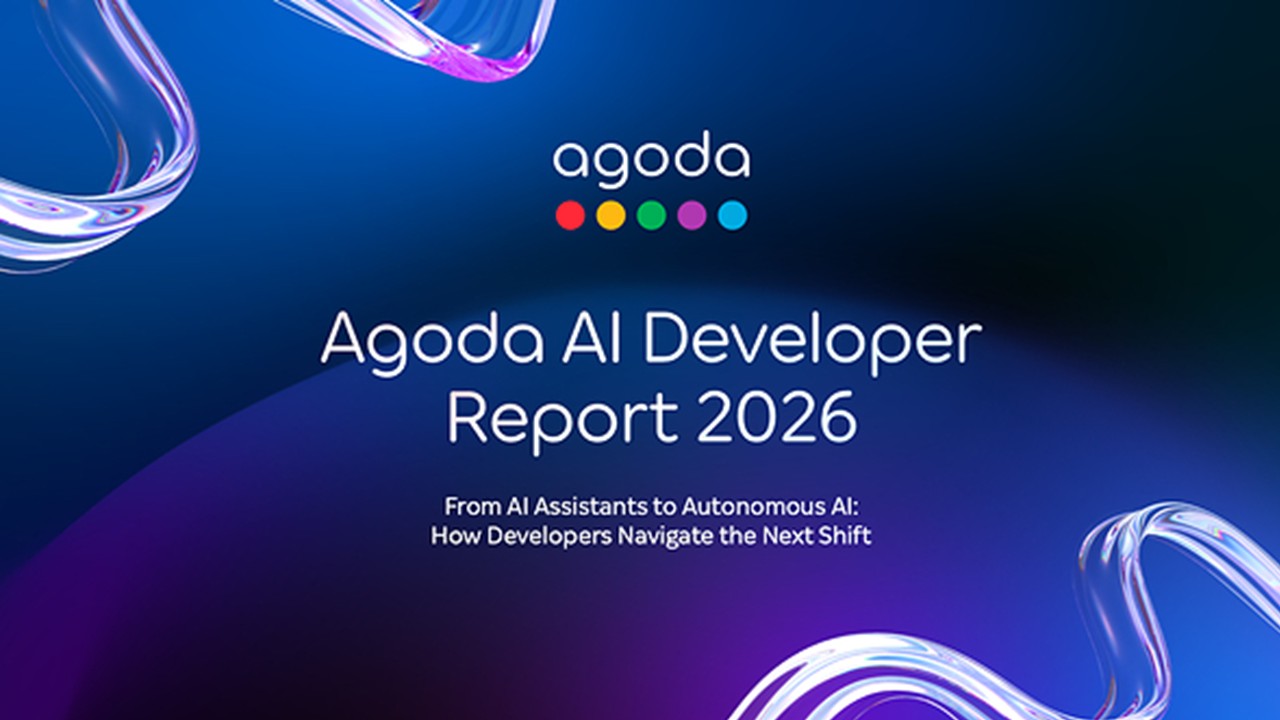
That is one of the key findings of Agoda’s AI Developer Report 2026, which surveyed developers across Indonesia, Malaysia, Thailand, the Philippines, Singapore, Vietnam and India.
The report found that 53% of respondents now have AI agents operating in selected production workflows or being used broadly across their organisations.
Yet only 38% said their codebases were mostly or fully ready for a fully autonomous AI agent.
The gap highlights a growing challenge for businesses: AI adoption is accelerating faster than the systems, governance and infrastructure required to support autonomous operations.
Productivity gains are becoming more visible
The report found a significant increase in the amount of time developers say they are saving through AI.
Some 55% of respondents said they now save at least seven hours a week using AI, compared with 18% in Agoda’s 2025 report.
AI-generated code is also becoming more usable. About 62% of developers said AI-generated code is often or almost always usable without major changes.
The technology is increasingly being deployed beyond basic code generation, with developers using AI for code review, software architecture, debugging, learning and documentation.
However, increased productivity has not eliminated the need for human oversight.
Some 86% of respondents said they always or most of the time review or validate AI-generated output.
Cost becomes a business issue
The economics of AI are emerging as one of the biggest constraints on wider deployment.
Cost was identified as the primary barrier to broader AI-agent adoption by 28% of respondents, followed by integration complexity at 24% and lack of governance at 19%.
The report argues that the cost of agentic AI extends beyond model usage. Businesses must also account for the expense of designing, integrating, monitoring, reviewing and validating AI systems.
Four in five respondents said they were working under some form of AI usage limitation, including token quotas, usage caps or budget restrictions.
This suggests that the next stage of enterprise AI adoption will involve not only determining what AI can do, but also whether businesses can operate it economically at scale.
Human accountability remains central
Despite the push towards greater autonomy, businesses continue to retain human decision-making at critical points.
While developers are more comfortable allowing AI agents to undertake lower-risk and reversible activities such as documentation, 79% of respondents said human approval is still required before production deployment.
The report also points to changes in the skills businesses will require.
System architecture and design, AI literacy and agent orchestration are emerging as important capabilities as developers move from simply using AI tools to managing systems in which multiple AI agents can perform interconnected tasks.
The transition is also creating uncertainty among parts of the technology workforce. Some 49% of junior developers said they felt less secure about their future career prospects, compared with 17% of CTO and vice-president of engineering respondents.
For businesses, the findings point to a more complicated AI transition than simply replacing individual tasks with automation.
Agoda chief technology officer Idan Zalzberg said the cost of AI should be understood beyond the model call itself, encompassing the work required to make AI trustworthy in production.
The study was commissioned by Agoda and conducted with Macramé Consulting.
Its findings suggest that the competitive question for companies across Southeast Asia and India is increasingly shifting from whether to adopt AI towards how quickly they can build the governance, technical infrastructure and human expertise required to use increasingly autonomous systems responsibly and at scale.