Hear Our Heartbeat: spotlight on heart condition ATTR-CM
Malaysian cardiologists, patients, caregivers and rare-disease advocates gathered at Dengarlah Degupan Kami (Hear Our Heartbeat) in Kuala Lumpur to raise awareness of transthyretin amyloid cardiomyopathy (ATTR-CM) and the challenges surrounding its diagnosis and management.
KUALA LUMPUR: Greater awareness among healthcare professionals and the public is needed to help identify transthyretin amyloid cardiomyopathy (ATTR-CM), a rare heart condition whose symptoms can resemble more common cardiovascular diseases or be mistaken for changes associated with ageing.
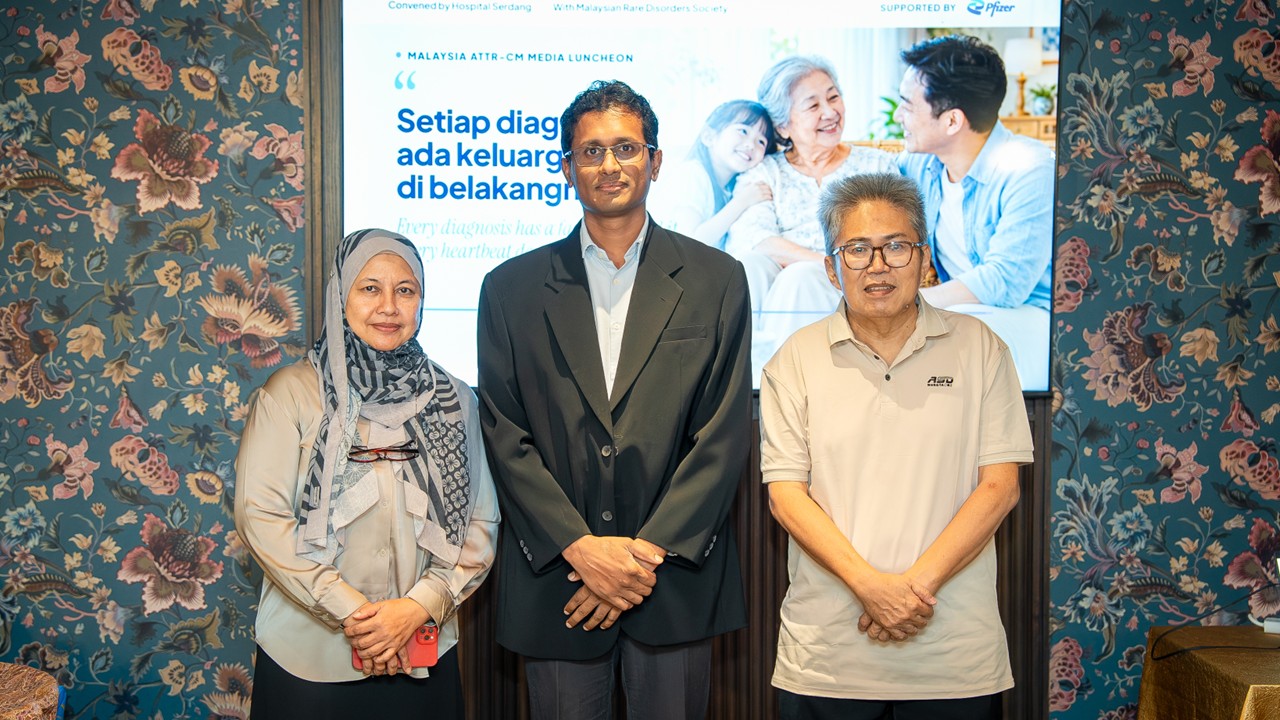
The call came during Dengarlah Degupan Kami (Hear Our Heartbeat), a forum convened by the Department of Cardiology, Hospital Serdang and supported by Pfizer Malaysia, which brought together cardiologists, patients, caregivers and the Malaysian Rare Disorders Society (MRDS).
ATTR-CM develops when transthyretin, a protein produced by the body, becomes misfolded and accumulates in the heart muscle. Over time, this can cause the heart walls to become thicker and stiffer, affecting the heart's ability to function effectively.
Symptoms may include persistent breathlessness, swelling of the legs and ankles and fatigue. However, because these symptoms can overlap with other cardiovascular conditions, recognising ATTR-CM can be challenging.
Published evidence cited in Malaysia's recently developed expert consensus on ATTR-CM indicates that patients can experience a delay of several years between the onset of symptoms and receiving a diagnosis.
At the forum, a Malaysian patient shared his personal journey from unexplained changes in his health to receiving an ATTR-CM diagnosis, providing a patient perspective on how the condition can affect everyday life and the wider family.
“For about three months I knew something was not right. I got tired very easily when I walked, and at night I could feel that something was wrong with my heart. It was my children who urged me to get checked, and that was when doctors found that my heart had become enlarged,” said Mr Teoh Eng Hoe, who is living with ATTR-CM.
“My message to anyone who notices something similar is simple: go and get checked, and do it early. I still have to watch my diet and I cannot do strenuous exercise. That said, I continue to live my life, and I still look forward to travelling in my retirement.”
Dr Saravanan Vengadesa Pillai, Consultant Cardiologist, Department of Cardiology, Hospital Serdang, said ATTR-CM could be difficult to identify because its symptoms are also commonly seen in other cardiovascular conditions.
“ATTR-CM can be challenging to recognise because symptoms such as breathlessness, fatigue and swelling are also seen in more common cardiovascular conditions and may sometimes be attributed to ageing. What we want people to understand is that persistent or worsening changes in their health deserve attention. Greater awareness, both among healthcare professionals and the public, can help ensure that patients who may require further assessment are directed towards appropriate care,” said Dr Saravanan Vengadesa Pillai, Consultant Cardiologist, Department of Cardiology, Hospital Serdang.
The forum comes as Malaysia's clinical community builds a stronger local framework for recognising and managing ATTR-CM.
In July 2026, a multidisciplinary panel of Malaysian clinicians from cardiology, haematology, nuclear medicine and related specialties published the country's first expert consensus and clinical pathway recommendations for ATTR-CM in the International Journal of Heart Failure.
The consensus provides locally relevant recommendations to support Malaysian clinicians in the recognition, assessment and management of suspected ATTR-CM.
ATTR-CM has been included in the Malaysian Rare Disease List since 2023, reflecting growing attention to the condition within the country's rare-disease landscape.
The expert consensus has also highlighted the potential value of establishing a local patient registry for cardiac amyloidosis, which could strengthen disease understanding, collaboration and research in Malaysia.
MRDS, which participated as the community partner for the forum, broadened the discussion to include the experiences of individuals and families affected by rare diseases more generally.
For many families, the path towards a rare-disease diagnosis can involve uncertainty, limited awareness and difficulties in identifying where to obtain appropriate information and support. The impact can also extend beyond the patient, with caregivers and family members often adapting their daily lives around the needs of someone living with a rare condition.
“For many people living with a rare disease, one of the hardest parts of the journey is simply finding out what is wrong. Families may know that something has changed, yet not know where to turn or what questions to ask. This is why awareness and support matter,” said Puan Allida Muhammad binti Said, Vice President, Malaysian Rare Disorders Society.
“Rare diseases may be individually rare, but collectively they affect a significant community4. Every patient deserves to be seen, heard and supported, so that receiving a diagnosis becomes not the end of the search, but the beginning of a supported journey.” Added Puan Allida.
The awareness campaign will continue in the lead-up to World Amyloidosis Day on 26 October, with Pfizer Malaysia supporting a series of social media health-awareness content focused on amyloidosis and ATTR-CM.
The content will cover public information on the condition, including signs and symptoms that may warrant discussion with a healthcare professional.
“Pfizer has a long-standing commitment to disease education and to the rare-disease community in Malaysia. Conversations such as Hear Our Heartbeat matter because greater awareness begins with better understanding,” said Tan Hui Yee, Specialty Care & Internal Medicine Marketing Lead, MISP Cluster, Pfizer.
“By bringing together healthcare professionals, patients, caregivers and patient advocates, we hope to help make conditions such as ATTR-CM better understood and encourage more informed conversations about health.”