ABDA 2026: Rethinking Breast Care - Screening and AI
Malaysia's radiology community is calling for stronger breast screening, better diagnostic pathways and responsible use of artificial intelligence as technology reshapes the way breast cancer is detected and treated.
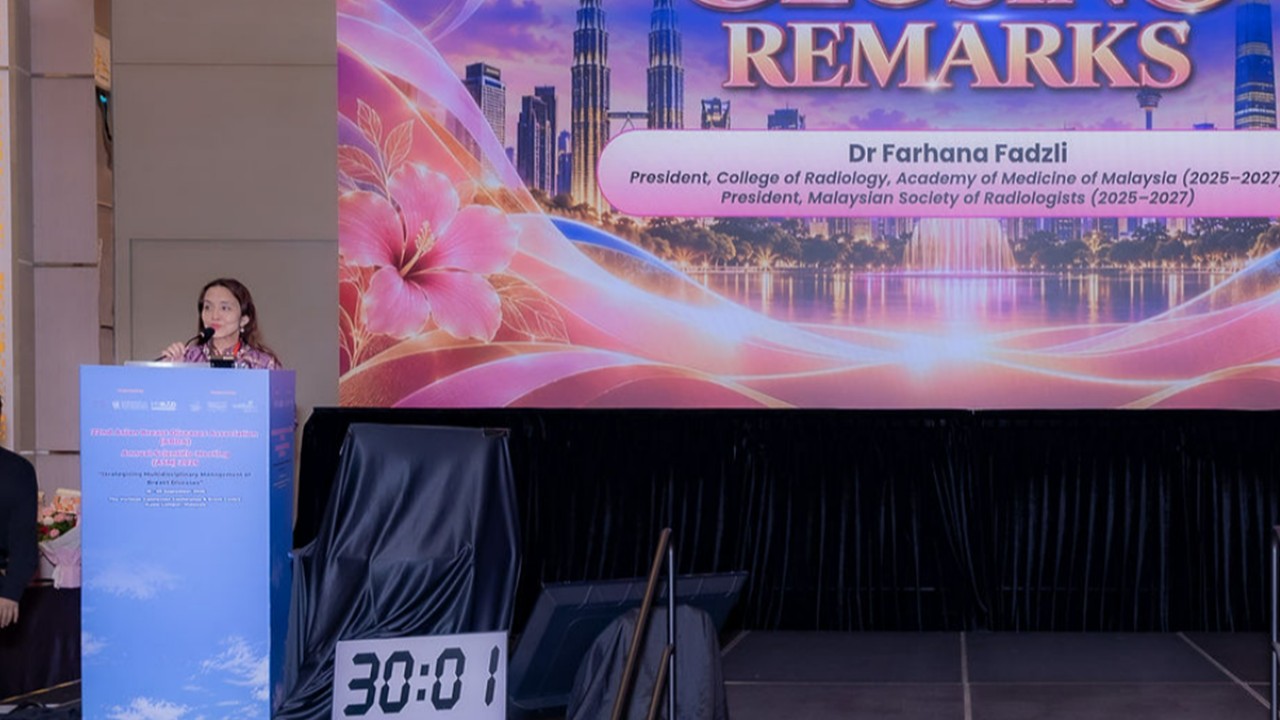
KUALA LUMPUR: Malaysia's breast cancer care landscape is facing two parallel challenges, encouraging more women to undergo screening and ensuring that new technologies such as artificial intelligence are introduced responsibly into clinical practice.
The issues were brought together at ABDA 2026 in Kuala Lumpur, which attracted over 400 participants, including more than 100 international delegates, for discussions covering breast imaging, diagnosis, nuclear medicine, AI and multidisciplinary cancer care.
For Dr Farhana Fadzli, President of the College of Radiology, Academy of Medicine of Malaysia and President of the Malaysian Society of Radiologists, better outcomes begin with earlier detection but cannot end there.
“For Malaysia, it has been a particular honour to host ABDA once again. This is the fourth time the conference has been held in Malaysia, and the second time that the College of Radiology has had the privilege of collaborating with ABDA, following our previous collaboration in 2015.
“Eleven years later, it is wonderful to see how much our field has advanced but also reassuring to see that the foundation remains the same, collaboration.”
Screening is only the first step. When an abnormality is detected, patients may require mammography, ultrasound, MRI or image-guided biopsy before a diagnosis can be established. This makes public education particularly important. Women need to understand not only why screening matters, but also what happens after an abnormal result and why timely follow-up can be critical.
Dr Farhana Fadzli, who is also the Head of Breast Imaging and Nuclear Medicine at Hospital Picaso shared “Whether we are radiologists, surgeons, oncologists, pathologists, nurses, researchers or allied health professionals, we may approach the patient from different perspectives but we share the same destination: better care and better outcomes for our patients.” she went on to say “Because ultimately, breast care is a team effort.”
Dr Farhana has called for medical imaging to be incorporated into Malaysia's digital-health transformation through stronger public-private cooperation and an all-of-nation approach. The objective should be to improve efficiency and access without placing additional financial burdens on patients.
In closing ABDA 2026, Dr Farhana stressed that breast care is fundamentally a team effort involving radiologists, surgeons, oncologists, pathologists, nurses, researchers and allied health professionals. “As we leave ABDA 2026, I hope we take home more than new knowledge. Take home a new idea. Take home a new collaboration. Take home a new friendship.”
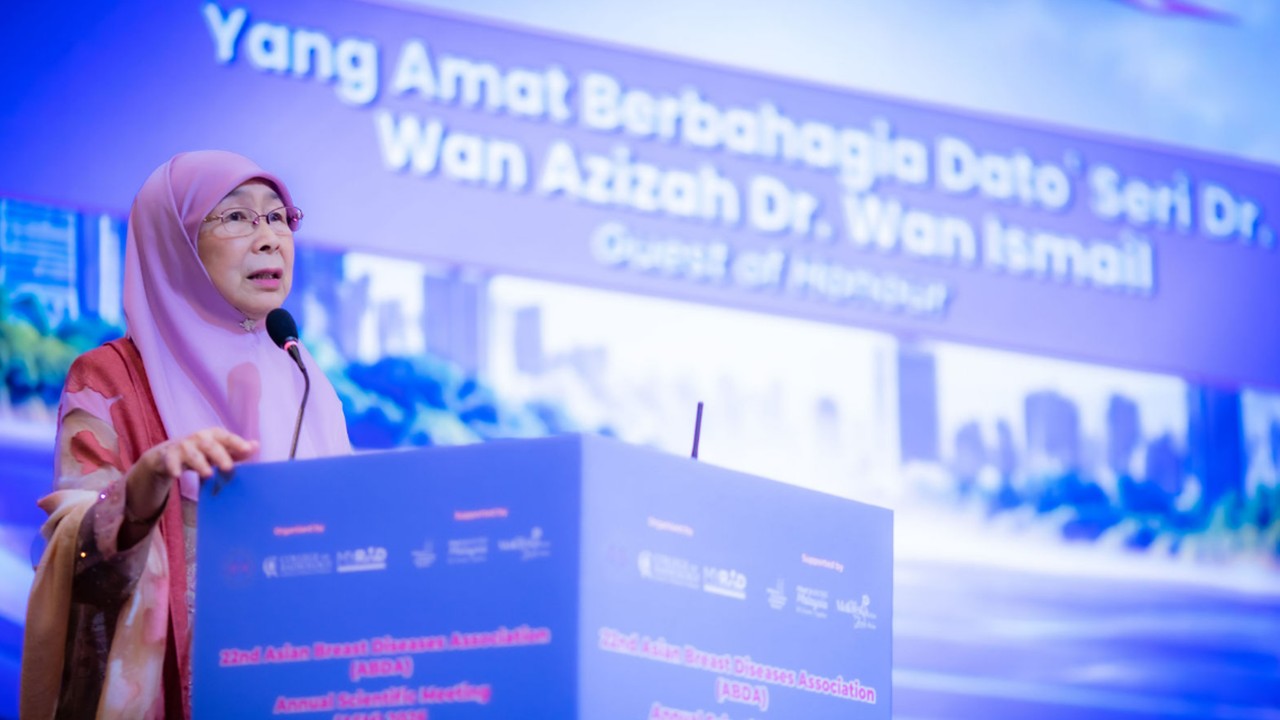
Datuk Seri Dr Wan Azizah Wan Ismail opened the meeting and highlighted the importance of encouraging more women to come forward for breast screening and earlier detection. The 2027 edition of the ABDA will be hosted in Japan.