More Women Need Breast Screening
Malaysia’s hosting of the 22nd Asian Breast Disease Association Annual Scientific Meeting has placed renewed focus on early detection, multidisciplinary care and the need to encourage more women to undergo breast examinations.
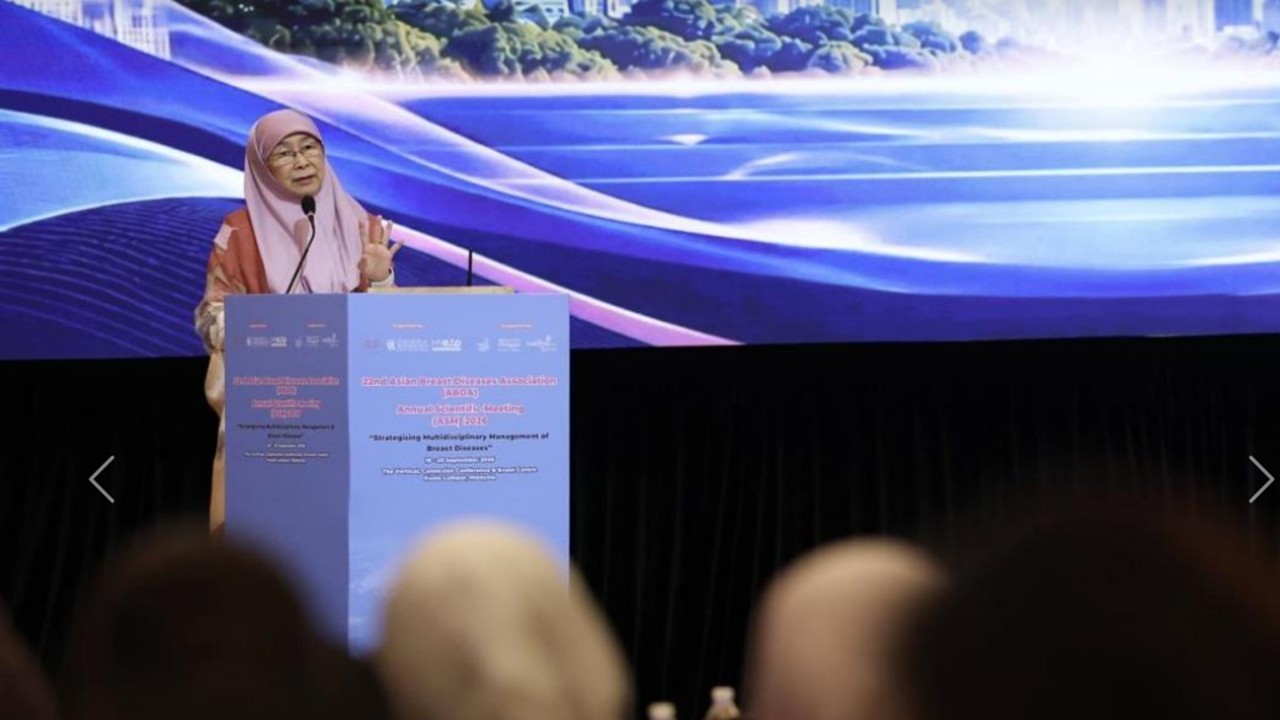
KUALA LUMPUR: More women need to come forward for breast screening, Datuk Seri Dr Wan Azizah Wan Ismail said, as Malaysia hosted the 22nd Asian Breast Disease Association (ABDA) Annual Scientific Meeting, a regional gathering of healthcare professionals and researchers focused on the detection, diagnosis and treatment of breast diseases.
The two day meeting, themed Strategising Multidisciplinary Management of Breast Diseases, was jointly organised with the Malaysian Society of Radiologists and supported by the College of Radiology, Academy of Medicine of Malaysia. Malaysia is hosting the regional scientific meeting for the fourth time, bringing together specialists and researchers from across Asia.
Opening the meeting in Kuala Lumpur, Wan Azizah said greater efforts were needed to encourage women to undergo breast examinations, warning that reluctance to seek screening could result in women only seeking medical attention when the disease had become more advanced.
She said many women remained hesitant about undergoing breast examinations, while the tendency to wait until symptoms or health problems became more serious remained a challenge for healthcare providers.
The issue, she said, was not simply about the availability of medical technology but also about encouraging women to take the first step towards screening and early detection.
For eligible Malaysians, Wan Azizah pointed to existing avenues for screening, including the PeKa B40 scheme, under which eligible recipients and their spouses aged 40 and above can receive free health screening, including clinical breast examinations. Eligible women can also access subsidised mammogram screening through programmes operated by the National Population and Family Development Board, or LPPKN.
The ABDA meeting also reflects the increasingly multidisciplinary nature of breast care, with specialists from different areas of healthcare sharing knowledge and strengthening cooperation in screening, diagnosis and treatment.
Wan Azizah said improving breast health outcomes required more than the work of doctors and healthcare professionals. It also involved healthcare institutions, professional organisations, policymakers, industry, patient groups and the wider community working together to improve awareness and access to care.
Another focus was the development of the next generation of healthcare professionals. Wan Azizah said junior doctors, researchers, nurses and allied health professionals needed structured mentorship and early exposure to multidisciplinary approaches to breast care.
She also highlighted the rapid development of artificial intelligence and advanced targeted therapies, saying technological progress was transforming breast care but should continue to be guided by human judgement and compassion.
The meeting therefore comes at a time when breast healthcare is being shaped by two parallel challenges: improving access to early screening and ensuring that healthcare systems and professionals are prepared to make effective use of increasingly sophisticated diagnostic and treatment technologies.
For Malaysia, the regional meeting also provides an opportunity to strengthen its role in Asian cooperation on breast disease, bringing together clinical expertise, research and public health priorities in a field where early detection remains central to improving treatment outcomes.