

Bangladesh and Turkmenistan Open New Economic Front With Energy, Trade and Investment Push
Bangladesh and Turkmenistan are seeking to turn stronger diplomatic ties into a wider economic partnership, with energy security, trade, investment and industrial cooperation among the priority areas.
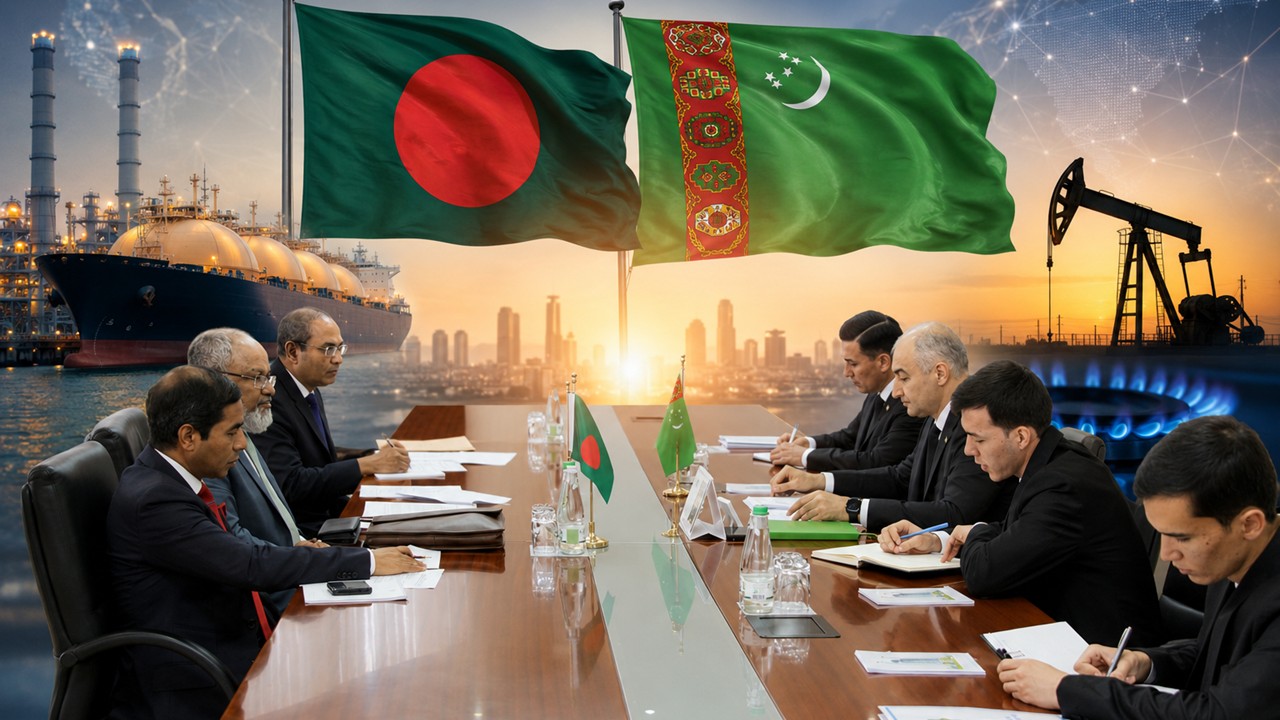
DHAKA — Bangladesh and Turkmenistan are moving to deepen economic ties, with energy security, trade, investment, agriculture, fertiliser, textiles and pharmaceuticals emerging as priority areas as Dhaka seeks to broaden its network of economic partners.
The push followed political consultations between the two countries in Ashgabat on Aug 15, where officials identified significant untapped potential in bilateral relations and agreed to work towards a new framework for cooperation covering the 2027 to 2029 period.
Energy is emerging as one of the most commercially significant areas. Turkmenistan, which has major natural gas and oil resources, expressed interest in supporting Bangladesh's energy security as Dhaka continues to seek reliable sources of energy to underpin industrial growth and economic development.
The discussions also opened the possibility of broader cooperation across the energy value chain, including petrochemicals, while agriculture and fertiliser supplies were identified as additional areas where Turkmenistan could support Bangladesh.
Turkmenistan offered to supply fertilisers to Bangladesh, potentially creating another channel for cooperation in a sector closely linked to Bangladesh's agricultural productivity and food security.
For Bangladesh, the talks were also about expanding market access for its domestic industries. Dhaka encouraged Turkmenistan to increase imports of Bangladeshi products, including jute and jute goods, ceramics, light engineering products and semiconductors.
Textiles could provide another significant commercial bridge between the two economies. Bangladesh's position as one of the world's leading ready made garment exporters and Turkmenistan's cotton production base offer opportunities to develop stronger links across the textile and apparel value chain.
The two countries also identified pharmaceuticals as a potential growth sector, with Turkmenistan expressing interest in Bangladesh's pharmaceutical manufacturing capabilities and expertise.
Investment is another central component of the emerging relationship. Bangladesh invited Turkmen investors to explore opportunities in its special economic zones, while the two sides discussed the possible establishment of a Joint Working Group on Trade and Economic Cooperation.
The proposed mechanism could give companies and chambers of commerce from both countries a more structured channel to identify projects, address commercial barriers and develop new trade opportunities.
The planned Programme of Action for 2027 to 2029 is intended to provide a wider institutional framework. Areas under discussion include trade and economic cooperation, investment promotion and protection, industrial cooperation, tourism, culture, avoidance of double taxation and cooperation between foreign service academies.
The business agenda is being reinforced by plans for higher level political engagement. Turkmenistan's Foreign Minister Rashid Meredov invited Bangladesh's Foreign Minister Dr Khalilur Rahman to visit Turkmenistan, while also indicating his readiness to visit Bangladesh. The two sides stressed that regular high level exchanges would be important for translating political understanding into practical economic cooperation.
Turkmenistan has separately invited a high level Bangladeshi delegation to visit the country, further signalling Ashgabat's interest in expanding engagement with Dhaka.
Labour mobility could become another element of the relationship. Bangladesh and Turkmenistan discussed employment opportunities in Turkmenistan for highly skilled and semi skilled Bangladeshi workers, potentially opening a new channel for cooperation beyond goods and investment.
The two countries also intend to strengthen cooperation in food and climate security, while expanding links in education, culture, sports and tourism.
The economic outreach comes as Bangladesh looks to strengthen supply chains, diversify export destinations and attract foreign investment, while Turkmenistan is seeking greater engagement with Asian markets and partners.
For Turkmenistan, Bangladesh represents a large South Asian market with a substantial manufacturing base and an internationally competitive garment industry. For Bangladesh, Turkmenistan offers access to major energy and agricultural resources as well as a potential gateway into wider Central Asian economic networks.
The next stage will be turning the broad areas identified in Ashgabat into commercially viable projects. The proposed 2027 to 2029 action programme, closer private sector engagement and a possible trade and economic working group could provide the institutional structure needed to move the relationship from diplomatic engagement towards measurable business activity.
With energy security at the centre and trade, investment and industrial cooperation expanding around it, Bangladesh and Turkmenistan are positioning their bilateral relationship for a more commercially focused phase.