

Fiji Seeks to Rebalance Trade and Deepen Economic Partnership with Malaysia
For Kuala Lumpur and Suva, the immediate task is therefore clear: translate renewed diplomatic engagement into commercial outcomes and build an economic relationship that benefits both sides.
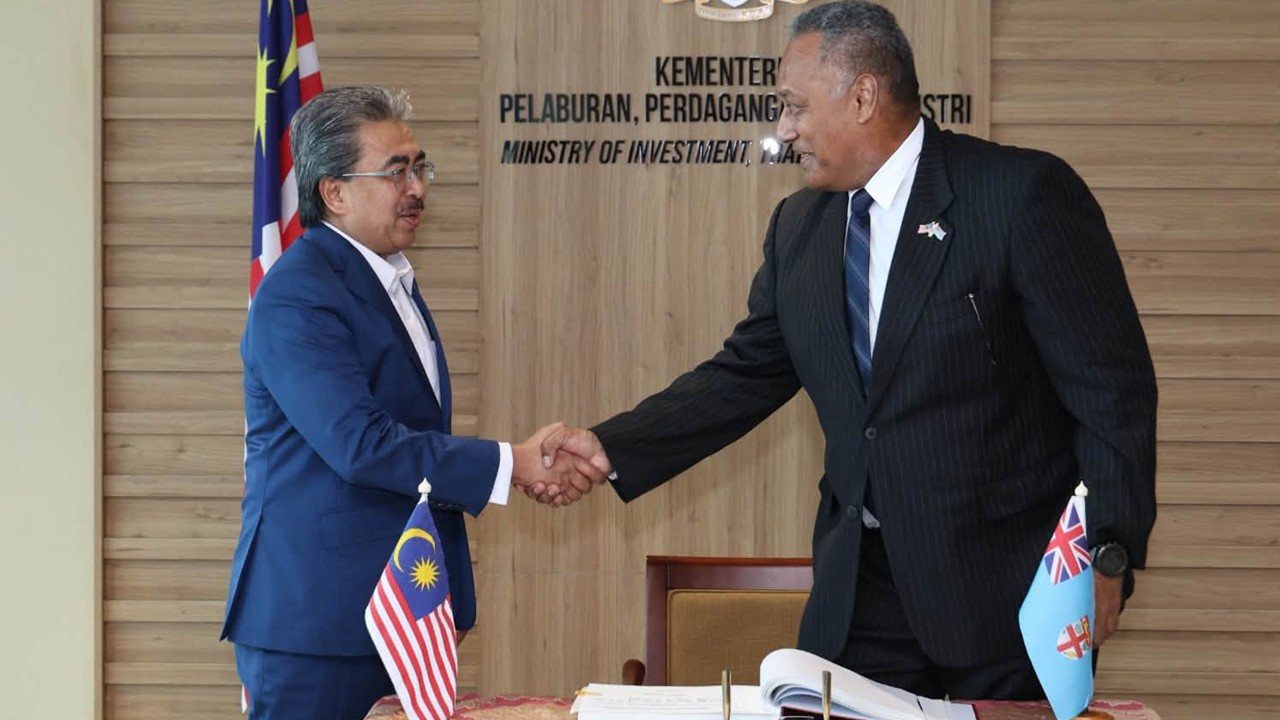
KUALA LUMPUR — Fiji is seeking to turn its longstanding relationship with Malaysia into a more balanced and commercially focused economic partnership, with greater access for Fijian products to the Malaysian market emerging as a key priority during high level talks in Kuala Lumpur.
Fiji’s Minister for Foreign Affairs and External Trade, Hon Sakiasi Raisevu Ditoka, raised the issue during a meeting with Malaysia’s Minister of Investment, Trade and Industry, Datuk Seri Johari Abdul Ghani, as Fiji looks to expand two way trade, attract investment and strengthen critical supply chains.
The discussions come as bilateral merchandise trade remains heavily weighted towards Malaysia. According to UN Comtrade data, Malaysia exported about US$202.58 million (approximately RM860 million) worth of goods to Fiji in 2025, while Fiji’s exports to Malaysia were valued at about US$9.64 million (approximately RM41 million). That produced total merchandise trade of roughly US$212.2 million (RM901 million), with Malaysia recording a trade surplus of about US$192.9 million (RM820 million).
The figures underline the imbalance that Fiji now wants to address, although Ditoka stressed that the objective is not to reduce imports from Malaysia.
“Fiji’s objective is not to reduce what we buy from Malaysia,” he said, noting that Malaysian products remain important to the Fijian economy. Instead, Fiji wants to expand the value and range of goods it can sell into Malaysia.
The opportunity is significant. Malaysian exports to Fiji in 2025 were dominated by mineral fuels and petroleum products, which accounted for about US$127.85 million, or more than 60 per cent of Malaysia’s exports to the Pacific island nation. Animal and vegetable fats and oils contributed a further US$25.54 million, followed by food industry residues and animal feed, machinery, plastics and a range of manufactured products.
By comparison, Fiji’s exports to Malaysia were concentrated in a much smaller number of product categories. Animal and vegetable fats and oils accounted for about US$1.54 million, while inorganic chemicals contributed about US$787,000 and oilseeds and related products about US$193,000. Beverages, including potential higher value agricultural products, accounted for about US$109,000.
Ditoka said Fiji wants to use this gap as a platform for export diversification, identifying premium seafood, kava, virgin coconut oil and other value added coconut products, turmeric and spices, bottled water and processed agricultural goods among the products with potential for the Malaysian market.
The push comes as Malaysia itself continues to strengthen its position as a major regional trading and investment hub. Malaysian trade reached a record RM3.061 trillion (US$720 billion) in 2025, with exports rising 6.5 per cent to RM1.607 trillion and imports increasing 6.2 per cent to RM1.455 trillion.
For Fiji, the ambition extends beyond simply increasing exports. Ditoka is positioning Malaysia as a gateway into ASEAN, while encouraging Malaysian companies to view Fiji as more than a market of fewer than one million people.
Fiji wants to be seen as a stable investment destination and a potential gateway into the wider Pacific, offering Malaysian businesses an opportunity to establish commercial relationships in a region where connectivity, infrastructure, food security, energy and sustainable development are creating new investment requirements.
The strategic logic works in both directions. Fiji can potentially use Malaysia's established logistics, manufacturing, distribution and financial networks to reach larger Asian markets, while Malaysian companies can use Fiji as a platform for accessing opportunities across Pacific island economies.
Fuel security was another important element of the discussions.
Ditoka raised Fiji’s interest in being considered within Malaysia’s fuel stockpiling and supply security arrangements being developed with Australia and New Zealand. For Fiji, which relies heavily on long international supply chains, reliable access to fuel is both an economic and national security concern.
The Fijian minister said he was encouraged by Johari’s positive reception to the proposal, while recognising that further discussions between officials will be required to examine the technical details and determine what arrangements may be feasible.
The fuel discussion also highlights the broader economic security dimension of the renewed Fiji–Malaysia relationship. For Fiji, strengthening commercial ties is increasingly linked to resilience — from securing energy supplies and attracting investment to developing new export markets and reducing vulnerability to disruptions in international supply chains.
The economic agenda also gives added significance to Fiji’s renewed diplomatic presence in Kuala Lumpur. The Fiji High Commission was reopened in Malaysia in 2025, while the official opening of its chancery and the launch of the Malaysia–Fiji Business Council formed part of Ditoka’s working visit this week.
The Malaysia–Fiji Business Council is expected to provide a platform for businesses from both countries to move beyond diplomatic goodwill and develop practical commercial partnerships.
The challenge now is to convert political support into transactions: more Fijian products on Malaysian shelves, greater Malaysian investment in Fiji, stronger business to business connections and more resilient supply chains.
The imbalance in current trade is substantial, but Fiji sees it not simply as a deficit to be corrected, but as an indicator of untapped commercial potential.
With bilateral trade reaching about US$212 million in 2025, the relationship remains relatively small compared with Malaysia’s overall international trade. Yet for Fiji, expanding the partnership could have an outsized impact, particularly if the next phase moves beyond the traditional flow of Malaysian manufactured goods and fuel into Fiji towards a broader two way relationship encompassing agriculture, food products, investment, energy security and services.
For Kuala Lumpur and Suva, the immediate task is therefore clear: translate renewed diplomatic engagement into commercial outcomes and build an economic relationship that benefits both sides.
As Ditoka put it, the potential is considerable. The next step is turning that potential into results.