


President Marcos Seeks Pause on Property Valuation Reform to Support Investment
Philippine President Ferdinand Marcos Jr. has urged Congress to temporarily suspend the implementation of the country's new property valuation law, saying the move will help protect businesses from rising costs, preserve investor confidence and support the nation's economic growth strategy.
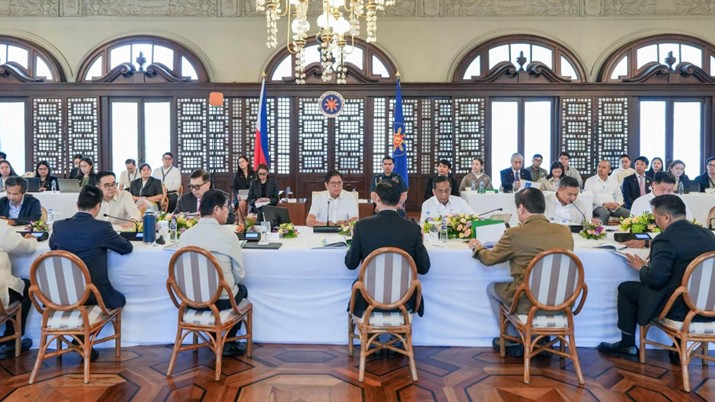
MANILA – Philippine President Ferdinand Marcos Jr. has asked Congress to temporarily suspend the implementation of the Real Property Valuation and Assessment Reform Act (RPVARA), saying the move is needed to shield businesses from higher property related costs and maintain the country's investment competitiveness.
The proposal was presented during the fourth meeting of the Legislative Executive Development Advisory Council (LEDAC), where President Marcos urged lawmakers to pause the rollout of the reform while the government reviews its economic impact on businesses and investors.
According to the Presidential Communications Office, the temporary suspension is intended to prevent additional costs arising from higher property valuations, support continued domestic and foreign investment, and ensure a more gradual transition to the new valuation framework.
The RPVARA, enacted as Republic Act No. 12001, was designed to modernise the Philippines' property valuation system by introducing a uniform, market based approach to real estate assessment. The reform aims to replace inconsistent valuation methods used by local governments with a nationally standardised framework aligned with international practices.
However, concerns have emerged that implementing the new valuation system too quickly could increase real property taxes and other property related expenses for businesses, particularly at a time when the government is seeking to attract greater investment into manufacturing, logistics, real estate and infrastructure.
By seeking a temporary suspension, the Marcos administration hopes to provide businesses with greater certainty while allowing authorities to refine the transition process and minimise unintended economic consequences.
The proposal comes as the Philippines continues to promote itself as one of Southeast Asia's fastest growing investment destinations. The country recorded economic growth of 5.7 percent in 2025, supported by resilient domestic consumption, infrastructure development and expanding foreign investment across priority sectors.
Foreign direct investment has remained an important pillar of the government's economic agenda, with reforms introduced in recent years to liberalise investment rules and improve the ease of doing business. Business groups have generally welcomed efforts that provide regulatory stability and reduce compliance costs for investors.
The LEDAC meeting also reviewed 24 priority legislative measures targeted for passage before June 2027, reflecting the administration's broader programme of economic and governance reforms despite disruptions caused by Tropical Storm Maymay, which affected parts of the country during the meeting. President Marcos proceeded with the scheduled discussions, underscoring the government's commitment to advancing its legislative agenda.
If approved by Congress, the temporary suspension would give policymakers additional time to fine tune the implementation of the valuation reforms while balancing fiscal objectives with the need to preserve a competitive business environment and sustain investor confidence.