

Macron's Malaysia Visit Seeks Strategic Partnership
Macron's first official visit as French president comes as both countries seek to deepen cooperation in rare earths, semiconductors, advanced manufacturing and energy transition, building on RM17.78 billion in bilateral trade.
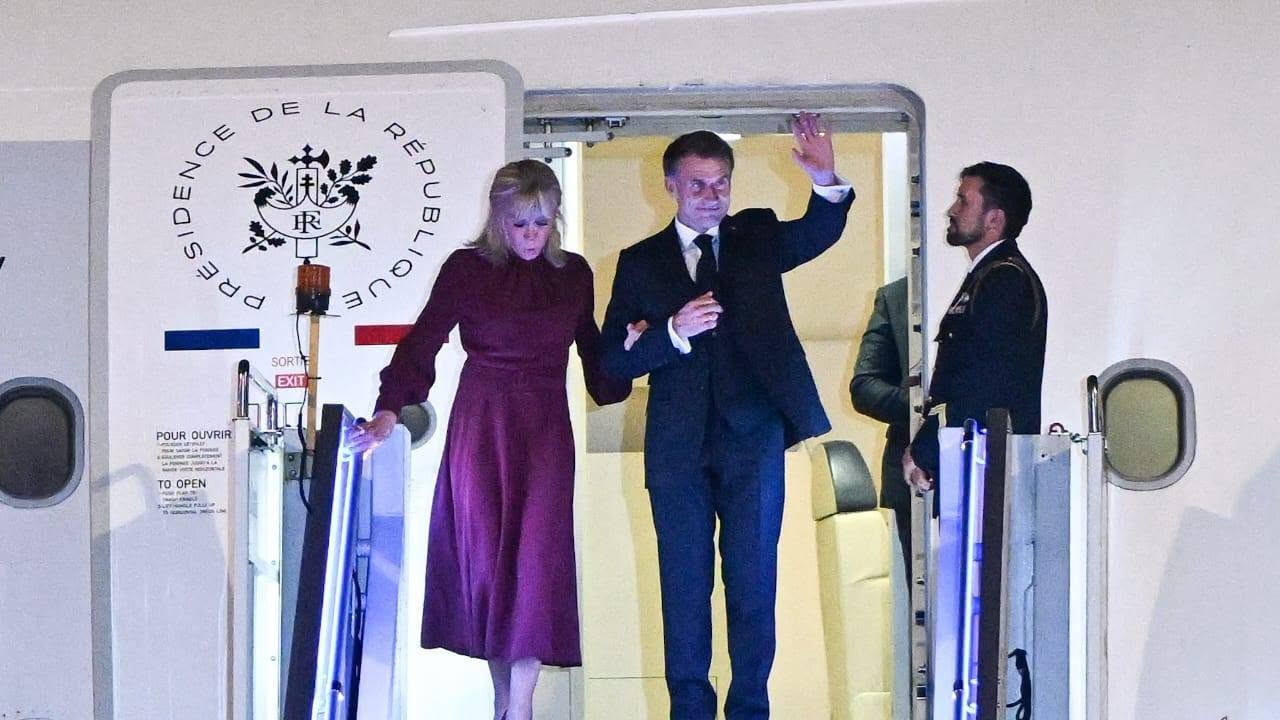
KUALA LUMPUR - French President Emmanuel Macron has arrived in Malaysia for a two-day official visit aimed at elevating bilateral relations to a Strategic Partnership, with critical minerals, semiconductors, advanced manufacturing and clean energy emerging as key areas for deeper economic cooperation.
Macron arrived at Kuala Lumpur International Airport at 11.10pm on Monday, accompanied by his wife Brigitte Macron, Cabinet ministers and senior government officials. He was received by Digital Minister Gobind Singh Deo. The visit, at the invitation of Prime Minister Datuk Seri Anwar Ibrahim, marks Macron's first visit to Malaysia since becoming president in May 2017 and follows Anwar's official visit to France in July 2025.
The two leaders are scheduled to hold bilateral discussions on Tuesday, with the proposed Strategic Partnership providing a broader framework for cooperation in trade and investment, critical minerals, energy transition, defence and education.
They are also expected to witness the exchange of several memoranda of understanding (MoUs) covering defence, higher education, critical minerals and energy transition.
The economic significance of the visit extends beyond conventional trade relations, as both countries look to strengthen their positions in industries that will increasingly determine technological competitiveness, industrial resilience and the security of global supply chains.
Malaysia-France bilateral trade reached RM17.78 billion (US$4.17 billion) in 2025. Malaysia's exports to France amounted to RM6.05 billion (US$1.41 billion), led by electrical and electronics (E&E) products, while imports totalled RM11.73 billion (US$2.76 billion), comprising mainly transport equipment, machinery and chemicals.
France is Malaysia's 21st-largest trading partner globally and fourth-largest among European countries.
Critical minerals move to the forefront
One of the most significant economic dimensions of Macron's visit is France's interest in diversifying its sources of rare earth supplies.
In a statement ahead of the visit, Macron said securing alternative sources of rare earths was important to French industry, particularly in manufacturing magnets used in electric motors and electronic devices.
He highlighted the need for multiple supply sources to reduce the risk of disruptions that could affect industrial production.
The issue is particularly relevant as rare earth elements are increasingly important to electric vehicles, renewable energy technologies, advanced electronics and defence systems.
For Malaysia, the interest creates an opportunity to develop partnerships that extend beyond the extraction and export of mineral resources towards processing, technology transfer, research and the development of higher-value downstream industries.
However, the opportunity will depend on Malaysia's ability to develop commercially viable processing capabilities, establish reliable feedstock supplies and meet increasingly stringent environmental and sustainability requirements.
France's interest also places Malaysia within a wider international effort to diversify critical mineral supply chains and reduce dependence on concentrated sources of production and processing.
The challenge for Malaysia will be to ensure that international partnerships contribute to domestic industrial capabilities, rather than simply positioning the country as another raw-material supplier.
Building on an established industrial relationship
The two countries already have a substantial business presence in each other's economies.
According to France's Ministry for Europe and Foreign Affairs, around 300 French corporate subsidiaries operate in Malaysia, employing approximately 30,000 people. Major French companies with Malaysian operations include STMicroelectronics, Airbus, Safran, Air Liquide, TotalEnergies and Technip Energies.
Their presence spans electronics, aerospace, manufacturing, energy, pharmaceuticals and engineering.
This existing industrial base provides a platform for expanding cooperation into advanced manufacturing, semiconductor technologies, aerospace and digital infrastructure.
The semiconductor sector is particularly relevant to Malaysia, which has an established position in global electronics manufacturing and is seeking to move towards higher-value activities, including integrated circuit design, advanced packaging and specialised semiconductor manufacturing.
French companies bring expertise in areas such as semiconductor manufacturing, industrial gases, aerospace systems and advanced engineering. Greater collaboration could support technology development, supplier partnerships, research and skills development.
The opportunity is not limited to attracting new factories. Cooperation involving research institutions, universities and existing industrial players could help strengthen Malaysia's technical capabilities and position within global production networks.
Energy transition and industrial competitiveness
Energy cooperation is another major pillar of the proposed partnership.
France has considerable expertise in nuclear energy, electricity generation, grid management and low-carbon technologies. These capabilities could complement Malaysia's efforts to strengthen energy security and accelerate its transition towards a lower-carbon economy.
Deputy Prime Minister Datuk Seri Fadillah Yusof, who is also Energy Transition and Water Transformation Minister, discussed opportunities for expanded cooperation with French Minister Delegate for Industry Sebastien Martin during a meeting in Kuala Lumpur on Monday.
Fadillah said the discussions covered energy transition, green energy, energy security and power grid development, highlighting France's technological capabilities in the energy sector.
For Malaysia, reliable and competitively priced electricity is becoming increasingly important as the country attracts investment in semiconductor fabrication, data centres and other energy-intensive industries.
The expansion of artificial intelligence infrastructure and advanced manufacturing will place greater demands on electricity supply, grid reliability and access to cleaner energy.
Cooperation with French companies could therefore support not only renewable energy development but also the modernisation of electricity infrastructure and the technologies required to integrate different energy sources.
Turning diplomatic engagement into investment
The visit also builds on the economic momentum generated by Anwar's trip to France in July 2025.
During that visit, Malaysia's trade and investment mission secured potential investments worth RM4 billion (US$939 million) from French companies, alongside RM675 million (US$158 million) in potential exports.
The proposed investments covered high-tech manufacturing, aerospace, renewable energy, tourism and hospitality, the digital economy and sustainable infrastructure.
These were potential investment commitments and opportunities rather than confirmed realised investments, but they provide a basis for assessing the commercial opportunities available to both countries.
The French Chamber of Commerce and Industry in Malaysia has also highlighted the importance of bringing Malaysian and French businesses closer together, particularly in sectors where technology partnerships and industrial collaboration can generate long-term value.
The elevation of bilateral relations to a Strategic Partnership would provide a more structured platform for translating these opportunities into commercial projects.
For Malaysia, the priority will be to secure partnerships that deliver more than increased trade volumes: technology transfer, skilled employment, local supplier development, research collaboration and stronger participation in higher-value segments of global supply chains.
With established French industrial players already operating in Malaysia and growing French interest in critical minerals, the energy transition and advanced technologies, Macron's visit provides an opportunity to give the relationship a more substantial economic and industrial dimension