

Singapore pushes digital integration, energy security and AI cooperation at ASEAN Summit
The priorities reflect Singapore's interest in ensuring that ASEAN's economic integration keeps pace with technological change, while strengthening the region's ability to manage disruptions to trade, energy supplies and regional stability.
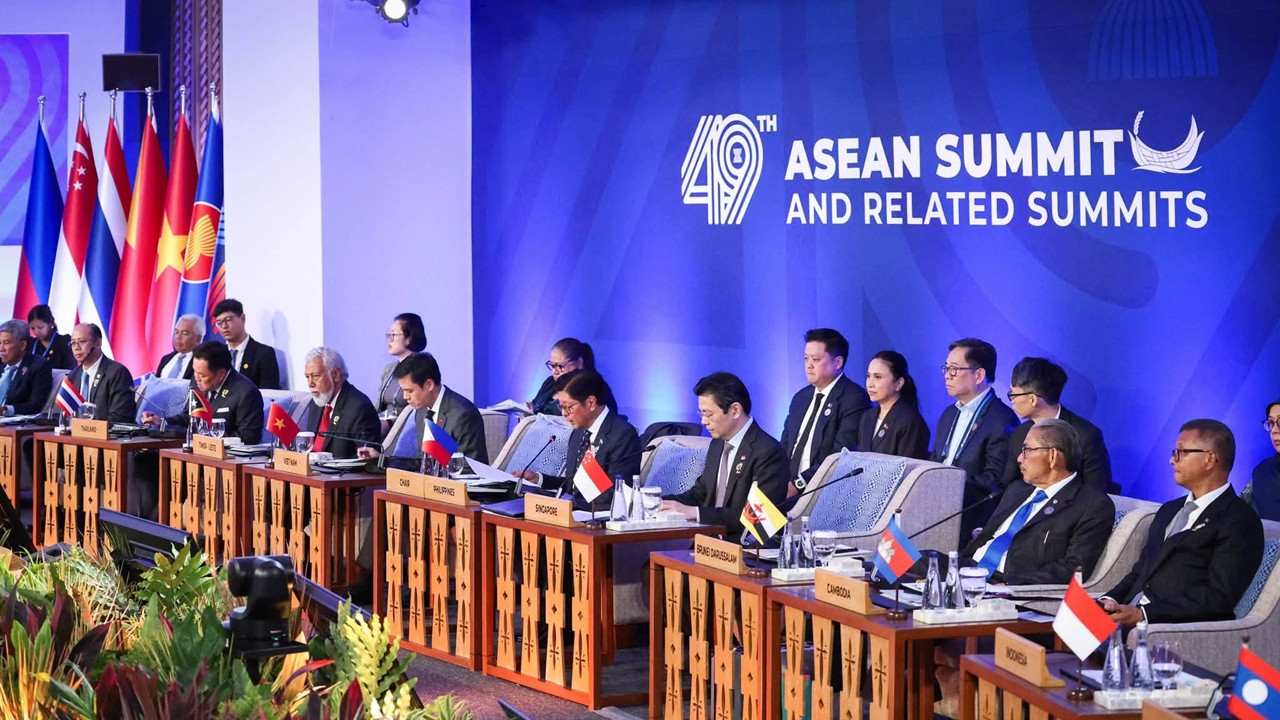
MANILA - Singapore has called for deeper regional cooperation on digital connectivity, cross-border payments, energy security and artificial intelligence (AI), identifying these as key areas where ASEAN must work together to strengthen economic resilience and create new opportunities for its people.
At the ASEAN Summit in Manila, Singapore Prime Minister Lawrence Wong joined fellow regional leaders in discussions on economic integration and shared regional challenges, with particular attention to the need for a stronger and more united ASEAN amid an increasingly complex geopolitical and economic environment.
The priorities reflect Singapore's interest in ensuring that ASEAN's economic integration keeps pace with technological change while strengthening the region's ability to manage disruptions to trade, energy supplies and regional stability.
One of the most significant developments at the summit was the signing of the ASEAN Digital Economy Framework Agreement (DEFA) on November 14, following three years of negotiations.
The agreement establishes common rules covering digital trade, cross-border data flows, electronic payments, cybersecurity and AI. It is intended to make it easier for companies to operate across national borders, reduce administrative costs and improve access to the region's expanding digital marketplace.
Wong said ASEAN should now move beyond signing agreements and focus on practical implementation. He proposed developing a region-wide network of seamless electronic payment systems, building on existing arrangements linking Singapore with Malaysia and Thailand.
Such a network could reduce the cost and complexity of transactions for businesses, tourists and people sending money across borders, while supporting greater integration of ASEAN's financial services.
The AI agenda is equally important. Wong called for wider access to AI tools and capabilities to improve productivity and transform regional economies. However, he stressed that greater digital integration must be accompanied by stronger cybersecurity cooperation, particularly in combating online scams and other cyber threats.
Energy security was another major priority, particularly following disruptions to international energy markets caused by geopolitical conflicts.
Wong urged ASEAN members to accelerate ratification of the ASEAN Petroleum Security Agreement, which provides a framework for regional cooperation in responding to petroleum supply emergencies.
He also called for faster progress on the ASEAN Power Grid, an initiative designed to connect electricity networks across Southeast Asia and facilitate cross-border power trading.
The objective is to strengthen the region's ability to manage supply disruptions while supporting the transition towards cleaner energy sources. For Singapore, which relies heavily on imported energy, stronger regional electricity connectivity offers an opportunity to diversify supply sources and improve resilience. For other ASEAN economies, it could help unlock investment in renewable energy projects and create a larger regional market for electricity.
Transboundary haze was another issue Wong raised, calling for the Singapore-Indonesia joint task force established in October to be expanded into an ASEAN-wide platform.
The existing task force is intended to improve investigations into companies linked to fires, including through financial intelligence, cross-border evidence gathering and potential asset recovery.
Wong argued that the problem should not be treated as exclusively bilateral, as forest and land fires can occur in different ASEAN countries and affect neighbouring populations. He called for greater information sharing and coordinated action against companies responsible for illegal forest clearing and practices that contribute to recurring haze episodes.
The proposal is significant because it seeks to move regional cooperation beyond monitoring pollution and responding to fires towards identifying corporate responsibility and strengthening enforcement.
On Myanmar, Wong reiterated Singapore's position that the country's eventual return to full political representation within ASEAN must be accompanied by concrete progress under the bloc's Five-Point Consensus.
The three areas he highlighted were humanitarian assistance, dialogue with relevant stakeholders and a sustained cessation of violence. While acknowledging progress in humanitarian assistance, he said further efforts were needed to establish meaningful dialogue and reduce violence.
Singapore's position reflects the challenge facing ASEAN: maintaining engagement with Myanmar while ensuring that the bloc's agreed principles and peace efforts are not undermined.
The discussions also carry added significance for Singapore as it prepares to assume the ASEAN chairmanship in 2027, when the regional grouping marks its 60th anniversary.
Wong has identified deeper economic integration and broader partnerships with external countries as important priorities. Singapore wants ASEAN to remain open to cooperation with major powers, including the United States, China, India, Japan, South Korea and Australia, rather than becoming caught in competing geopolitical blocs.
The broader objective is to preserve ASEAN's strategic relevance and strengthen its ability to attract investment, expand trade and manage regional challenges.
Wong's discussions with ASEAN parliamentarians, business representatives and youth leaders also provided an opportunity to hear different perspectives on the bloc's future.
His message was that ASEAN's strength will depend not simply on the agreements its members sign, but on their ability to translate regional commitments into practical benefits for businesses and ordinary people.
As Singapore prepares to take over the chairmanship, the challenge will be to turn these priorities into measurable progress in an increasingly uncertain global environment.