Australia and Malaysia reset defence cooperation addressing Indo-Pacific shifts
The sixth Australia Malaysia High Level Committee has produced a significant expansion of the bilateral defence relationship, moving cooperation beyond exercises and traditional military ties towards strategic planning, logistics, information security, defence industry, cyber resilience and maritime domain awareness. The timing is important as both countries confront a more complex Indo Pacific security environment.
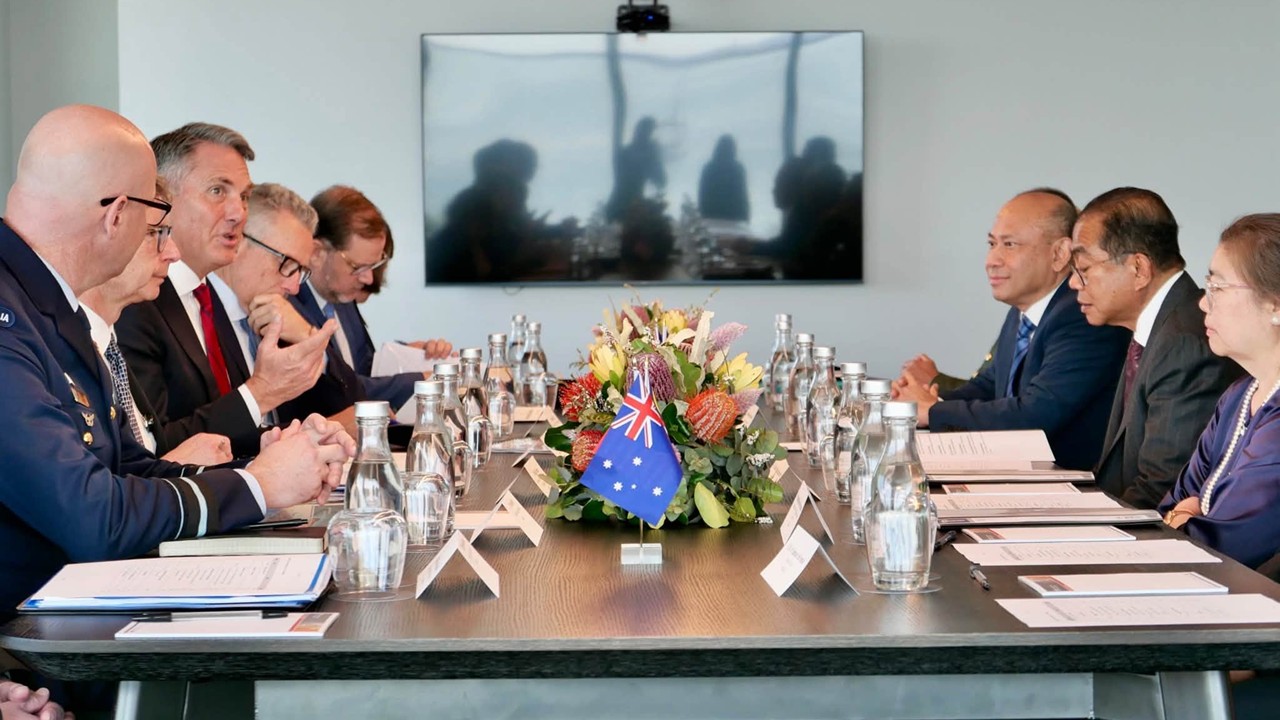
GEELONG — The significance of the sixth Australia Malaysia High Level Committee meeting lies less in any single announcement than in the architecture of cooperation now being built around the relationship.
The meeting, co chaired by Australian Deputy Prime Minister and Defence Minister Richard Marles and Malaysian Defence Minister Mohamed Khaled Nordin in Geelong on September 18, produced a series of decisions that collectively point towards a more integrated and strategically organised defence partnership. The most important development is the decision to establish a Strategic Planning Committee as the first step in elevating the Australia Malaysia defence partnership, with the committee intended to identify priority areas of practical cooperation and oversee their implementation.
That matters because Malaysia and Australia already have extensive military to military cooperation, meaning the relationship is no longer starting from the foundations of exercises, training and professional exchanges. What is changing is the effort to connect those individual activities into a more deliberate strategic framework in which planning, capability development, logistics, infrastructure, information security and defence industry are increasingly treated as parts of the same relationship.
The relationship is therefore moving from cooperation that is largely exercise and engagement driven towards a model in which the two governments are seeking greater continuity between strategic planning, operational capability, logistics, information security, cyber resilience and industrial cooperation. This is occurring against a regional environment in which the distinction between conventional military security and broader national resilience is becoming increasingly difficult to maintain, particularly as competition between major powers increasingly extends into technology, supply chains, maritime access, communications networks and critical infrastructure.
From exercises to strategic integration
The Malaysia Australia Joint Defence Program, established in 1992, has provided the institutional foundation for decades of training, education, exercises and professional exchanges. More recently, bilateral activities have expanded into maritime and special forces cooperation, including the 2026 Keris Strike exercise in Sabah, demonstrating that the two militaries already possess considerable practical experience working together.
The latest committee decision suggests that both governments now want to extract greater strategic value from this accumulated experience. The emphasis on high end and operationally relevant engagement is particularly significant because it indicates that interoperability is no longer being treated simply as the ability of two militaries to train together, but increasingly as the ability to operate together under more demanding circumstances where communications, logistics, information security and command structures become as important as conventional military capability.
The renewed Malaysia Australia Mutual Logistics Support Arrangement is consequently more important than its technical description might initially suggest. Logistics is one of the least visible but most consequential components of military cooperation because forces can train together relatively easily, while sustaining them during prolonged operations, exercises or humanitarian missions requires compatible procedures, access arrangements, supply chains and infrastructure.
The renewed arrangement is intended to improve logistical support and interoperability while facilitating future exercises, operations and engagements. In practical terms, this gives the bilateral relationship greater depth because it creates mechanisms that can support cooperation beyond individual exercises and towards sustained operational activity.
Butterworth is becoming more strategically relevant
The continuing investment in Royal Malaysian Air Force Butterworth is another important part of the picture. The two ministers said infrastructure upgrades and runway remediation were progressing, with completion expected by the end of 2026, while reaffirming Butterworth's importance as a platform for bilateral cooperation, regional engagement and Five Power Defence Arrangements activities.
Butterworth's significance goes beyond Malaysia Australia relations because it is associated with the FPDA's Headquarters Integrated Area Defence System and has long been an important node for multinational defence cooperation involving Australia, Malaysia, New Zealand, Singapore and the United Kingdom. The FPDA was established in 1971 and remains focused on consultation and practical cooperation concerning the defence of Malaysia and Singapore.
The timing is notable because 2026 marks the 55th anniversary of the FPDA, while Malaysia is scheduled to host the FPDA Defence Ministers' Meeting and Exercise Suman Protector in 2027. This places Malaysia at the centre of an established regional defence network at precisely the moment Australia and its partners are seeking greater interoperability while avoiding the creation of an exclusively bloc based security structure.
The South China Sea is the strategic backdrop
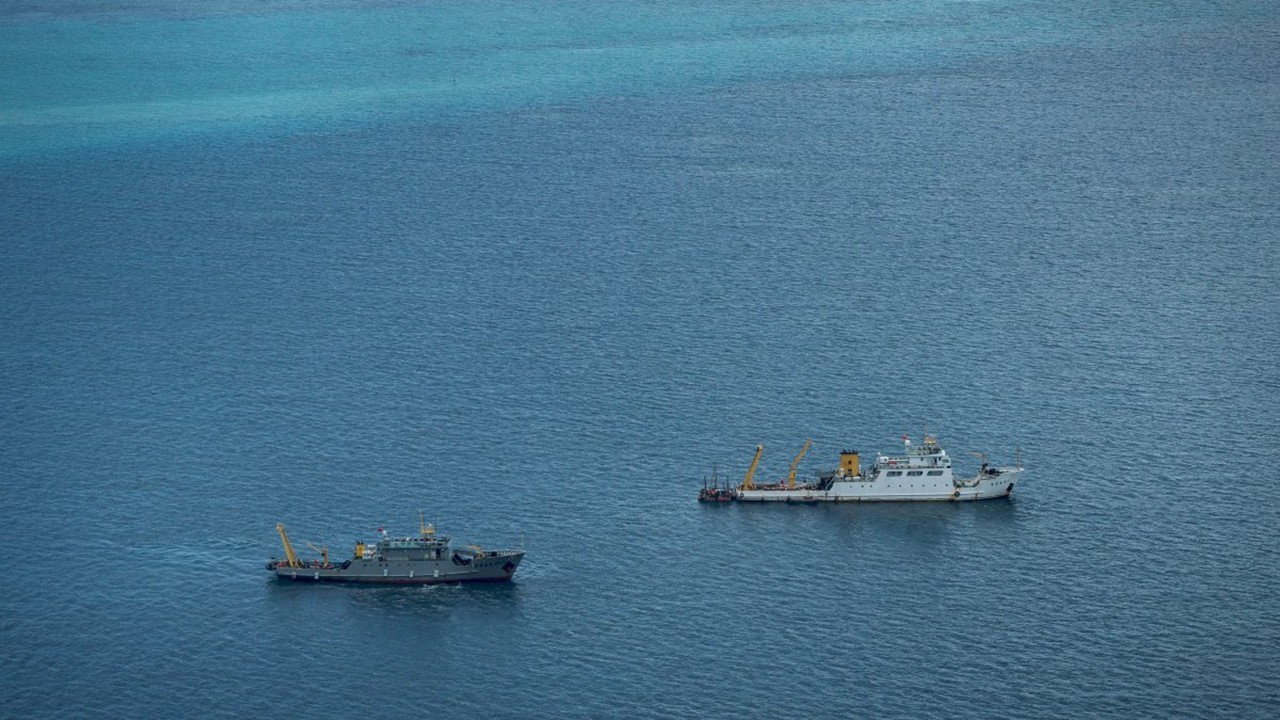
The joint statement is deliberately careful in its language on China and the South China Sea. Malaysia and Australia reaffirmed freedom of navigation and overflight, adherence to the 1982 United Nations Convention on the Law of the Sea, peaceful resolution of disputes and the need for maritime claims to comply with UNCLOS.
The ministers also expressed concern over dangerous and unprofessional actions at sea and in the air that increase tensions in the South China Sea. This language is significant precisely because Malaysia's strategic position is different from that of Australia, with Kuala Lumpur maintaining substantial economic and diplomatic relations with China while traditionally seeking to manage maritime disputes without allowing them to dominate the wider bilateral relationship.
Australia, meanwhile, has increasingly emphasised freedom of navigation, international law and the prevention of coercion in the Indo Pacific. The joint statement therefore represents a convergence around principles rather than an announcement of a China focused military alignment.
That distinction is important because Malaysia is not abandoning its longstanding preference for ASEAN centrality or strategic autonomy. In fact, the statement repeatedly emphasises ASEAN centrality and an ASEAN led regional architecture, suggesting that Kuala Lumpur sees deeper defence cooperation with Australia as compatible with a wider regional strategy rather than as a choice between competing strategic camps.
The emerging model is therefore one in which Malaysia can deepen practical defence cooperation with Australia while continuing to frame that cooperation within ASEAN institutions and international law. For Australia, that provides an established Southeast Asian relationship through which it can contribute to regional security without requiring Malaysia to abandon its broader diplomatic approach.
The missile test adds another layer
The statement's reference to a recent submarine launched ballistic missile test is also noteworthy. On July 6, China conducted a submarine launched ballistic missile test from the South China Sea towards the Pacific, with the missile reportedly travelling approximately 7,000 kilometres towards the South Pacific. Chinese authorities described the test as routine and said it was not directed at any particular country.
Australia and Malaysia did not describe the test as an attack or directly attribute hostile intent to Beijing. Instead, their statement focused on transparency, reassurance, professional conduct and reducing the possibility of miscalculation.
That language reflects a central problem in contemporary Indo Pacific security: the danger is not necessarily that every military activity represents preparation for conflict, but that increasingly sophisticated military operations, surveillance, exercises and weapons testing can create uncertainty about intentions. For middle powers such as Malaysia and Australia, crisis management therefore becomes almost as important as deterrence.
Cybersecurity is moving into the defence mainstream
Perhaps one of the most consequential developments is the attention given to cybersecurity and information security. The two countries are working towards a Security of Information Arrangement while also committing to greater cooperation on cyber security and cyber resilience, with the ministers highlighting malicious cyber activity targeting financial institutions across the Indo Pacific.
This reflects a broader change in the definition of defence. A modern military partnership cannot depend solely on aircraft, ships and soldiers because sensitive information, financial infrastructure, communications networks, defence supply chains and critical national systems are all potential targets.
The proposed information security arrangement could therefore become an important enabler for deeper cooperation. The closer the two countries work on sophisticated military technologies, intelligence and defence industry projects, the greater the requirement for trusted systems governing how sensitive information is shared, stored and protected.
Cyber resilience also has implications beyond defence ministries because attacks against critical infrastructure and financial institutions can have economic and social consequences long before they become conventional military problems. This makes cybersecurity an increasingly natural part of the bilateral security relationship rather than a specialist issue operating separately from defence planning.
Defence industry could become the next growth area
The decision to explore a Defence Science Technology and Industry Working Group and an Australian defence industry trade mission to Malaysia could eventually prove to be one of the most commercially significant elements of the agreement.
Malaysia has been seeking greater technology transfer, industrial participation and domestic capability development in its defence sector, while Australia's defence industry is being reshaped by its own strategic requirements and by Canberra's growing emphasis on sovereign capability. There is therefore potential overlap between Malaysian ambitions to strengthen domestic defence capabilities and Australian efforts to develop more resilient industrial and technological partnerships.
Malaysia's Defence Ministry has already highlighted technology cooperation involving Malaysian company Weststar Defence Industries and Australia's Rocket Technologies International. The proposed working group could provide a mechanism for moving from individual industrial relationships towards identifying projects involving research, technology, manufacturing, maintenance and capability development.
That would give the bilateral relationship an economic dimension beyond government to government defence cooperation and could potentially create new opportunities for Malaysian companies to participate in regional defence supply chains.
The real significance is institutional
Taken together, the decisions announced in Geelong suggest that Australia and Malaysia are attempting to make their defence relationship more institutionalised and less dependent on individual exercises or ministerial meetings.
The Strategic Planning Committee provides the strategic layer, the Mutual Logistics Support Arrangement provides the operational layer, Butterworth provides physical infrastructure, the Security of Information Arrangement addresses trust and sensitive information, the proposed defence science and industry mechanism adds an industrial dimension, Operation Gateway and expanded maritime cooperation add a regional surveillance and maritime security dimension, while cybersecurity adds resilience.
That combination is more significant than any individual announcement because it creates the beginnings of an interconnected defence ecosystem in which bilateral cooperation can feed into ASEAN led mechanisms and FPDA activities while remaining anchored in international law.
The institutionalisation of the relationship also provides both governments with greater continuity. Defence relationships can be affected by changes in political leadership, budgets and regional crises, but committees, agreements, infrastructure projects and recurring exercises create structures that can survive individual policy cycles.
Malaysia's strategic balancing act
For Malaysia, the challenge will be maintaining this deeper security relationship without allowing it to be interpreted as a move towards exclusive alignment with Australia or another major power.
The language of the joint statement provides the framework for doing precisely that. ASEAN centrality is repeatedly emphasised, the ASEAN Defence Ministers' Meeting Plus is highlighted, the ASEAN Outlook on the Indo Pacific is referenced, and humanitarian assistance, disaster relief, maritime security and cybersecurity are identified as areas for practical cooperation.
This is a distinctly Southeast Asian approach to strategic competition: strengthen capabilities, build relationships with multiple partners, preserve room for diplomacy and avoid unnecessary escalation.
For Australia, Malaysia provides something equally important: a long standing Southeast Asian partner located at the intersection of the Indian and Pacific oceans, with established relationships across ASEAN and a strategically important geographic position.
The next High Level Committee meeting is due to take place in Malaysia in 2027. By then, the real test will not be whether another declaration is issued, but whether the new Strategic Planning Committee has converted the commitments made in Geelong into actual programmes, whether the information security arrangement has been completed, whether defence industry cooperation has produced projects, whether logistics interoperability has improved and whether the upgraded Butterworth infrastructure is being used to support a wider pattern of regional cooperation.
The sixth committee meeting therefore marks an important transition. Australia and Malaysia are not announcing a new alliance, but they are building something more incremental: a deeper, more resilient and more operationally connected defence partnership designed to give both countries greater room to manage an Indo Pacific security environment that is becoming harder to predict.
For Southeast Asia, that distinction may be as important as the military capabilities themselves because the region's security architecture is increasingly being shaped not by a single alliance or bloc, but by overlapping networks of partnerships, institutions, exercises, logistics arrangements, technology cooperation and diplomatic mechanisms.