

Xi’s BRICS Vision Puts Global South Cooperation at the Centre of a Changing World Order
Xi Jinping’s BRICS address in New Delhi combines calls for greater Global South representation with practical proposals on trade, artificial intelligence, digital industries, smart manufacturing and technology talent.
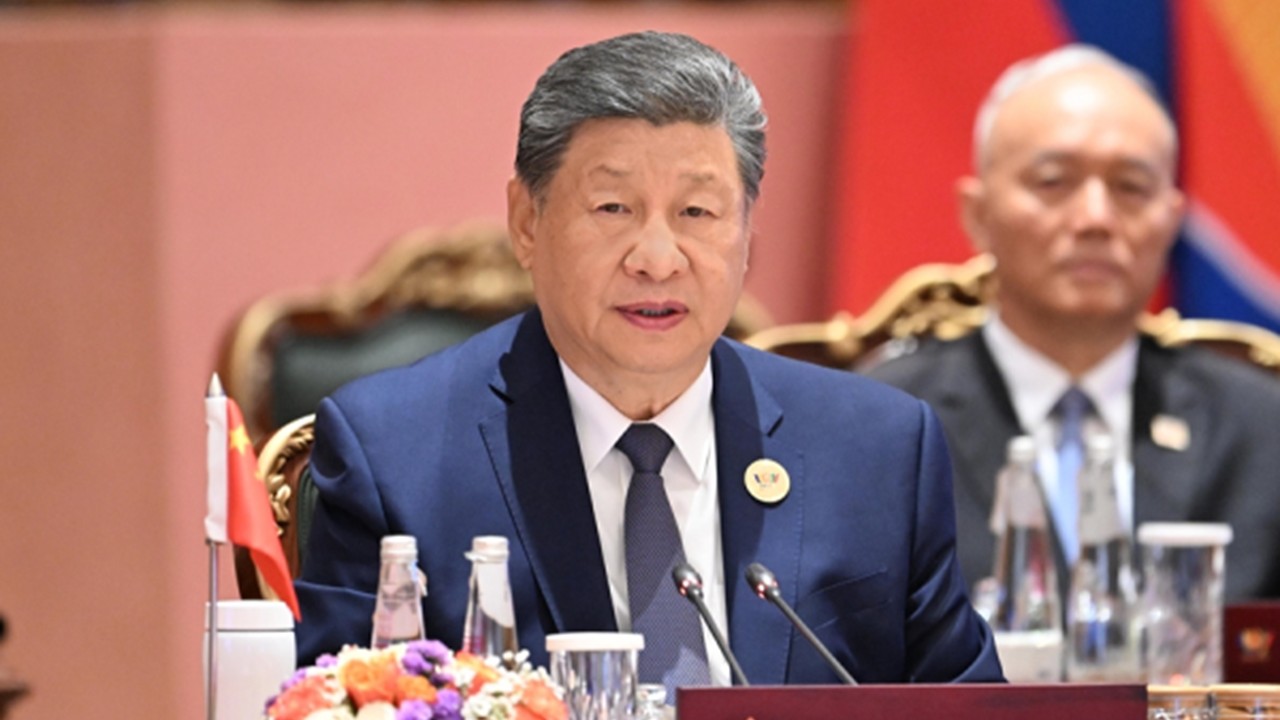
NEW DELHI — Chinese President Xi Jinping’s address at the 18th BRICS Summit presents a broad vision for strengthening the role of the Global South through multilateralism, economic cooperation, technology partnerships and more inclusive international institutions.
The speech places particular emphasis on cooperation rather than confrontation, with Xi calling on BRICS countries to become a stabilising and positive force in international affairs.
For the Global South, the significance of the address lies in its attempt to connect political principles with practical economic initiatives. Rather than presenting BRICS solely as a diplomatic grouping, Xi outlines a framework involving trade, investment, artificial intelligence, digital industries, manufacturing and talent development.
A stronger voice for developing economies
One of the central themes is the argument that international rules should better reflect the participation of all countries, regardless of their size or economic strength.
Xi calls for greater representation of developing countries in international institutions and points to reform of the international financial architecture, alongside continued support for the United Nations and reform of multilateral institutions.
He also calls for reform of the World Trade Organization while highlighting principles such as most favoured nation treatment.
The message places economic openness and institutional reform alongside calls for sovereign equality and non interference, giving BRICS a wider political and economic agenda.
From political statement to practical cooperation
Perhaps the most substantive part of the address is the five initiatives proposed by China.
These include an open source and inclusive artificial intelligence initiative, a trade and investment facilitation initiative, digital industry cooperation, intelligent manufacturing cooperation and a science and technology talent development initiative.
The proposals give BRICS cooperation a strong economic and technological dimension.
The AI initiative envisages cooperation on large language models, specialist seminars and training, while the digital initiative proposes a BRICS digital ecosystem cloud platform alongside digital skills development and technological exchange.
For developing economies, such initiatives address a practical challenge: gaining access not only to technology, but also to the skills, infrastructure and industrial capabilities required to use it effectively.
AI as a development issue
Xi’s treatment of artificial intelligence is notable because he frames the technology in terms of development and governance.
He calls for AI to be developed for positive purposes and proposes progress towards a consensus based global AI governance framework.
That approach places technology governance within the wider Global South agenda rather than treating AI solely as a competition between major technology powers.
The proposed engineer cultivation alliance and youth exchanges in science and technology similarly put emphasis on building human capital, which could be important for emerging economies seeking to move into higher value industries.
Trade, manufacturing and supply chains
The speech also reflects the changing structure of global economic cooperation.
Xi calls for stable and smooth industrial and supply chains and proposes a BRICS special economic zone partnership to facilitate trade and investment.
The intelligent manufacturing initiative goes further by proposing cooperation in smart factories, standards and manufacturing upgrading.
This could create additional opportunities for countries seeking to attract investment while developing higher value manufacturing capabilities.
The emphasis on industrial alignment also suggests that future BRICS cooperation could increasingly involve production networks, technology transfer and industrial standards rather than simply bilateral trade.
A development agenda beyond diplomacy
Another important element is the speech’s focus on development outcomes.
Xi links BRICS cooperation to the United Nations 2030 Agenda for Sustainable Development and highlights China’s development cooperation initiatives, including thousands of projects and training programmes for professionals from developing countries.
The figures cited in the speech are presented by the Chinese government as evidence of its development cooperation. Their inclusion nevertheless illustrates the kind of development centred diplomacy Beijing is seeking to associate with its engagement with the Global South.
What the speech signals for Asia
For Asia, the broader message is that BRICS is being positioned not simply as an alternative diplomatic grouping, but as a platform for practical cooperation among emerging economies.
The combination of trade facilitation, digital development, artificial intelligence, smart manufacturing and skills development gives the grouping an increasingly economic and technological agenda.
That could create additional space for Asian economies to participate in new forms of cooperation while maintaining their existing relationships with other major powers and institutions.
Xi’s reference to China’s 15th Five Year Plan is also significant. He describes the plan not only as a blueprint for China’s domestic development but also as a potential cooperation agenda for other countries, linking China’s economic transformation with opportunities for international partnerships.
The speech therefore offers a clear picture of how Beijing sees the next stage of BRICS cooperation: greater Global South representation in international affairs combined with practical collaboration in trade, technology, manufacturing, skills and development.
For Asia, the important takeaway is that China is presenting BRICS increasingly as a development and economic cooperation platform, with technology and industrial capacity becoming as important to its future agenda as traditional diplomatic coordination.